

THE Federal Government has again reaffirmed its long-standing policy of refusing to pay ransom for abducted victims, insisting that all rescue operations are carried out through sustained military pressure and intelligence-led operations rather than negotiations with criminals.

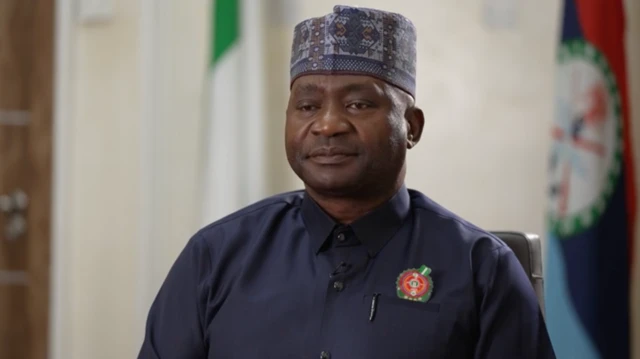
The Minister of Defence, Christopher Musa, made the clarification during an interview with BBC Hausa, monitored by News Point Nigeria, amid widespread public assumptions that ransom payments are often made to secure the release of kidnapped victims, particularly schoolchildren.
According to the minister, such assumptions are inaccurate and fail to reflect the realities of how security agencies conduct rescue missions across the country.


“The federal government does not pay ransom. Even if others do, the federal government does not. We do not pay ransom,” Musa said.
Musa explained that victims are typically freed after security forces intensify operations in areas where kidnappers operate, forcing them to abandon captives while fleeing from advancing troops.
“People only assume that ransom is paid. For example, whenever children are kidnapped from schools, soldiers go into the forest to apply pressure on the bandits so they will flee and abandon the children, and then we recover them. There is no issue of paying ransom,” he stated.
He warned that ransom payments only serve to embolden criminal networks, providing them with funds to acquire weapons and carry out further attacks.
“We oppose it, because if it continues, it will encourage people to kidnap for money. That is why we say people should stop paying ransom,” the minister added.
The defence minister urged families, communities and state authorities to immediately report kidnapping incidents to security agencies rather than engaging in private negotiations with abductors.

“If someone is kidnapped, they should report to the security agencies so that proper action can be taken,” he said.
He stressed that intelligence provided by local communities remains one of the most effective tools in combating banditry, kidnapping and other violent crimes.
Musa also cautioned communities against any form of collaboration with bandits, including selling food, fuel or other supplies to them.


“We constantly tell people to stop having dealings with bandits and to stop selling food or drinks to them,” he said.
He described such actions as morally wrong and harmful to national security.
“What people should understand is that if you sell food to them and they give you money, you are eating blood money, and that is not good,” Musa warned.
The minister further warned state governments against entering into peace agreements with armed groups, describing such arrangements as deceptive and counterproductive.
According to him, negotiated settlements with bandits often undermine ongoing military operations and give criminals the opportunity to regroup.
Musa cited Katsina State as an example, noting that the Federal Government had consistently advised against peace initiatives with armed groups operating in the state.
He reaffirmed the Federal Government’s commitment to restoring peace and security nationwide, stressing that sustained military action, intelligence gathering and public cooperation remain the most effective strategies for defeating banditry.
“Our goal every day is to ensure peace in the country,” the minister said.