

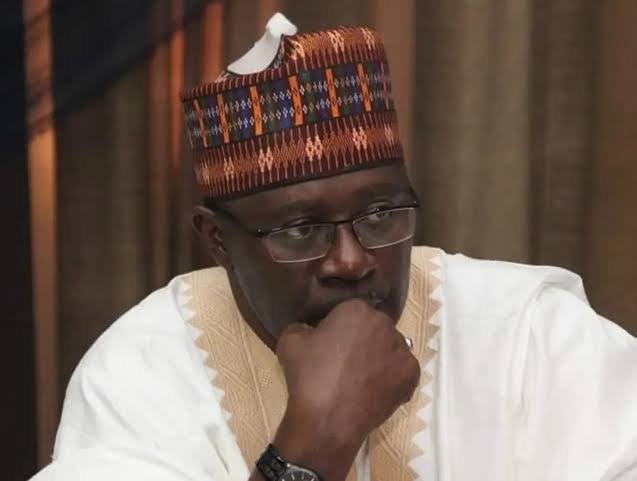
THE Nigerian Minister of Transportation, Mu’azu Jaji Sambo, was recently reported by the media as calling for the “unbundling of the Nigerian Railway Corporation (NRC)”. Such a step, according to the Minister was “in line with the vision and objectives of government’s current reforms in the transportation sector”. He added that “as it is presently constituted, the NRC cannot operate optimally, thus necessary reforms and unbundling have become imperative”.

Unfortunately, the reports in the press did not expatiate on what Minister Sambo meant by “unbundling of the Nigerian Railway Corporation”, neither did he allow us a peek into his ministerial insight into why the NRC “cannot operate optimally” in it’s present state.
Because there wasn’t clarity of perspective from Sambo, we can only take conjectural flights into what might be cooking behind ministerial walls. Given what’s been done in the past by successive Nigerian governments from the mid-1980s, since the ideology of privatization took over the public space, “unbundling” can only mean an effort in privatisation of the Nigerian Railways.


One of the sad aspects of the Nigerian system is the manner that privatisation has been turned into the one-size-fits-all pill for all issues of our public space. This is in spite of the glaring failure of the sale of public enterprises in Nigeria. But this is an ideological standpoint.
The rulers of our country were mass-converted to the “ideology-religion” of neoliberalism, and they became blinded to objective reality. For them, every asset means a thing, only when they’re sold; this is in spite of the mass failure of their privatisation policy since it commenced from the mid-1980s.
Let us try to unbundle this “unbundling of Nigerian railway”, that Sambo is preaching. I don’t know who the advisers for this plan are, but privatised railways haven’t been a success story around the world.
One of the poster cases of railways privatisation around the world, was the Tory privatisation of British Rail which commenced in the 1990s. The listed benefits they adduced for privatisation included improved customer service and more investment. The high priests of the process frowned at higher fares, lower punctuality, and state subsidy of the system.
In the years since they were privatised, its protagonists have harped on such benefits as improved efficiency, services, and operations. While drawback noted have included the inability of privatised railways to provide affordable services, the casualisation of jobs, loss of revenue to the state in the form of dividends.
Those who study privatised railways systems have similarly noticed the high chances of bribery and corruption that usually accompany privatisation; the expansion of the gaps between the rich and the poor; the emergence of business models imposed by private firms, often to the detriment of the mass of consumers because of the centrality of the profit motive. There’s also noticed a drawback in pricing as the private firms are price takers.

Then there emerges a “natural monopoly”, and a neglect of the public interest, and this is also related to difficulty of regulation of the private companies, along with a fragmentation in the industry and finally, the regime of “short termism” amongst the companies.
Since privatisation, Britain has witnessed major rail crashes such as Southall rail crash in 1977; Ladbroke Grove rail crash of 1999; Hatfield rail crash in 2000; the Stonehaven crash of the same year killed three people; and the Potters Bar rail crash recorded in 2002.
Clearly, the Railway Act of 1993 dismantled the integrated national railway system in Britain. The apostles of privatisation emphasised on the increase in passenger journey numbers which clearly grew after the process was completed. There’s a deep irony that the profit motive survives only because it is dependent on various types of public subsidy, which had been one of the reasons asserted against a state run system in the first place.


Overall, the grand benefits used to justify privatisation of British rail never materialised. Today, fares are much higher ; there’s infrastructure failure; and train delays are rampant; the train franchising process isn’t working efficiently; and these have deepened passenger dissatisfaction.
British Rail, before privatisation, was a fully vertically integrated industry. BR was responsible for virtually every aspect of the railways system. And in that period, it was said to be one of the most financially successful railways in Europe. In 1994, subsidy from government was only 15% of revenue, thus making it the least subsidised railways in Europe.
Privatisation fragmented the industry, with the emergence of over 100 different companies that resulted in what was termed “a complex contractual web of operational transactions between different industry players-with profit mark up being extracted at every stage”, according to John Stittle, of the University of Essex, whose article “Nationalising Britain’s railways is the only way to fix chronic problems – here’s why”, was published on January 16, 2018.
Given this dysfunctional privatisation, the call for re-nationalisation of British Rail has become very popular in the United Kingdom. Renationalisation is now seen as the key to end the operational and structural absurdities that privatisation gave birth to in the British railways system.
The example of the privatisation of British Rails certainly has been one that the Indians have noted very closely, and has been at the heart of decisions taken to protect the national public service railways system. They argued in India that privatisation will make the railways profit-based, and gradually become unavailable to or out of reach, of the poor in Indian society.
The Indian Railway connects small and large communities of the country. Privatisation will make the trains increasingly inaccessible in less profitable or remote rural communities, since private firms are unlikely to generate profits from such locations.
The railways are so important to Indian life, that there’s a Ministry of Railways, owned by the Indian Government. They operate the 4th largest railway network on earth, with a total route length of 68,043 km; running track length of 102, 831km and track length of 128, 305km, as of March 31, 2022.
The Indian railways, like their Nigerian counterpart, were a product of British colonialism; they were founded on the 8th of May, 1845. As of March 2021, according to Wikipedia, the Indian Railways had 1,252,347 employees. They posted revenue of $25billion in 2021-2022.
In 2020, Indian commenced a process of allowing private firms to operate passenger trains on its network with the introduction of 151 new trains. Furthermore, they were expecting additional private sector investment in the system; but the Rail Minister told the Indian Parliament, that there were no plans to privatise the Indian railways. They belong to the Indian state and the people and so shall they remain.
Privatisation will destroy a system which serves all areas of a huge country and connects people of all classes and stations in a broad national transportation system. Privatisation agendas don’t serve such a national purpose.
We can talk about several other examples of railway systems around the world. The Chinese railways with over 155,000km of railways is the second longest network in the world. Today China with more than 42,000 km of high-speed rail (HSR), has the longest HSR network in the world. Almost the entire operations are handled by the China State Railway Group Company Limited, a state-owned company created in March 2014, as China Railway Company after the Ministry of Railways was abolished. China’s railways are the busiest in the world, and in 2019, they delivered 3.660billion passengers, according to Wikipedia.
Similarly, the Russian Railways is a Russian fully state-owned vertically integrated railways company. They manage infrastructure as well as operate freight and passenger services. In 2017, the Russian Railways had assets totalling $76.6b. It’s important to mention that the Trans-Siberia Railway of Russia, is the longest single rail system in the world, stretching 9,288km between Moscow and Vladivostok.
The French Railways system is also a state-owned system called Société Nationale des Chemins de Fer Francais (SNCF). It was formed in 1938. France has a very fast and highly efficient railways system, with the French government investing massively in high-speed trains (the TGV or Train a Grande Vitesse). The SNCF Group comprises of five public limited liability companies, and all are wholly own by the French government.
This tour-de-force is necessary in order to explode the dangerous delusion behind the plan by the Nigerian government to “unbundle the Nigerian Railways”. If our national intention is to have a national railways system that’s fit for purpose, privatisation or “unbundling” is the wrong step. Those they always try to copy, such as the British or the Americans, don’t have exemplary railways systems at all. The profit motive as basis of running railways systems clearly fails the system.
What we need is to think creatively, study and copy, best practices from places like India, France, China, and Russia. These countries have very worthy railways structures that are state-led.
The truth is that over the years, the Nigerian railways system gradually deteriorated. The infrastructure decayed because there was no consistent regime of investment; equipment also failed, and the general environment became very inefficient, just as corruption was also wedded with very poor management. There was a regime of criminality, damage to railways property, as well as theft.
I saw these clearly, when I did the over 1,200 km of railway journey from Kano to Lagos, as a program for the BBC, in 1995. It now seemed incredible to recall, but the Nigerian Railways, once used to be the highest employer of labour in the country.
Our rail systems are worn out, and there are regular wash outs of lines, leading to accidents; the railways were badly funded by successive governments, who failed to appreciate the national strategic importance of the system to the whole concept of nationhood; skilled manpower became old, they retired, and there was no systematic structure of renewal of manpower in a modern railways environment, again because there’s no thinking in that direction. And finally, the institutional framework also gradually deteriorated to the point that the railways stopped meaning much to the governmental structure of Nigeria.
Yet, it’s clear that we need to re-invigorate the Nigerian railways system, but that must be built upon clear-headed philosophical understanding of their importance to national development. These types of grand ideas and schemes of national railways development, can only be achieved within a state-run railways structure. The new trains serving Abuja to Kaduna, Lagos to Ibadan, should be extended nationwide, as part of the grand idea.
Privatisation or unbundling are clearly schemes of theft. They won’t give us workable railways system in Nigeria. So when Minister of Transportation spoke of “unbundling the Nigerian Railways”, he’s opening a straight road to perdition for the system. It is a state-run railways system that offers the best opportunity for the development of the system in a huge, developing country like Nigeria. “Unbundling the Nigerian railways” will destroy the railways; Minister of Transportation, Mu’azu Jaji Sambo should be properly advised please.
Dr Kawu, PhD, FNGE, is a broadcaster, Journalist, and a Political Scientist.