
IN Nigeria, many policies that are supposed to catalyse economic growth end up making things worse and complicate matters for the citizen for whom these policies are designed to enhance their quality of life. Recently, two significant policies typify this: The Petroleum Subsidy Removal Policy and the floating of the Naira.

Both policies are good and well-intentioned and would bring about substantial progress for people in the medium to long term. However, the reality is that the policies ended up having a devastating effect on the populace. Removing the subsidy brought untold hardship due to sequencing and implementation issues rather than the principle of doing it. Somehow, we are still battling to survive the impact of the Naira forex rate merger.

Read also: Will A Nobel Solve The World’s Trump Problem? The President Thinks So – By Azu Ishiekwene
The problem was not the nobility of the intention, but something was wrong with these policies’ conception, delivery, and implementation. This is against the absence of a planned execution that appreciated the impact assessment of a singular action on the economic dynamics such that by solving one problem, we created a bigger one.

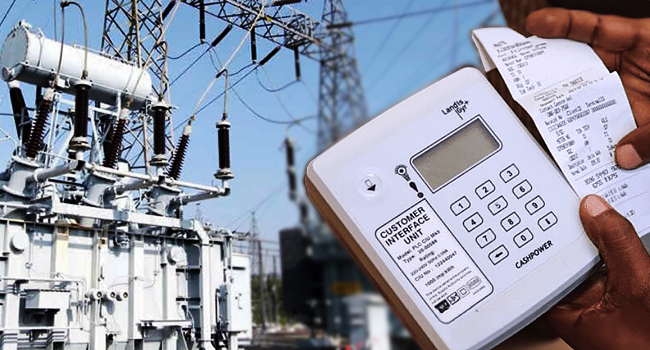
The most recent 231% hike in the price of electricity units for Band A customers is another presumed good policy that might have an unintended adverse impact on the citizens. The main argument for a cost reflective tariff must be distinct from that of subsidy removal, especially when the economics of the subsidy is yet to be proven, and the utilisation transition mechanism is not established or communicated. This policy may unleash hardship on the people, which is not the intention of the policymakers. To be clear, I am an advocate of cost reflective electricity tariff because of the big picture, and I will give reasons for this, but I am afraid I have to disagree with the current government approach.
Based on the evidence of the roll-out of the policy and the realities of this new electricity regime, it is unclear how the determination of the bands works because the criteria of customers enjoying the constant 20-hour power supply threshold are unsubstantiated and bogus. Moreso for a largely illiterate population . This makes the case for tariff increase somewhat confusing and not transparent as there is no measurable way for the average consumer to track supply relative to billing. The result is that people may end up paying for darkness.


A gradual, sequential step to the ultimate destination of appropriate electricity pricing would have delivered a different result and minimise the adverse effect on the citizens. I have gone through the website of the regulator ,If what the Nigeria Electricity Regulatory Commission (NERC) has released is the master plan for implementing appropriate electricity pricing, it lacks details of the progression path to total transition to cost effective tariff regime and fall short of expectations in every respect.
The result of this hurried announcement of a price hike, whether for band A, B, or even C clients, may lead to endless inflation and economic stress on the citizens. If we add the electricity price hike to the impact of petrol subsidy removal and spiralling food inflation, the average citizen faces existential shock.
However, I support the appropriate electricity pricing because it is critical for ensuring the sustainability, reliability, and affordability of electricity supply in Nigeria and promoting investment, innovation, and economic growth in the energy sector and beyond. Appropriate pricing ensures that utilities can generate sufficient revenue to invest in the maintenance, upgrade, and expansion of electricity infrastructure to enhance the reliability and quality of electricity supply. It incentivises consumers to use electricity more efficiently, thereby reducing energy consumption.

It attracts private investment and, most importantly, helps reduce the financial burden on the government of subsidising electricity prices, freeing up resources for other priority areas such as health care, education, and infrastructural development. For the above reasons, I advocate appropriate pricing and support any policy that will open our electricity regime for growth and development. I understand the importance of electricity in Nigeria’s emerging economic structure.
Read also: Nigerians’ Mental Health Is Under Siege – By Boma West
Nonetheless, I do not support the current policy approach because it is counterintuitive and counterproductive. It will produce a counter-effect to the intended goal. The reasons for my position are evident: first, between 1999 and 2015, Nigerian Senate documents show that Nigeria spent N2.74 trillion on electricity, yet there was no significant improvement in the generation or power delivered to homes and businesses. From 2018 to 2020, we spent N1.7 trillion on electricity, yet 43% of our population, according to the World Bank, needs to be connected to the national grid. The inference to draw is that the electricity power challenge is beyond money.

There are obviously systemic inefficiencies and corruption that no one has bothered to address. Asking consumers to pay more will transfer the inefficiencies to the populace. Second, NERC says only 15% or 1.8m out of 12million meterable customers are under band A, which enjoys 20 hours of electricity per day, although this may seem unrealistic. This band A must include factories, banks, telecom companies, hospitals, schools, malls, commercial centres, and residential areas of high-net-worth individuals.
This increase in tariffs will mean an increase in the cost of doing business by 231%. Cost of school fees for private institutions will also go up by a factor of 231%. The implication is that the businesses will transfer the cost to final consumers, mostly people experiencing poverty who are already undergoing a cost-of-living crisis. Third, this may dampen the real sector, and many businesses may close. Besides, demands for goods and services may drop. The competitiveness and profitability of Nigerian firms may be in jeopardy.
The current approach will create inflationary pressures, reduce the competitiveness of businesses both locally and internationally, impact the household budget that is already battered by harsh economic realities, lead to business closures and resultant unemployment, negatively impact economic growth by constraining production and consumption, and ultimately may exacerbate already tensed social and civil unrest. Policymakers should consider implementing measures to improve electricity generation, transmission, and distribution efficiency and address issues related to tariff structures, affordability, and subsidy mechanisms.
Nigeria has a vast informal sector – micro, small, and medium-sized businesses – that is our economy’s backbone. These businesses account for over 40% of our GDP and 70% of employment. These businesses include vibrant youth-led innovation hubs in informal urban settlements across the country, small service and creative firms scattered across our commercial centres, and burgeoning small industrial production businesses dotted in areas where access to electricity is better and stable. A draconian hike in electricity without appropriate time to plan and adjust may spell doom for these businesses, already spending a chunk of their merger revenue on private power generation.
What could NERC have been done differently to implement a better pricing system? NERC could have delivered a well-thought-through transition plan over a 6-to-9-month period with a model allowing everyone to see what an increased tariff and electricity supply would mean. This way, citizens can adjust, make alternative arrangements and plan accordingly. Transparent communication and stakeholder engagement are essential for building trust and effectively managing potential social and economic impacts.
The necessity of public sensitisation on matters that affect the livelihood of the majority must be balanced. There is a need to prepare the public before implementing any new policy that has a significant impact on livelihoods. Socio-economic reform must never be an ambush shock therapy; otherwise, the populace will react like an injured collective. NERC ought to match an electricity tariff adjustment plan with a post-reform plan to show how the government and stakeholders intend to mitigate the adverse impact of a hike in price and other critical reforms.
Conceptualising and adopting sound economic policies is necessary for increased output in the electricity sector, but more is needed: any policy is only as good as its implementation and impact. Policy implementation can fail for three reasons: the absence of complementary measures necessary to make the policy effective, nonalignment with reality, and the inadequate capability of prevailing institutions and administrative systems to respond to changes.
Read also: ‘Your Integrity Is Your Crown’, EFCC Chairman Warns Nigerian Girls Against Sextortion
This electricity tariff hike, especially given our current socio-economic realities, is one policy that may hurt the people because of poor conception and disoriented implementation. Though a great idea, the timing, implementation approach and lack of complementarity of favourable institutional and economic capacity to mitigate the unintended effect of the hike in price may end up creating more significant problems than we already have. Inadvertently, we may be biting more than we can chew.
Dr Peterside is a chieftain of the All Progressives Congress (APC) and former Director-General of Nigeria Maritime Administration and Safety Agency (NIMASA). His syndicated column appears on News Point Nigeria newspaper on Mondays.