

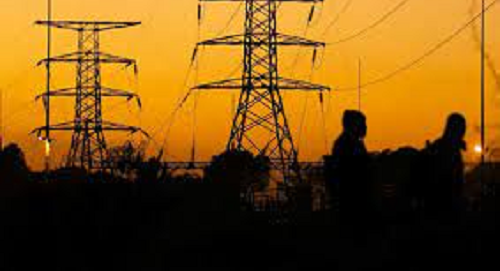
KANO State has been plunged into widespread darkness following an indefinite strike by workers of the Kano Electricity Distribution Company (KEDCO), a development that has crippled socio-economic activities across the metropolis and surrounding areas, leaving residents, businesses and essential service providers counting heavy losses.

News Point Nigeria reports that strike, jointly declared by the Senior Staff Association of Electricity and Allied Companies (SSAEAC) and the National Union of Electricity Employees (NUEE), began on Wednesday after the expiration of an ultimatum issued to KEDCO management, which elapsed on Tuesday, January 20, 2026, without resolution.
As early as Wednesday morning, union members shut down operations at critical KEDCO facilities, including the company’s headquarters and key operational centres. The action immediately resulted in widespread power outages, plunging Kano metropolis and its environs into darkness.


The blackout has disrupted commercial activities, healthcare services, water supply systems, telecommunications support services and daily household routines, with the situation worsening as the strike entered its third day.
Speaking to journalists shortly after workers picketed the KEDCO head office, the Deputy President-General (North) of SSAEAC, Rilwan Shehu, said the strike was unavoidable due to management’s alleged failure to honour longstanding agreements with workers.
“We are here to lock down activities because management has failed to comply with several agreements,” Shehu said.
“Since 2014, workers have been grappling with unresolved issues ranging from non-remittance of pension deductions to unpaid death benefits and poor working conditions. Many of these issues have been repeatedly sidelined.”
Shehu noted that unions had exercised patience for years but were left with no option after repeated appeals and negotiations allegedly yielded no concrete outcome.
Similarly, NUEE Vice President (North-West), Ado Gaya, accused KEDCO management of bias in recent staff promotions, describing the exercise as selective and unfair.

“Some staff have worked here for ten or eleven years without a single promotion,” Gaya alleged.
“But suddenly, in pursuit of personal interests, management is now conducting selective promotions that do not reflect fairness or equity.”
According to him, the promotion exercise further deepened mistrust between staff and management and worsened already fragile labour relations.


Meanwhile, the prolonged blackout has taken a severe toll on residents and businesses across Kano.
Speaking to News Point Nigeria, business owners described mounting losses and rising operational costs.
A hotelier and food vendor in Tarauni, Hajiya Atika, said reliance on generators had made business unsustainable.
“I have been running on a generator for days, which is making me incur losses. Sometimes customers come, other times they don’t. It is not encouraging,” she said.
In Dakata, Nasarawa Local Government Area, welder Abubakar Bala warned that continued outage could collapse his business.
“We have paid for electricity, yet we do not have access. If power is not restored soon, my business might collapse,” he said, urging authorities to intervene and explore alternative energy solutions.
Another welder in Sharada, Aminu Sani, said soaring fuel prices forced him to suspend operations.
“We charge more when using generators, but not everyone can afford the increase. Now we’re stranded,” he lamented.
Frozen food dealers have also been hit hard. Manu Garba, who operates along Zaria Road, said cartons of chicken and fish were destroyed by the outage.
“We expected good Easter sales, but everything got spoilt. Many business owners are now in debt,” he said.
In Rijiyar Zaki, hairdresser Nafisa Nuhu criticised the continued issuance of estimated electricity bills despite the blackout.
“This is a huge blow to those of us who rely on electricity to survive,” she said.
Water supply has also been affected, with residents reporting that the price of a 25-litre jerrycan doubled to N200 in some areas.
Conversely, mobile phone charging operators reported increased patronage. Malam Isa Umar said he raised charging fees to between N150 and N250 per phone due to fuel costs.