

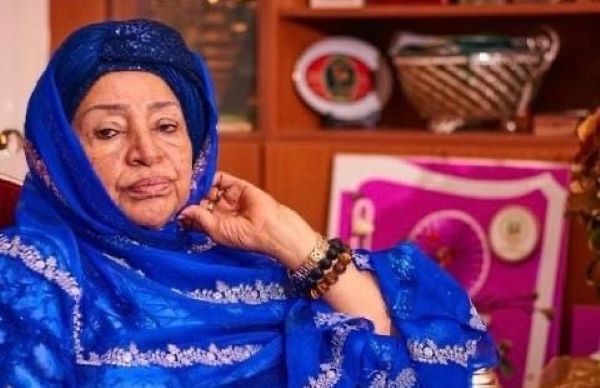
HAJIYA Maryam Abacha, widow of former Nigerian Head of State Sani Abacha, has called on political leaders, traditional institutions, religious scholars, women and youth organisations across Northern Nigeria to adopt a coordinated and constructive approach in engaging the Federal Government on the region’s multifaceted challenges, with a view to achieving durable and sustainable solutions.
She also cautioned against the use of abusive language and derogatory remarks in public discourse, noting that such conduct is inimical to constructive engagement, undermines governance processes, and does not contribute to meaningful progress.
According to her, “the use of invective against leaders does not serve the interests of the ordinary citizen; rather, it weakens governance structures. What is required is constructive engagement, accompanied by prayers and a sincere articulation of the people’s challenges in a manner that promotes unity and collective advancement.”


She made the remarks in a personally signed statement issued to journalists from Paris on Friday, April 10, 2026.
Maryam Abacha further noted that, drawing on her experience as a former First Lady familiar with the workings of government and established channels for transmitting public concerns, there is a need for Northern stakeholders to recalibrate their approach to advocacy and grievance articulation.
She urged: “Rather than resorting to media platforms for the exchange of insults, I call on Northern traditional rulers to close ranks and engage the Federal Government through appropriate institutional mechanisms on the pressing challenges confronting the region—particularly insecurity, poverty, and the socio-economic hardship affecting the populace.”
She emphasised the importance of inclusive participation, stating that all segments of society must be actively involved in structured advocacy and representation.
She further called on women’s groups, business leaders, the organised private sector, youth organisations, religious scholars, academics, and security personnel of Northern origin, alongside other stakeholders, to forge a unified platform for dialogue with the Federal Government aimed at addressing the region’s developmental and security concerns.
In her remarks, she stated: “I have had the privilege of being within the seat of the Federal Government; I understand how sustained and coordinated public pressure through legitimate channels can prompt decisive action. I therefore appeal to Northerners—particularly religious leaders, traditional rulers, business leaders, women’s groups, youth organisations, university academics, and all stakeholders—to speak with one voice, including security personnel of Northern origin, especially on the issue of insecurity and the underlying factors driving underdevelopment in the region.”

“After presenting grievances, prayers should follow. Let there be supplication, patriotism, and then structured engagement with government. When such concerns are harmonised across all sectors, government will be compelled to respond constructively in the interest of peace and stability.”
She also extended goodwill to public office holders at all levels, from the Federal Government to state governors, legislators, local government chairmen, and councillors, urging them to discharge their responsibilities with justice, equity, and a strong sense of national responsibility.
Maryam Abacha further expressed concern over what she described as the relative cohesion among stakeholders in Southern Nigeria in advancing their collective interests through coordinated representation, stressing the need for Northerners to cultivate similar unity of purpose and strategic engagement.