

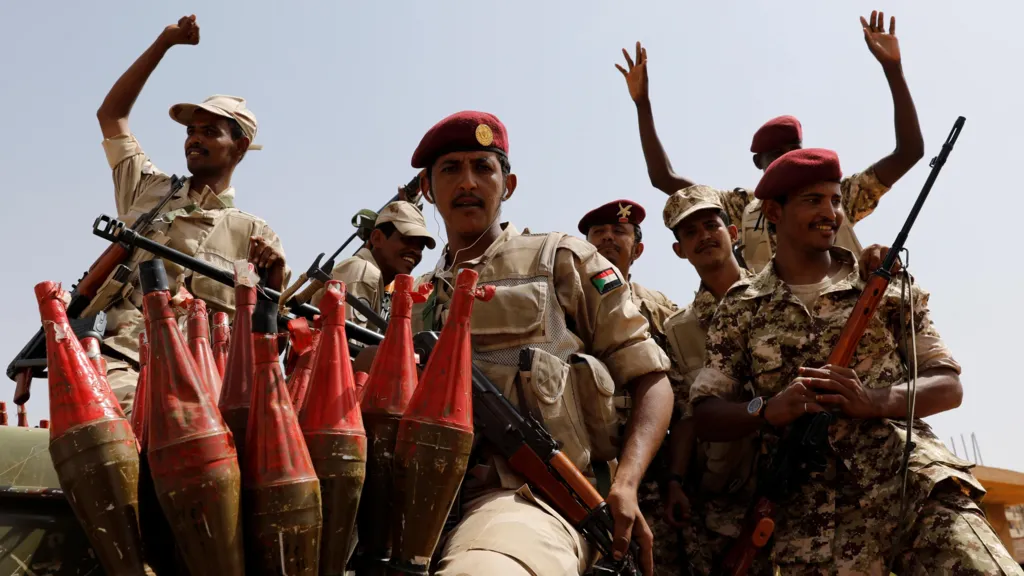
A NETWORK of Colombian mercenaries backed by the United Arab Emirates (UAE) provided critical support to Sudan’s paramilitary Rapid Support Forces (RSF) enabling it to capture the western city of el-Fasher last year, a new report says.
The investigation, by security analysis organisation the Conflict Insights Group (CIG), used data obtained from tracking the mobile phones of the Colombian fighters.

The UAE has long denied supporting the RSF, which has been fighting Sudan’s regular army for three years.

El-Fasher’s fall was one of the most brutal chapters of the conflict, which has led to the world’s worst humanitarian crisis with tens of thousands killed and millions forced from their homes.


The CIG has been closely following evidence of extensive Emirati military assistance to the RSF, but “this is the first research where we can prove UAE involvement with certainty”, says director Justin Lynch.
“We are making public what governments have long known – that there is a direct link between Abu Dhabi and the RSF.”
The report “shows mercenaries involved with drones travelling from a UAE base to Sudan before the RSF takeover of el-Fasher”, he says.
“Mercenaries involved in drone operations even named their wi-fi network their unit name – linked to a company operated out of the UAE.”
Colombian President Gustavo Petro was quoted last year as calling the mercenaries “spectres of death” and describing their recruitment as a “form of human trafficking”.

The BBC has asked for a response from the Emirati government to the latest findings.
The UAE has previously issued statements rejecting what it called “false and unfounded allegations” that it backs the RSF and condemning “in the strongest terms” the atrocities committed in el-Fasher.
Analysts agree that foreign support for both sides has been key to the continuation and expansion of the civil war.


The CIG says it used commercially available technology designed to make advertising more personal to track more than 50 mobile phones in Sudan between April 2025 and January this year whose operators were Colombian mercenaries, including at RSF-held areas from which drones were fired.
It also used flight-tracking data, satellite imagery, social media videos, news and academic articles to support its analysis.