

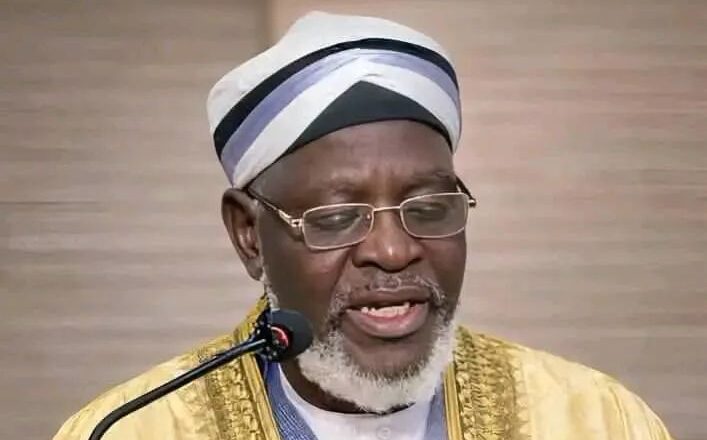
THE Tijjaniyya Sufi Order has raised concerns over the continued detention and prosecution of one of its revered leaders, Sheikh Abdulkadir Sani Khalifa Zaria, describing the development as troubling and calling for adherence to the rule of law.
In a Monday statement sent to News Point Nigeria and signed by Sheikh Ibrahim Shehu Maihula, National Vice Chairman of the Tijjaniya Shura Council of Nigeria, the group said it was compelled to speak on the matter following the prolonged detention of the cleric, who has spent nearly five months in custody.
The Tijjaniyya Order, described as one of the largest Islamic groups in Nigeria and West Africa with an estimated 60 million followers, reiterated its longstanding commitment to peace, justice, and lawful conduct, noting that the detained cleric is widely respected for his teachings on discipline, spirituality, and societal order.


According to the statement, the events leading to the cleric’s detention began on November 30, 2025, when Sheikh Abdulkadir visited a Ja’iz Bank branch in Zaria, Kaduna State, to carry out transactions on his personal account, only to be informed that the account had been placed on Post No Debit (PND).
He was subsequently advised to report to the bank’s headquarters in Abuja, and on December 11, 2025, he honoured the invitation. However, upon arrival, he was reportedly arrested by armed individuals later identified as personnel of the Defence Intelligence Agency (DIA) and taken to an undisclosed location.
The development, the group said, sparked anxiety among his family and followers across Nigeria and beyond, particularly as the cleric was held incommunicado for nearly four months without access to family members, legal counsel, or medical care. It was not until March 25, 2026, after his transfer to the custody of the Department of State Services (DSS), that he was allowed limited access to his legal teams.
In a bid to prevent the situation from escalating into a breakdown of law and order, a team of lawyers filed a fundamental rights enforcement suit against the Economic and Financial Crimes Commission (EFCC), the DIA, the Attorney General of the Federation, and Jaiz Bank Plc, seeking his release.
On April 20, 2026, the Federal High Court in Abuja, presided over by Justice Peter Lifu, ordered the immediate and unconditional release of Sheikh Abdulkadir Sani Khalifa Zaria. The court also declared the restriction on his bank account unlawful and awarded N6 million in damages.
The court held that the cleric’s fundamental human rights had been violated, citing breaches of Sections 35 and 36 of the 1999 Constitution, as amended, as well as provisions of the African Charter on Human and Peoples’ Rights. It further directed the DSS to release him without delay and ordered Jaiz Bank to lift the restriction on his account.

Despite the ruling, the Federal Government, on April 21, 2026, filed a 13-count charge against six individuals, including the cleric, alleging a plot to wage war against Nigeria and commit acts of terrorism.
The following day, April 22, 2026, Sheikh Abdulkadir Sani Khalifa Zaria was arraigned alongside five others before Justice Joyce Abdulmalik of the Federal High Court in Abuja. He pleaded not guilty to all charges, and the case was adjourned to April 27, 2026, for the commencement of trial.
The statement noted that the cleric informed the court that he was meeting the co-defendants for the first time during the proceedings, a development the group described as surprising.


While expressing confidence in the Nigerian judiciary, the Tijjaniyya Order said it believes the cleric will ultimately be discharged and acquitted, just as the court had earlier ruled in his favour regarding his detention.
The group urged its followers across the country to remain calm, law-abiding, and steadfast in prayers, warning against statements or actions that could inflame tensions or undermine ongoing legal proceedings.
It also expressed appreciation to various stakeholders, including Islamic organisations, the Supreme Council for Sharia in Nigeria, civil society groups, Christian leaders, members of the press, the international community, and the cleric’s legal team for their support during what it described as a challenging period.
Reaffirming its position, the Tijjaniyya Order maintained that Sheikh Abdulkadir Sani Khalifa Zaria is innocent and expressed confidence that justice would prevail.