

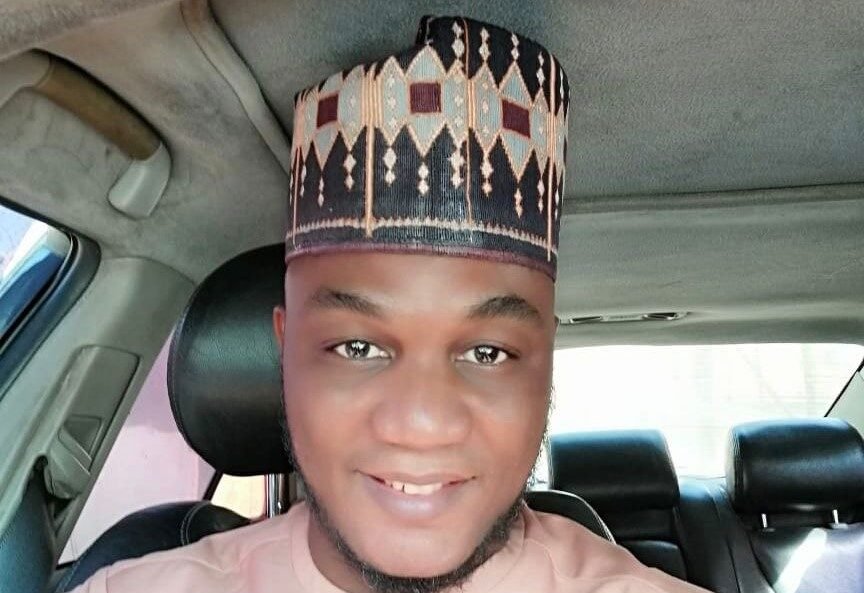
A 28-YEAR-OLD man named Mene Ogidi sat on the ground in Effurun, Delta State on April 26, 2026. His hands were tied behind his back with a rope. He was not running. He was not fighting. He was begging.
“Officers, abeg, I go tell you everything. Na my friend deceived me. E dey Sapele. I go carry you go the place.”
Someone filmed what happened next.

ASP Nuhu Usman cocked his rifle and shot Mene Ogidi at point-blank range. In broad daylight. With the man’s hands still tied behind his back. The officers then lifted the body into a police Toyota Sienna and drove off.


This is not a war story from Sambisa Forest. This happened on an ordinary street in Delta State. And if not for the camera phone of an ordinary Nigerian, it would have been filed under “suspected criminal neutralised” and we would have moved on.
That is the part that should disturb every one of us deeply.Mind you, I am not saying Mene Ogidi was a saint. The police claim he was caught trying to ship a Beretta pistol with four rounds of ammunition. Maybe he was. Maybe he was not. Maybe, as he was screaming in that video, a friend truly set him up. We will never know now, because ASP Usman decided to become judge, jury and executioner in one trigger pull.
This is the very foundation of what a justice system is supposed to prevent. You arrest a suspect, you produce him in court, you present your evidence, and a judge decides his fate. That is not bureaucracy for its own sake. It is the difference between a functioning state and a killing field.
Now, in fairness, the Inspector-General of Police, Rilwan Disu, moved relatively quickly. ASP Usman and three other officers have been recommended for dismissal and criminal prosecution. The Force Disciplinary Committee has sat. The case is before the Police Service Commission for ratification. I give the IGP some credit for not circling the wagons this time. But credit only goes so far.
Because here is my real question. Why does this keep happening?
The #EndSARS protests of October 2020 shook this country to its foundations. Young Nigerians, armed with nothing but phones and anger, took to the streets and told the government enough was enough. The Special Anti-Robbery Squad was dissolved, at least on paper. Panels were set up in every state. Reports were written. Recommendations were submitted. Governors received findings. And then what? Nearly six years later, a restrained man is shot dead on camera in Delta State by a serving police officer and we are back to the same outrage cycle, the same official condemnations, the same promises.
What did we actually reform? I want someone to answer that question with specifics, not press releases.
Let me be precise about the pattern here, because treating Mene Ogidi’s death as an isolated incident is dishonest. There is a recurring category of security force killing where the victim is not a combatant, not an armed suspect in flight, not posing any imminent threat at the moment lethal force was applied.

The cases of Kehinde Alade, Ibrahim Usman, the unnamed pregnant woman in Abraka, the two passers-by cut down in Alagbado in each of those incidents, the victims were either bystanders or already under some form of state control when they were killed. Mene Ogidi fits squarely into the worst sub-category of this pattern: physically restrained, hands literally tied behind his back, pleading cooperatively, and still shot. That is not a split-second field decision gone wrong. That is deliberate execution of a man in custody.
And before anyone tries to make this a regional story, the geography of documented cases from the past two years stretches from Delta to Lagos, from Abuja to Akwa Ibom, from the north-east to the south-east. This is not a southern problem or a northern problem. The common thread is not geography. The common thread is impunity , the settled belief among some officers that a poor, unconnected Nigerian’s life carries no real cost.
There is also something in this Delta case that I am surprised official commentary has not pressed harder on. Mene Ogidi, in that video, was actively cooperating. He was offering the officers a lead , a friend in Sapele, a specific location, a potentially bigger arrest. That is exactly the intelligence any competent officer would want to follow. So what was ASP Usman so eager to bury that he shot this man mid-sentence, mid-cooperation?


I am not accusing anyone of a specific crime beyond what the video already shows. But the question must be asked. When a suspect is willing to talk and an officer silences him permanently, the logical inference is that the officer had a reason to prevent that information from surfacing. The IGP’s disciplinary process must go beyond the mechanics of the shooting and probe what Mene Ogidi might have known that made him dangerous to someone in or connected to that patrol. Cover-ups in Nigerian law enforcement are not conspiracy theories. They are a documented, recurring feature of how certain bad actors within the system operate.
The wider problem resolves to three things: training, culture, and accountability infrastructure.
On training, a Nigerian police constable typically receives between three and six months of instruction before being handed a firearm. In jurisdictions that take professional policing seriously, that period runs between eighteen months and two years. You cannot build proportional force judgment, human rights instincts, and de-escalation reflexes in six months. What you produce is someone who knows how to operate a weapon but has received no serious grounding in why restraint is the harder and more disciplined calling.
When that person faces a tense situation, muscle memory beats judgment every time.On culture, the rot is generational. For decades, sections of the Nigerian police have operated on an unspoken premise that poor, unconnected citizens are not quite rights-bearing individuals but problems to be suppressed. That culture does not die with a memo from the IGP. It requires new supervisory norms at the divisional level, consistent mentorship from senior officers who model different behaviour, and most critically a track record of consequences severe enough to alter the calculus for the next officer tempted to cross the line.
On accountability infrastructure, the Mene Ogidi case does show something: when leadership chooses to act, the system can respond with some speed. The IGP moved. Good. But accountability cannot be a function of how viral a video went. It cannot be selective. The families of Kehinde Alade, Ibrahim Usman and the unnamed pregnant woman from Abraka have the same rights as Mene Ogidi’s family. If the state cannot show them equivalent resolve, then what we have is not accountability it is brand management triggered by embarrassing footage.
And that is the uncomfortable truth underneath all of this. The reason that camera phone mattered is that without it, nothing would have moved. How many Mene Ogidis were never filmed? How many families received a phone call, a body, and a story about how their son was a dangerous criminal who gave officers no choice? The documentation gap in Nigerian law enforcement accountability is not an administrative oversight. It is the gap through which most of the impunity escapes, unchallenged and uncounted.
So what must happen now? First, the IGP must drive this case to its full legal conclusion ,criminal prosecution, trial, and conviction, not a quiet administrative dismissal that allows ASP Usman to eventually resurface somewhere in the system. The family of Mene Ogidi deserves justice completed, not justice begun.
Second, the National Human Rights Commission, working with police oversight bodies, should establish and publish a running public register of extrajudicial killing cases dates, locations, officers named, charges filed, verdicts reached. We cannot manage what we refuse to measure, and right now the true scale of unlawful killings by Nigerian security forces is masked by the absence of systematic public record-keeping.
Third, state governors cannot continue hiding behind the federal structure of the Nigeria Police Force. The police operating in Delta State operate in a political environment shaped in part by the Delta State Government. Governors have the platform, the relationships and the public authority to demand higher standards from the commands in their states. The silence of most governors after incidents like this is its own form of complicity.
Mene Ogidi was 28 years old. Whether guilty of the charge against him or entirely innocent and we may never know which he deserved to live to see a courtroom. He did not. And if we exhaust our outrage on social media and then move on to the next scandal, we have no right to be surprised when the next restrained man is shot on camera and the cycle begins again.
- Nda-Isaiah is a political analyst based in Abuja and can be reached on jonesdryx@gmail.com. His syndicated column appears on News Point Nigeria newspaper on Saturday.