

TODAY, Muslim faithful across Nigeria will join over two billion Muslims around the world in celebrating Eid al-Adha, popularly known in Nigeria as Eid-Al-Kabir or simply “Babbar Sallah” in many northern communities.

From the ancient city of Kano to the bustling streets of Kaduna, from Sokoto to Maiduguri, Bauchi, Katsina, Dutse, Gombe and Yola, Ibadan to Ado-Ekiti the atmosphere is already filled with excitement, prayers, colourful attire and the cherished traditions that have defined the festival for generations.

Across the North, the early morning will witness thousands of worshippers trooping to Eid praying grounds in flowing white jalabiyas, babban riga, embroidered kaftans and colourful hijabs. Children will accompany their parents to the Eid grounds, while the familiar sounds of takbeer, “Allahu Akbar, Allahu Akbar” echo from mosques and neighbourhoods.


In emirates such as Kano, Zaria, Sokoto, Katsina and Bauchi, the traditional Hawan Sallah celebrations will once again bring together culture, royalty and religion as emirs ride through the cities on decorated horses amidst cheers from residents and visitors.
But beyond the colourful celebrations, Eid-Al-Kabir remains one of the most spiritually significant festivals in Islam, deeply rooted in the story of sacrifice, obedience and total submission to the will of Almighty Allah.
The festival draws its origin from the account contained in the Holy Qur’an, specifically in Chapter 37, Suratul As-Saffaat, as well as in the Old Testament of the Bible.
The scriptures narrate how Prophet Ibrahim (AS), in absolute obedience to Allah’s command, prepared to sacrifice his beloved son, Prophet Ismail (AS), whom he begot in old age. It was a moment that tested faith, patience and total submission to divine instruction.
As Prophet Ibrahim prepared for the sacrifice, Allah, in His infinite mercy, stopped the act and replaced Ismail with a ram from heaven, declaring that Ibrahim had passed the ultimate test of faith and devotion.
That singular act of obedience has remained one of the greatest examples of sacrifice and unwavering submission to Allah’s will.

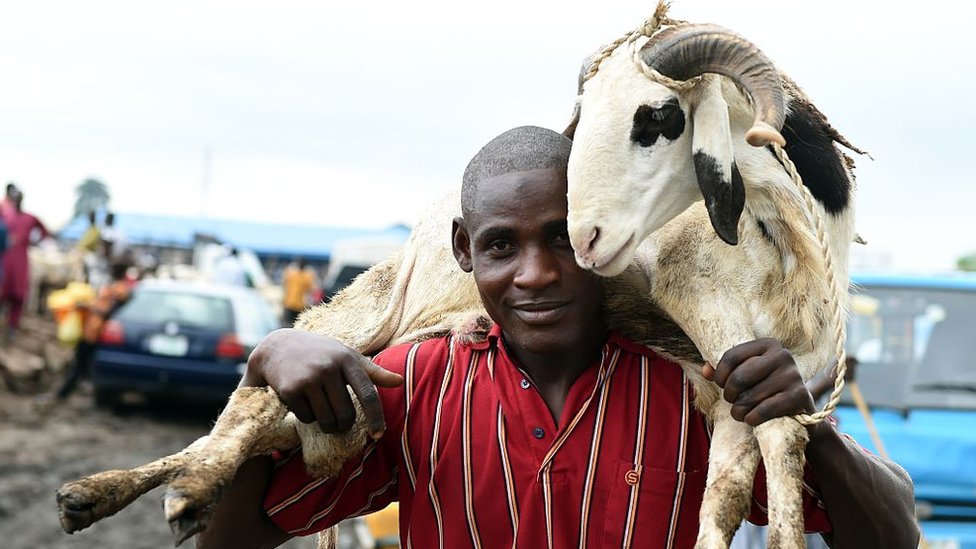
Today, millions of Muslims slaughter rams, cows, camels and goats in remembrance of that historic event. In northern Nigeria, homes will be filled with the aroma of grilled meat, suya, kilishi, pepper soup and other delicacies shared among family members, neighbours, friends and the less privileged.
In many communities, people travel from cities back to their hometowns and villages to celebrate with relatives. Roads linking Abuja to Kano, Kaduna, Sokoto, Katsina, Jigawa and other northern states are usually filled with travellers eager to reunite with loved ones for the festivities.
Yet, the true essence of Eid-Al-Kabir goes far beyond feasting, merriment and social gatherings.


The central message of the festival is sacrifice, humility, charity, obedience and complete submission to Allah.
Unfortunately, many people celebrate the season without reflecting deeply on the lessons behind it. The story of Prophet Ibrahim is not merely about slaughtering animals; it is about surrendering personal desires and worldly attachments in obedience to Allah.
There are countless teachings in both the Qur’an and the Bible capable of transforming society if sincerely practiced. Islam teaches honesty, integrity, compassion, righteousness, love for neighbours and justice. However, many people selectively obey divine commandments while disregarding others that conflict with personal interests.
Allah commands justice, yet corruption persists. He forbids oppression, yet the weak are often exploited. He condemns stealing, violence and dishonesty, yet society continues to struggle with greed, insecurity and selfishness.
The Holy Qur’an in Chapter 4, Suratul An-Nisaa, Verse 125, says: “Who could have a better religion than someone who submits himself completely to God and is a good-doer, and follows the religion of Abraham, a man of pure natural belief?”
The verse underscores the importance of complete submission to Allah and living a life guided by righteousness and sincerity.
Today, Allah does not require believers to sacrifice their children as He tested Prophet Ibrahim. Yet, many people still find it difficult to fulfill simpler obligations such as honesty, kindness, patience, charity and fairness.
If people struggle with these relatively easier responsibilities, one wonders how many would withstand a greater test of faith and sacrifice.
Indeed, many of Nigeria’s social and political challenges stem from the tendency to place personal ambition, greed and selfish interests above moral values and divine principles.
As Muslims celebrate this year’s Eid-Al-Kabir, there is need for sober reflection. The festival should not become merely an occasion for extravagant spending, reckless partying or public display of wealth.
It is not simply about storing large quantities of meat in freezers or showing off affluence on social media.
Rather, Eid-Al-Kabir is a reminder of compassion, charity and concern for others especially the poor, vulnerable and struggling members of society.
In many northern communities, one of the most beautiful traditions of Babbar Sallah remains the sharing of meat with neighbours, widows, orphans and the less privileged. That spirit of generosity and communal care reflects the true teachings of Islam.
The story of Prophet Ibrahim teaches humanity that genuine faith requires sacrifice, discipline and trust in Allah. It reminds believers that obedience to Allah ultimately leads to mercy, reward and spiritual fulfilment.
As families gather today in Kano, Kaduna, Katsina, Sokoto, Maiduguri, Bauchi, Yobe, Jigawa and across Nigeria to celebrate Eid-Al-Kabir, may the lessons of sacrifice, love, peace and humanity remain alive in hearts long after the festivities end.
Eid Mubarak.