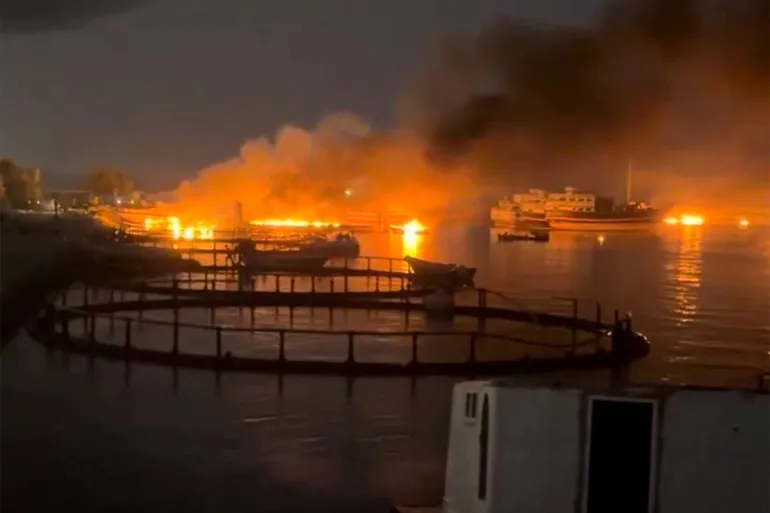
THE United States has fired on an oil tanker attempting to reach Kharg Island in the Strait of Hormuz as part of its blockade on Iranian ports, while Tehran came under attack for the first time in the latest round of strikes.
The US said on Thursday morning that it had disabled the unladen oil tanker during a fifth consecutive day of military operations, firing Hellfire missiles into the vessel’s smokestack after it allegedly ignored multiple warnings.

Read also: Trump Announces Russian Diesel Deal Amid Soaring US Fuel Prices
The latest developments underscore the rapidly deteriorating security situation in the Gulf, with escalating waves of attacks coming just days after the ceasefire between Washington and Tehran appeared to have entirely collapsed, heightening fears of a return to full-scale war.
On Wednesday evening, the US targeted Iranian coastal defences and missile sites, only hours after another round of strikes hit cruise missile storage and launch facilities on Iran’s Greater Tunb Island earlier in the day.
The US also expanded its operations further north, with Iranian state media reporting strikes on the country’s capital, Tehran. Residents reportedly heard air defence systems operating across the city in the early hours of Thursday.
Iran responded by launching attacks targeting Bahrain and Kuwait, although there was no immediate information on casualties or the extent of the damage. Iranian officials, however, said recent US strikes had killed more than 35 people and wounded over 300 others.

Amid the growing crisis, concerns have mounted that the chaos and confusion surrounding the conflict have brought Washington no closer to resolving tensions over the Strait of Hormuz.
Late on Wednesday, the US military’s Central Command said the latest strikes were aimed at Iranian military capabilities “used to threaten vessels freely transiting through the Strait of Hormuz, an international waterway vital to global commerce.”

Iranian media reported that four locations around the city of Ahvaz had been struck, alongside Bandar Abbas, the principal port city overlooking the Strait of Hormuz. Missiles were also said to have landed near Sirik and Qeshm in southern Iran.
The tit-for-tat attacks between the US and Iran have intensified since Tehran announced on Saturday that it was closing the strategic waterway, once again jeopardising maritime traffic through the Strait of Hormuz, which carried roughly one-fifth of global oil and gas supplies before the outbreak of hostilities.
On Wednesday, the United States reimposed its naval blockade on Iran, prompting a swift response from the Islamic Revolutionary Guards Corps (IRGC), which threatened to halt all energy exports from the Middle East.


“Regional energy exports are either shared by all or denied to all,” the IRGC said.
The renewed hostilities have continued to push oil prices higher. Brent crude, the international benchmark, traded above $85 per barrel on Wednesday, representing an increase of more than 15 per cent compared to pre-war levels, although prices remain below the nearly $120 per barrel recorded at the peak of the conflict.
Read also: Saudi Arabia Says 12 Killed, 300 Wounded In Houthi Attack On Riyadh Airport
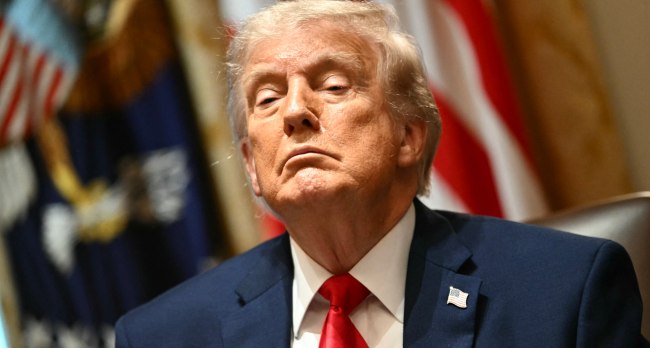
US President Donald Trump on Wednesday once again predicted that Iran would be “defeated soon”. Speaking in Pennsylvania, Trump claimed that the Iranians wanted to “settle so badly”.
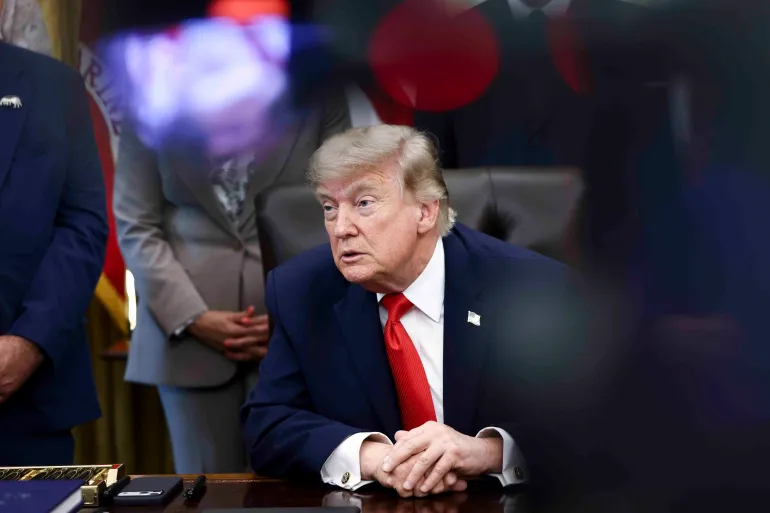
Earlier, on Tuesday, the US president said American negotiators had contacted their Iranian counterparts with a warning that “you better make a deal”.
Trump has also suggested that Washington could broaden its military campaign to force the reopening of the Strait of Hormuz. The president warned that the United States could strike “Pickaxe Mountain”, a heavily fortified underground installation linked to Iran’s disputed nuclear programme.
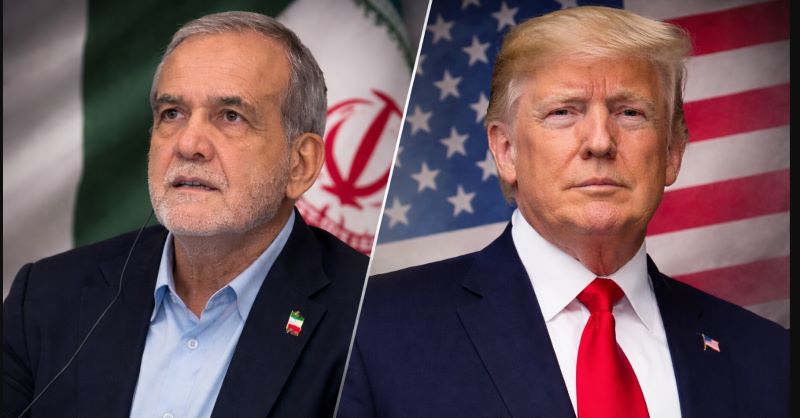
The latest escalation comes only weeks after Washington and Tehran signed a memorandum of understanding (MOU) designed to end the conflict and restart negotiations over Iran’s nuclear programme.
However, Tehran’s chief negotiator warned that the agreement could only retain significance if its “clauses are valid and being implemented”, suggesting that recent attacks were undermining prospects for further negotiations.
“If Iran is not to derive any benefit from the memorandum of understanding, we have no reason to adhere,” Mohammad Bagher Ghalibaf said in a statement.
Ghalibaf also insisted that Iran’s security depended on maintaining what he described as “Iranian arrangements” in the Strait of Hormuz, adding that the country was engaged in an “essential and existential war with America”.
Iran’s military spokesperson similarly argued that the only path to reopening the strategic waterway was for the United States to comply with the MOU.
Analysts have pointed to ambiguities in the agreement, particularly provisions suggesting Iran could assume responsibility for the “safe passage of ships” through the strait, as a major factor behind the confusion that has characterised the Trump administration’s approach in recent weeks.
Despite the rapidly intensifying hostilities, Trump sought late on Wednesday to highlight what he described as a possible gesture of goodwill between the two countries.
The US president announced that Iran had allowed an American citizen who had been “wrongfully detained” since late 2024 to leave the country.
“The United States of America appreciates this gesture of goodwill by Iran,” Trump wrote on Truth Social.
Read also: How Israel’s Genocide In Gaza Pulled Britons Into The Palestine Movement
Human rights attorney Jared Genser later identified the released American as Dena Karari, who had been prevented from leaving Iran since December 2024.
“Dena is now safe and traveling back to the United States,” Genser wrote on social media, while also thanking Trump for his efforts in securing her release.