
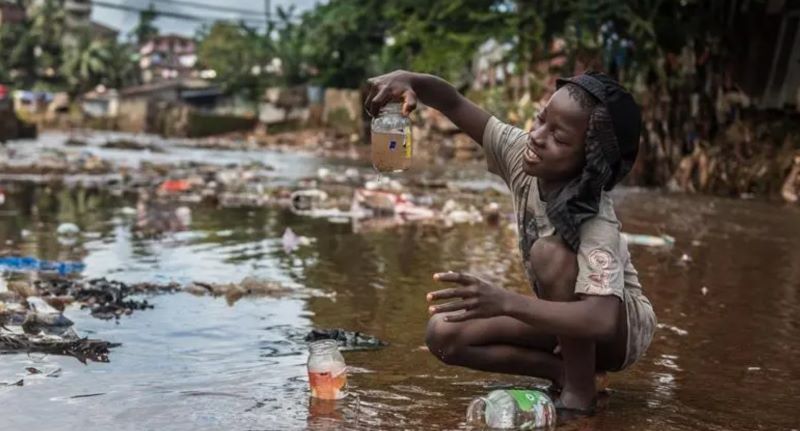
NIGERIA’s recurring battle with cholera has once again raised questions about the country’s water, sanitation and public health systems, as thousands of cases continue to be reported across several states despite years of interventions aimed at controlling the disease.

In this Weekend features, News Point Nigeria dissects and analyses the situation, examining why cholera continues to return, the communities most exposed to its dangers, the shortcomings in prevention and response, and what needs to change if Nigeria is to move from emergency reaction to lasting prevention.

Read also: Nigeria Records Third Consecutive Inflation Decline As Rate Falls To 14.63%
The latest outbreak has affected communities across the country, with northern states including Bauchi, Gombe, Kano, Plateau and Zamfara among those reporting cases. The Nigeria Centre for Disease Control and Prevention (NCDC) says the number of suspected cases recorded this year has risen to more than 65,000 across 35 states and about 195 local government areas.

Yet, even as the weekly number of cases has fallen considerably from the peak recorded earlier in the year, health authorities have cautioned that the decline should not be mistaken for the end of the outbreak.
NCDC Director-General, Jide Idris, made this clear during a press briefing in Abuja on Friday, stressing that Nigeria had made progress but remained at risk, particularly as the rainy season continues.


“The encouraging news is that weekly cases have declined substantially from the peak recorded earlier in the season. The proportion of reported cases resulting in death is also considerably lower than it was at the same time last year,” Idris said.
“This is important progress. But I want to be very clear: the outbreak is not over.”
That warning is important because Nigeria’s cholera story is not simply about an infectious disease that appears, peaks and disappears. It is also a story about poverty, access to clean water, sanitation, overcrowding, displacement, infrastructure deficits, public health preparedness and the ability of government and communities to respond before an outbreak becomes a crisis.

Cholera is an acute diarrhoeal disease caused by the bacterium Vibrio cholerae. It spreads when faecal matter contaminates food or water and can cause severe dehydration within a short period.
Without prompt treatment, an infected person can die from dehydration. Oral rehydration remains one of the critical lifesaving interventions, particularly when treatment is accessed early.
Historically, cholera was common in many parts of the world. Improvements in water supply, sanitation, hygiene and healthcare systems have largely eliminated the disease from high-income countries. Today, it remains predominantly associated with developing regions where poverty, poor water quality and inadequate sanitation create conditions in which transmission can continue.


Africa continues to record a higher proportion of deaths among reported cholera cases than many other regions.
Nigeria has experienced major outbreaks repeatedly, including devastating epidemics in 1991, 2010, 2014 and 2018. The recurrence has made cholera not merely an occasional emergency but a persistent public health challenge.
The disease has consequently been described as a “disease of poverty”, because social and economic conditions play such an important role in determining who becomes vulnerable and how rapidly outbreaks spread.
The drivers of cholera are deeply connected to the conditions in which people live.
Susceptibility can be influenced by demographic and socioeconomic factors, including age and nutritional status. Malnutrition can increase both transmission and severity, while vitamin B12 deficiency and gastritis have also been identified as risk factors for infection.
Once infected, people can continue shedding the bacteria through faeces for nearly two weeks. This means an infected person can unknowingly contaminate the environment and contribute to further transmission if sanitation systems are inadequate.
The most basic drivers, however, remain access to safe drinking water and personal and environmental hygiene.
People can become infected by drinking water or consuming food contaminated with Vibrio cholerae. Evidence from the 1995–1996 cholera outbreak in Kano State, for instance, showed the role played by poor hand hygiene before meals and the consumption of vended water.
This demonstrates how something as simple as the water people drink or whether they wash their hands before eating can become a matter of life and death during an outbreak.
Population congestion can further accelerate transmission.
Commercial centres such as Kano and LAgos attract people through migration and economic activity, creating densely populated environments where an infectious disease can spread rapidly when water and sanitation systems cannot keep pace.
Humanitarian crises can create an even more difficult situation.
In north-eastern Nigeria, millions of people have been displaced by insecurity and many live in crowded camps and settlements. Such environments often have inadequate water supplies and sanitation facilities, making it difficult for residents to maintain the hygiene practices required to prevent cholera.
During the 2018 outbreak, thousands of cases and deaths were reported in Yobe, Adamawa and Borno, with crowded internally displaced persons’ camps among the environments affected.
The vulnerability of displaced populations remains a major concern today.
As communities across Borno State continue to respond to an outbreak that began in May 2026, internally displaced people living in overcrowded settlements face particular risks because of limited access to safe water, sanitation and hygiene services.
The challenge is therefore not only treating people after they become sick. It is creating living conditions in which people are less likely to become infected in the first place.
Urban and peri-urban slums are another important part of the cholera equation.
Where regular water supply is unreliable and toilet facilities are inadequate, people may be forced to depend on unsafe sources or practise open defecation. Such conditions provide an environment in which contamination can occur easily.
Nigeria has historically struggled with access to improved drinking water and sanitation facilities, while open defecation remains a major public health concern.
This is why cholera cannot be addressed exclusively from hospitals and treatment centres. The disease begins, in many cases, with what happens outside the hospital, at the water source, in the household, at markets, in schools, in neighbourhoods and within public institutions.
The current rainy season has added another layer of risk.
Idris warned that transmission could increase between late August and October because flooding can contaminate water sources and overwhelm already fragile sanitation systems.
Unsafe water, open defecation, damaged water distribution networks and inadequate hygiene and sanitation infrastructure in schools, markets and other public places continue to provide opportunities for transmission.
This makes the condition of Nigeria’s water infrastructure a central part of the country’s cholera response.
The NCDC has therefore called on state and local governments to improve access to safe water and sanitation, strengthen water-quality monitoring, repair critical water infrastructure and address open defecation.
Authorities have also been urged to ensure that high-risk local government areas have functional treatment facilities and rapid-response capacity.
One of the clearest lessons from the current outbreak is the importance of early treatment.
Idris said people who seek medical care early generally have better outcomes, pointing specifically to Borno State, where the majority of this year’s cases have occurred.
“In Borno State, where the majority of this year’s cases have occurred, outcomes have been better where treatment has been brought closer to affected communities,” he said.
But the NCDC boss was equally emphatic that treatment alone cannot end cholera.
“While treatment saves lives, we cannot treat our way out of cholera,” he said.
Hospitals can treat dehydration. Health workers can administer oral rehydration solution. Treatment centres can save patients who arrive in time. But if contaminated water continues to enter communities, if sanitation remains poor and if open defecation persists, another group of people can become infected.
The cycle simply begins again.
The Nigerian government has undertaken a number of interventions over the years to control cholera.
Programmes have been introduced to improve water supply, basic sanitation and hygiene practices. The Federal Ministry of Water Resources, for instance, has supported water provision in cholera-affected communities.
In Adamawa State, water was supplied daily to dozens of locations during previous outbreaks, while mobile solar-powered boreholes have also been deployed in affected areas.
The International Organisation for Migration has maintained solar-powered boreholes in Borno and has also drilled new facilities and rehabilitated existing ones, including connecting some to solar power.
These interventions demonstrate the value of bringing clean water closer to communities, particularly in locations where conventional infrastructure has been damaged or where insecurity makes access difficult.
But they also expose the scale of the problem: emergency interventions are often required because permanent systems have not been sufficiently developed or maintained.
Oral cholera vaccination has also been deployed during outbreaks.
The current situation in Borno illustrates both the progress being made and the scale of the challenge.
Field reports from partners and government agencies indicate that suspected cases may have exceeded 60,300 across 22 local government areas by August 2026, although that figure had yet to be officially confirmed at the time of the report.
The outbreak, which began in May, has placed additional pressure on communities already dealing with displacement, insecurity and infrastructure challenges.
In response, Solidarités International (SI), with support from ECHO and CDCS, has been implementing a comprehensive package of emergency and preventive WASH interventions.
The organisation says its activities have included hygiene promotion and risk communication reaching more than 60,000 people, alongside extensive water chlorination in hotspot communities.
It has also carried out rehabilitation work on sanitation facilities, including latrines and showers at Fariya Camp and similar facilities at Elmiskin camps in Maiduguri.
Cholera kits containing essential hygiene supplies have been distributed to households with confirmed cases, while additional CATI kits have been provided to neighbouring households to support preventive measures.
At the Monguno Cholera Treatment Centre, emergency water trucking has been conducted to ensure access to safe drinking water for affected populations.
Susan Amarachi, SI Nigeria Cholera Task Force Lead and WASH Cluster Cholera Task Force Lead, explained that the response combines treatment and prevention.
“Our response has focused on both treating cholera and preventing further transmission,” she said.
According to Amarachi, SI works closely with cholera treatment centres, including the Ngarnam treatment centre, described as the largest in the state.
Once cases are identified, field teams conduct Case Area Targeted Interventions, or CATI, to reduce further transmission. At the same time, water chlorination and hygiene promotion continue in hotspot communities to help families protect themselves.
The organisation is also looking beyond the immediate emergency by rehabilitating water infrastructure, improving sanitation facilities and supporting sustainable access to safe water.
Despite these interventions, significant challenges remain.
Hotspots including Monguno, Maiduguri, Mafa, Jere and other affected locations continue to experience gaps in WASH coverage and access to prevention services.
But reaching some communities is difficult.
Insecurity, poor roads in areas such as Kukawa, Bama and Mobbar, limited resources and overstretched response capacity can delay the delivery of essential WASH supplies and services.
Inadequate water and sanitation infrastructure further increases vulnerability.
These constraints have forced response organisations to explore alternative ways of reaching communities and strengthening prevention at strategic points of entry.
The current response shows that emergency measures can save lives, but they also raise a bigger question: how long can Nigeria continue responding to the same disease in emergency mode?
Nigeria has made progress in controlling cholera, but the fact that outbreaks continue to return suggests that the underlying systems have not been adequately strengthened.
Health education campaigns are often intensified after an outbreak has already been confirmed.
The NCDC’s outbreak investigation teams conduct community health education, while UNICEF has supported water chlorination in cholera hotspots.
Such interventions have reached millions of people in Borno, Adamawa and Yobe, including displaced populations in urban centres.
Yet these efforts must be sustained beyond the immediate crisis.
Regular health education during and after outbreaks is essential. Communities should understand how cholera spreads, how to recognise symptoms and where to report suspected cases.
They should also be empowered to identify individuals who can report suspected cases quickly.
The teams responsible for outbreak management at local, state and federal levels must work in a coordinated manner and respond swiftly once an outbreak is reported.
One of the most important conclusions from Nigeria’s cholera experience is that the disease cannot be defeated by the health sector alone.
Water agencies, local governments, environmental authorities, humanitarian organisations, schools, markets, community leaders and households all have roles to play.
The NCDC has already acknowledged that state and local governments must intensify their interventions.
For cholera, that means expanding access to safe water and sanitation, improving water-quality monitoring, repairing damaged infrastructure, tackling open defecation and ensuring that high-risk local government areas have treatment and rapid-response capacity.
The responsibility also extends to communities.
People must understand the importance of handwashing, safe food preparation, safe water storage and early medical attention.
Healthcare workers must promptly recognise, report and appropriately manage suspected cases.
When cholera is suspected, dehydration must be assessed and treated immediately.
“Dehydration should be assessed promptly and appropriate treatment commenced without delay, because it is dehydration that kills,” Idris said.
Nigerians have also been advised not to wait until watery diarrhoea becomes severe before seeking help.
The NCDC recommends starting oral rehydration solution immediately and proceeding to the nearest health facility.
The cholera crisis is occurring alongside another public health challenge: diphtheria.
Nigeria has recorded more than 10,000 confirmed cases of diphtheria this year, with Kano, Borno and Bauchi among the states carrying a substantial burden.
Although the proportion of confirmed cases resulting in death has declined considerably compared with the same period last year, the disease remains a serious concern.
Idris said too many children remain unvaccinated or have not completed their recommended doses.
Vaccine hesitancy, insecurity, displacement, population movement and the difficulty of reaching remote communities all contribute to the problem.
But diphtheria, unlike many infectious diseases, is vaccine-preventable.
“It is important to emphasise again that diphtheria is vaccine-preventable,” Idris said.
Improving vaccination coverage, particularly among underserved and hard-to-reach communities, is therefore central to controlling the disease.
Parents and caregivers have been urged to ensure that children who missed recommended doses complete their routine immunisation.
The NCDC says it is coordinating the national response to both outbreaks with state governments and development partners.
The response includes stronger surveillance and laboratory capacity, support for healthcare workers and deployment of National Rapid Response Teams when necessary.
For cholera, authorities are combining treatment access with investigations into transmission sources, water-supply assessments, chlorination, rehabilitation of water sources, oral cholera vaccination in high-burden areas and hygiene promotion.
In Borno, response teams have investigated transmission sources and assessed water-supply points to identify weaknesses in water quality, sanitation and chlorination.
In Bauchi, oral rehydration points have been established, treatment capacity strengthened and active case searches intensified.
For diphtheria, efforts are centred on improving vaccination coverage, quickly identifying cases and providing appropriate treatment, with reactive vaccination taking place in affected areas.
These measures are necessary, but they cannot succeed without strong support from state and local governments.
The history of cholera in Nigeria shows that outbreaks are rarely caused by one factor.
They emerge from the interaction between poverty, poor sanitation, unsafe water, weak infrastructure, population movement, displacement, inadequate healthcare preparedness and environmental conditions.
Research into recurrent outbreaks in Nigeria has also highlighted the consequences, including deaths, socioeconomic disruption and the emergence of antimicrobial-resistant Vibrio cholerae strains.
The major challenges identified include vaccination uptake, late diagnosis and treatment, healthcare-system preparedness, environmental factors and insufficient political commitment.
The recurrence of cholera therefore requires a response that goes beyond emergency measures.
At the centre of that response must be water, sanitation and hygiene infrastructure.
As demand for water increases in Borno and elsewhere, communities may increasingly depend on alternative sources, including privately operated boreholes. This makes water-quality monitoring and adherence to safety standards even more important.
Amarachi stressed the need for stronger investment in critical water infrastructure, particularly in communities that repeatedly become cholera hotspots.
“While emergency response remains essential, long-term solutions must address the systems that allow cholera to continue spreading,” she said.
Best practices for controlling cholera require a coordinated, multisectoral approach.
National governments in affected countries should take the lead, supported by partners such as the Global Task Force on Cholera Control.
The response should combine access to safe drinking water and sanitation with stronger disease surveillance, reporting and preparedness.
Community engagement must also be placed at the heart of the strategy so that people understand how cholera spreads and how to protect themselves.
Regular health education should not begin only when an outbreak has already erupted.
Communities need continuous information about hygiene, safe water, sanitation and early reporting.
Local, state and federal outbreak-management teams must also be properly coordinated so that when suspected cases are reported, response does not become trapped in bureaucratic delays.
Nigeria must also strengthen the reach of vaccination where appropriate, improve surveillance and rapid-response systems, and address the socioeconomic and environmental conditions that make communities vulnerable.
The biggest lesson from the current crisis may be that Nigeria cannot afford to measure success only by how quickly it responds after cholera arrives.
The real test is whether communities have safe water before an outbreak begins.
It is whether children have access to functional sanitation facilities in schools.
It is whether markets and public institutions have adequate hygiene infrastructure.
It is whether displaced families living in crowded settlements have reliable access to clean water.
It is whether health workers can identify and report cases early.
And it is whether government can maintain the infrastructure needed to prevent contamination in the first place.
Emergency interventions are saving lives today. But they cannot substitute for functioning public health and WASH systems.
The recurring nature of cholera in Nigeria makes that distinction especially important.
Nigeria has demonstrated that it can mobilise treatment centres, deploy rapid-response teams, vaccinate high-risk populations, chlorinate water, distribute hygiene kits and conduct community education when an outbreak occurs.
The harder task is ensuring that communities do not repeatedly return to the same vulnerable conditions.
That means strengthening water supply networks, expanding sanitation, improving disease surveillance, maintaining rapid-response systems, supporting community preparedness and addressing the poverty and environmental conditions that fuel transmission.
The goal, therefore, should not simply be to respond faster when cholera arrives.
The goal should be to build systems that make communities less vulnerable when the next outbreak threatens.
Until that happens, Nigeria’s annual confrontation with cholera will remain a recurring emergency — one that takes lives, strains an already stretched health system and exposes weaknesses that should have been fixed long before the first patient arrives at a treatment centre.
Read also: Kanu, Toni Payne Bag Brace As Nigeria’s Super Falcons Rout Comoros In Olympic Qualifiers
For a country that has battled cholera for decades, the question is no longer whether Nigeria knows how to treat the disease.
The more important question is whether Nigeria is prepared to finally fix the conditions that keep bringing it back.