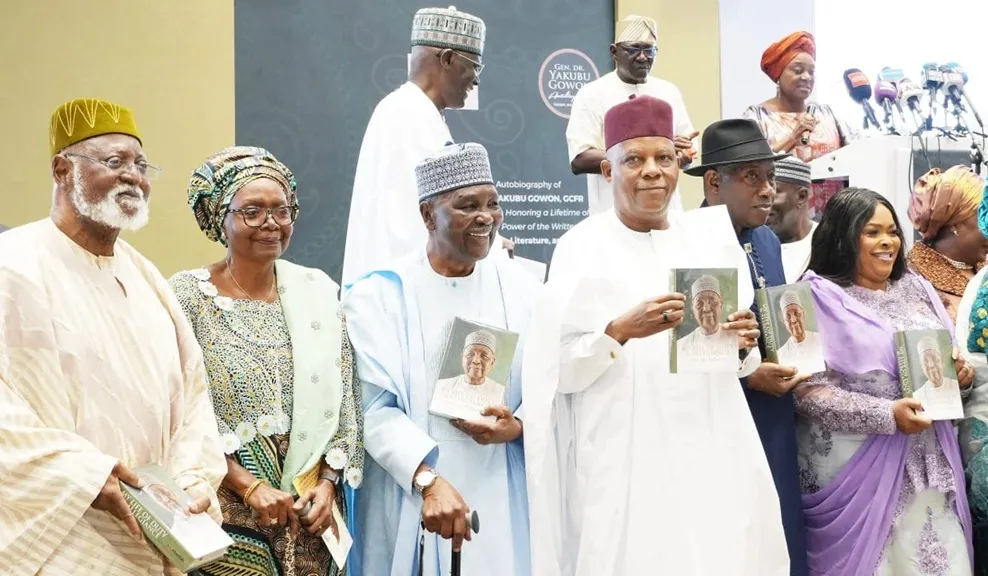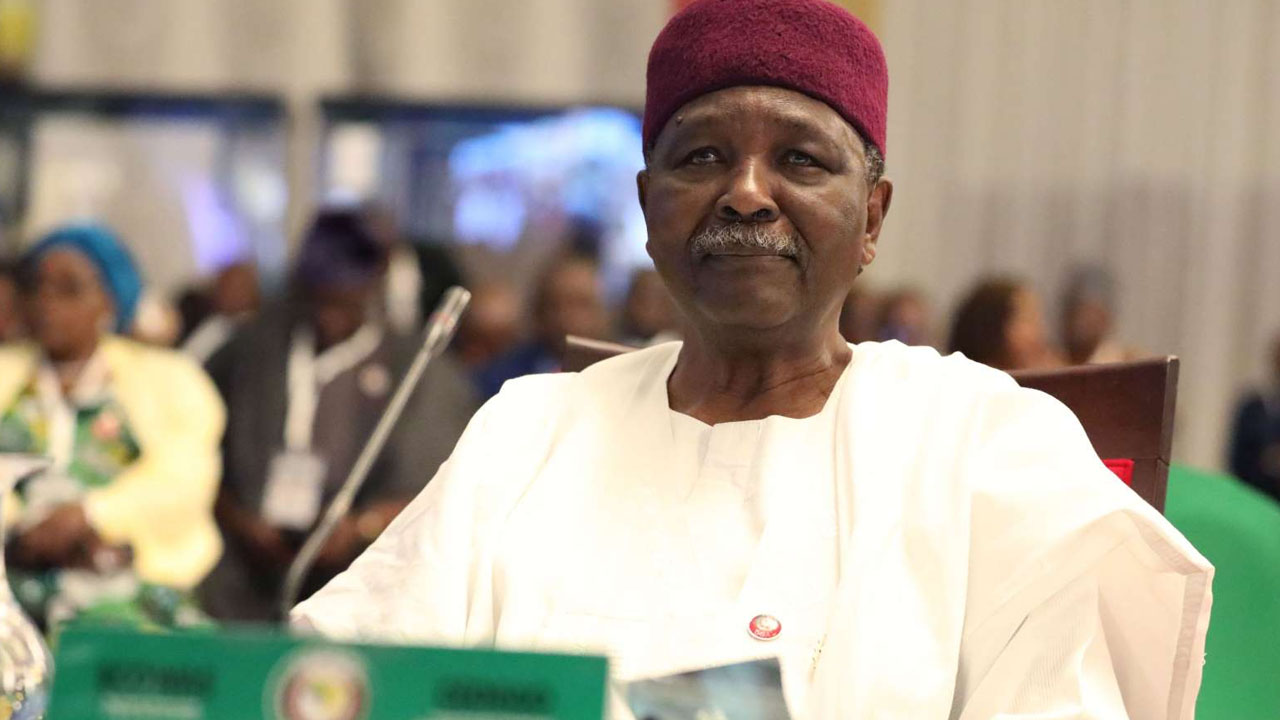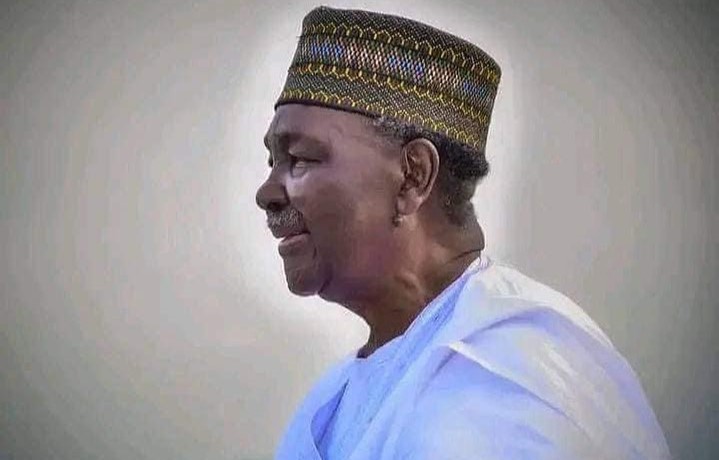

FORMER Military Head of State, Gen. Yakubu Gowon, has explained how the Federal Government compensated Igbos for material losses suffered during the Nigerian Civil War, while defending the post-war economic policies adopted by his administration.
News Point Nigeria reports that Gowon also rejected the long-standing criticism directed at the wartime Federal Commissioner for Finance, the late Chief Obafemi Awolowo, over the controversial £20 post-war payment policy, insisting that the decision was taken collectively by the Federal Government and not by Awolowo alone.

Read also: Police Rescue Abducted 11-Year-Old Girl Sold For N4m In Ebonyi

The former Head of State, who ruled Nigeria between 1966 and 1975, stated that contrary to widespread claims, those who had money in Nigerian banks before the civil war, including businessmen, recovered the full value of their deposits together with the accrued interest.


Gowon made the clarification in his memoir titled My Life of Duty and Allegiance, explaining that the post-war currency control policy was the collective decision of the Federal Executive Council (FEC), stressing that Awolowo merely served as a commissioner (minister) in the administration.
The three-year Nigerian Civil War began in 1967 and ended in 1970. Following the war, Gowon, who declared a policy of “no victor, no vanquished,” launched programmes of reconciliation, reconstruction and rehabilitation across the then East Central State.
Recalling the circumstances that informed the government’s decision, Gowon said his administration introduced a currency change after the large-scale looting of the Central Bank branches in Benin and Enugu.
According to him, the development meant that “much of what the people had amassed automatically ceased to be legal tender in Nigeria.”
He also explained that the Biafran currency had no monetary value because it was not convertible anywhere in the world.

Gowon wrote: “That left the Federal Executive Council with the question of what to do to alleviate the suffering of returnees. Council diligently evaluated all suggestions that were proposed.
“The Central Bank, on its part, set up a panel to look at all the ramifications of possible currency conversion of the Biafran pound, though it was evident it would be a difficult assignment because ab initio the Biafran currency was not legal tender in Nigeria.
Read also: Court Sentences Two Boko Haram Supporters To Life Imprisonment


“Due to the large number of Biafran pounds in circulation, the Federal Government decided it could not afford to exchange them all at par with the Nigerian currency without risking economic collapse.
“Economic experts recommended that the Federal Government limit the payout to approximately 20 Nigerian pounds for each Biafran adult, irrespective of the amount of Biafran currency being returned.
“We accepted the proposition and adopted it as policy, particularly because we were unable to determine the micro and macro parameters for printing the Biafran notes.
“However, all who fled Nigeria but had proof of having money in Nigerian banks received full value for their money plus the interest that it earned in the Nigerian currency. It would have been unwise to take a different course of action.”
The former military ruler lamented that, despite the passage of time, what he described as “pseudo-historians” continued to blame Chief Awolowo for the effects of the Federal Government’s post-war currency control policy.
According to Gowon, “This is far from the truth. The final decision was not Chief Awolowo’s, even though he was the Finance Commissioner. It was done in the overall national interest.
“We certainly could not have ignored the recommendations of our economic advisers without collapsing the economy. Thus, the government made a collective and tough decision to save Nigeria’s economy, which struggled to stabilise after a 30-month war fought without external borrowing.”
Gowon further disclosed that, as part of efforts to regenerate the economy of the former Eastern Region, promote reconciliation and accelerate recovery, the Federal Executive Council allocated a substantial proportion of the national budget to the rehabilitation of the East Central State and other areas devastated by the war.
He recalled that the government also introduced additional measures to ensure comprehensive recovery across the affected communities.
Read also: 2027 Elections: ‘Algorithms Will Not Decide Who Governs Nigeria,’ Amupitan Declares
According to him, rather than commence the National Development Plan in April 1970 as originally scheduled, the Federal Government postponed its implementation until October 1970 to enable the East Central State fully participate in the Second National Development Plan.
He explained that the decision was taken “so that we could achieve meaningful reconciliation for the East Central State to be able to participate in the Second National Development Plan.”