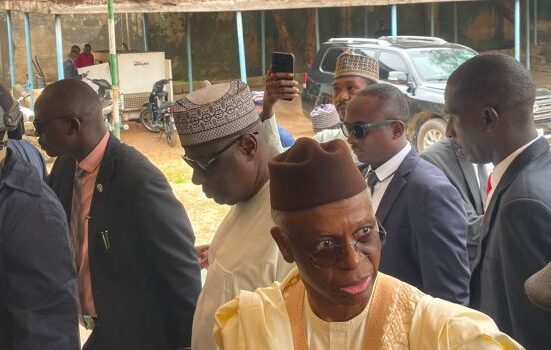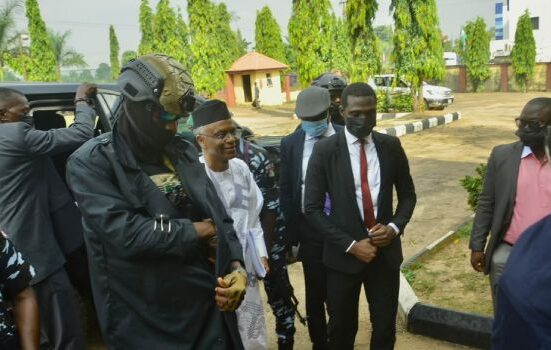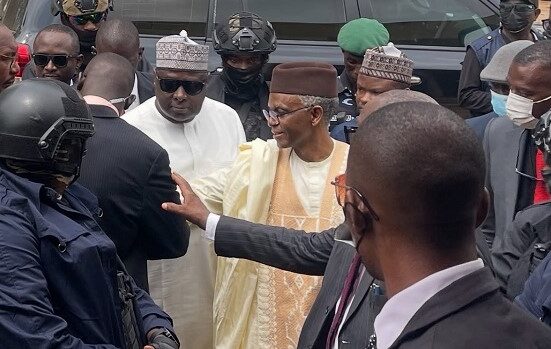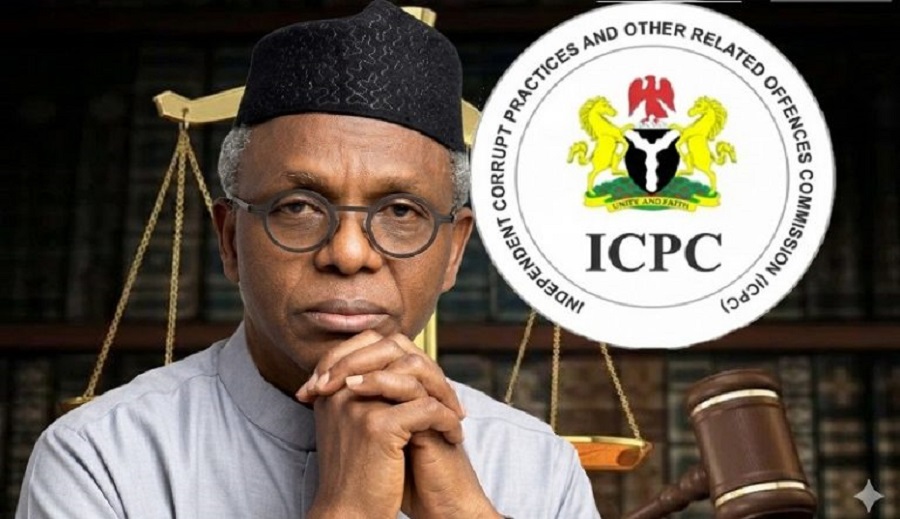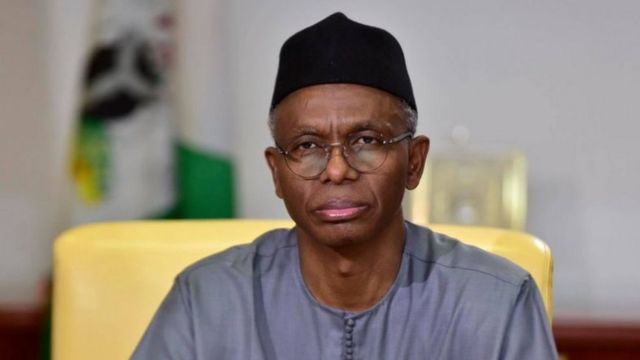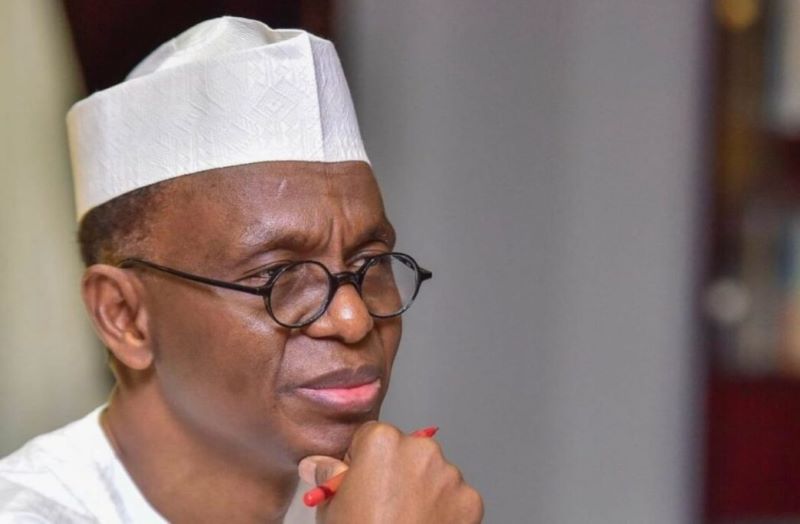

FORMER Kaduna State Governor, Nasir El-Rufai, says his experience in detention and the ongoing legal proceedings against him have taught him important lessons about life, including the need to reconsider certain relationships.
The former governor made the remarks in a statement posted on X, saying he had observed the silence of some colleagues, friends and family members whom he had publicly supported or closely associated with in the past.
Read also: DSS, Military Arrest Five Suspects In Rivers, Abia Over Abduction of 20 NYSC Members
News Point Nigeria reports that El-Rufai said his present circumstances had given him an opportunity to reflect on the nature of some of his relationships.

A source close to the former governor told News Point Nigeria that El-Rufai was actually referring to the Emir of Kano, Muhammadu Sanusi II, and some of his close associates, whom he believes have remained largely silent over his prolonged detention.
The source said Sanusi, an outspoken traditional ruler, has been relatively quiet on El-Rufai’s situation, while appearing to make moves aimed at maintaining cordial relations with both the state and federal governments.


This newspaper recalls that within 48 to 72 hours of Sanusi’s dethronement by then-Kano State Governor Abdullahi Ganduje, El-Rufai appointed him Vice-Chairman of the Kaduna State Investment Promotion Agency (KADIPA) and Chancellor of Kaduna State University (KASU), in a move aimed at providing a platform for his expertise and easing the sense of loss following his removal from the Kano throne.
El-Rufai also travelled personally to Awe, Nasarawa State, where Sanusi had been confined in exile, shortly after a Federal High Court ordered the deposed emir’s release. El-Rufai escorted Sanusi out of Awe in his convoy to Abuja, from where Sanusi was flown to Lagos to reunite with his family.
El-Rufai had openly criticised Sanusi’s dethronement, publicly defended him as a global asset and maintained a strained relationship with Governor Ganduje, largely as a result of his strong support and loyalty to the former emir.

El-Rufai is currently facing prosecution over allegations including money laundering and abuse of office. He has denied wrongdoing and has pleaded not guilty to charges brought against him.
He has been in the custody of the Independent Corrupt Practices and Other Related Offences Commission (ICPC) since February 19, after he was released by the Economic and Financial Crimes Commission (EFCC). The ICPC has said his detention is pursuant to court-authorised remand orders in connection with its investigation.


In his statement, the former governor said, “adversity has a way of illuminating relationships,” adding that the apparent silence of people he had once supported had raised concerns.
“Some have expressed concern at the apparent silence, in my present circumstances, of some of my colleagues, friends and family members whom I have publicly stood by or associated closely with in the past,” he said.
“What I learn in difficult times like the past few months may lead me, quietly and without regret, to reconsider the nature of certain relationships and what those that look up to me expect of them.”
He said the decision should be seen as neither reproach nor condemnation, but rather as a way of seeing people and life more clearly.
El-Rufai said he had always tried to support his colleagues, friends, family and others, guided by his faith, upbringing, personal values and conscience.
He said he stood by people and causes he believed in, sometimes in difficult circumstances and at considerable personal cost, without expecting praise, gratitude or reciprocity.
The former governor, however, said those he had supported were also free to make their own choices now that circumstances had changed.
“I have no regrets about standing by people or for causes when I believed it was right to do so, and I bear no resentment towards anyone who chooses not to do the same for me,” he added.
“As for any injustice, ingratitude or injury done to me, I seek neither revenge nor retribution. Ultimate accountability belongs to Almighty Allah, and I leave that judgment to Him, in this world and in the Hereafter.”
Read also: Two Brothers, Suspected Herbalist Arrested Over Missing Heads From Nine Graves In Kwara
El-Rufai said he would instead focus on remaining at peace with his conscience and his faith.
“In the end, each of us must live with the choices we make, and posterity will render whatever verdict it sees fit. My only concern is to remain at peace with my conscience and, above all, with Almighty Allah,” he said.