

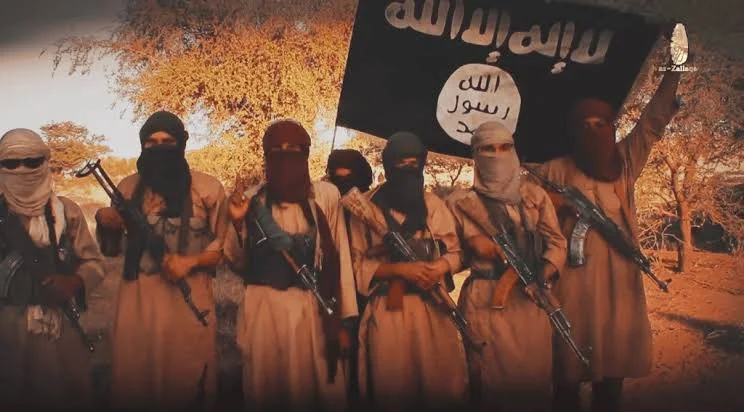
A SUSPECT standing trial over the August 26, 2011 bombing of the United Nations building in Abuja has narrated before a Federal High Court how he joined the Ansaru terror group allegedly led by Mohammed Usman, popularly known as Khalid Al-Barnawi.

News Point Nigeria reports that the suspect, Mohammed Bashir Saleh, is one of four defendants being prosecuted by the Department of State Services (DSS) in connection with the deadly attack, Nigeria’s first bombing of an international organisation’s facility, which claimed over 20 lives and left more than 70 others injured.
Saleh made the disclosure during the resumed hearing of the case on Wednesday, when the prosecution played a video recording of his interrogation in open court.

In the footage, Saleh told investigators that he joined the Ansaru terrorist group in Bauchi shortly before the UN House bombing, adding that it was at that time his relationship with Al-Barnawi began to grow.
According to court documents, Al-Barnawi is accused of being the leader of Ansaru, a Boko Haram splinter faction responsible for high-profile terrorist attacks in Nigeria.
The UN building bombing of August 26, 2011 marked a turning point in Nigeria’s security history, as it was the first attack on an international institution in the country. The suicide bombing shocked the global community and heightened concerns about the expanding reach of terrorist groups operating in Nigeria.
Al-Barnawi was arrested by the DSS in April 2016 in Lokoja, Kogi State, nearly five years after the attack.
He is facing trial alongside Mohammed Bashir Saleh; Umar Mohammed Bello, also known as Datti or Mohammed Salisu; and Yakubu Nuhu, also known as Bello Maishayi.
Al-Barnawi is known by several aliases, including Kafuri, Naziru, Alhaji Yahaya, Mallam Dauda and Alhaji Tanimu.

Wednesday’s proceedings formed part of a trial-within-trial, a legal process instituted to determine whether the confessional statements allegedly made by the defendants were given voluntarily.
Following the video presentation, the court proceeded with the cross-examination of the third prosecution witness, identified as “TSR3.”
Under questioning by counsel to the first defendant, F. K. Kaigama (SAN), the witness told the court that he works in the Technical Department of the DSS.


He explained that his duties include setting up audio and video recording equipment in interview rooms and recording suspect interrogations in real time.
“In addition to that, I also conduct computer forensic examinations, mobile phone forensic analysis, and crime scene investigations, including fingerprint collection and laboratory analysis,” the witness said.
He further testified that in relation to Al-Barnawi, he personally recorded the interview sessions, statement-taking process, and the translation of the defendant’s statements, all using audio-visual equipment.
When asked whether there was a person named James in the DSS Technical Department, the witness replied that there were several officers bearing the name James in the department.
At that stage of the proceedings, the presiding judge, Justice Emeka Nwite, announced an adjournment, explaining that he had other judicial engagements.
With the consent of counsel representing all parties, Justice Nwite adjourned the matter until March 2 for the continuation of the cross-examination of the prosecution witness in the ongoing trial-within-trial.