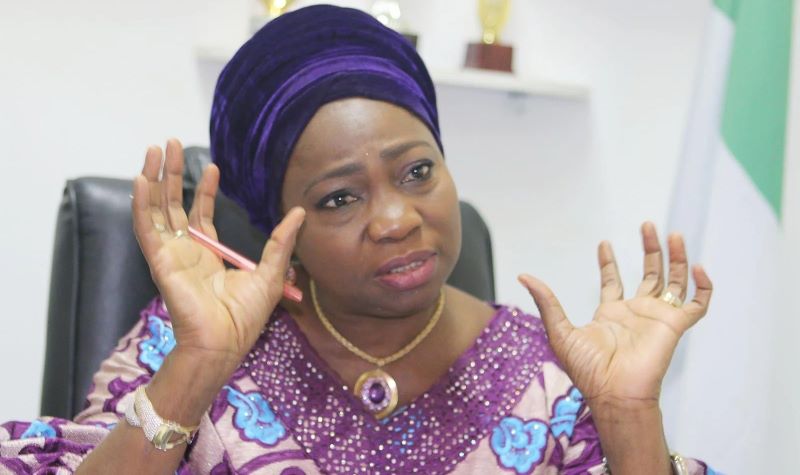
FOR over six years now, the Nigerians in Diaspora Commission (NiDCOM), under Hon. Abike Dabiri-Erewa, has been run like a man walking with one leg. The Commission focuses mostly on the West, leaving behind the other leg, Africa.
While the African continent has been left behind, offices, webinars, and town halls are routinely organised for Nigerians in the US, UK, and Canada. Nigerians trading in Ghana, building businesses in South Africa, and those studying in Kenya, Saudi Arabia, Egypt, and a host of other countries receive very little attention from the Commission. This is why the Commission must focus on Africa, not just the West.
Read also: WOFAN Turns Years Of Hardship Into Renewed Hope For Spinal Cord Patient In Jigawa – By Lamara Garba
Regrettably, the Commission’s engagement within Africa remains largely reactive dominated by crisis response, consular protection, and xenophobia mitigation, rather than focusing on a development model.

If NiDCOM’s mandate is truly about “all Nigerians in the diaspora,” then that grave imbalance must end immediately. The Commission must rebalance toward Africa and the Middle East, where a large number of Nigerians also live, work, and invest.
When NiDCOM was created, its main objective was to be the bridge between Nigeria and its people abroad. Right now, that bridge only goes west. It is therefore time to rebalance the diaspora mandate toward Africa and the Middle East and end the Western bias. From remittances to trade, Nigerians in Ghana, South Africa, Saudi Arabia, and Kenya deserve the same attention as those in the US and UK.


Why the Heavy Western Focus?
One wonders why the Commission’s energy, budget lines, and high-profile engagements are so glaringly tilted toward Europe and America. Meanwhile, just across our borders, Nigerians in Accra, Johannesburg, and Nairobi face deportations, xenophobia, and trade barriers with little institutional backup from the Commission.

A diaspora commission that ignores its closest neighbours is walking with only one leg. It is time to rebalance the mandate and put Africa at the centre.
Instead of appearing Africa-centred without losing global impact, the Commission seems to be placing greater emphasis on activities in the West to the detriment of African unity and growth. In the past six years, the Hon. Abike Dabiri-Erewa-led Commission has tilted more toward the West, but it is not too late for it to change course and address the narrative gap.
The most evident fact is that NiDCOM is currently facing a strategic narrative gap. Its engagement within Africa remains largely reactive and crisis-response-driven, focusing on consular protection and xenophobia mitigation rather than adopting a development-focused model.


It is time for the Commission to redress this global-African imbalance and align its operations with Nigeria’s strategic economic priorities without sacrificing global financial flows.
An expert on international affairs, Malam Sarki Muhammad, observed that the tragedy is very clear: focusing largely on the West indicates that the Commission prefers the West over African countries. The Commission almost exclusively focuses on crisis management, evacuations, anti-xenophobia efforts, and consular protection within Africa instead of concentrating on development-oriented initiatives.
Read also: ‘Journalists Can Project Election Winners, But Must Cite Sources’, Agbakoba Cautions Media
With the current reality, NiDCOM must transition from a reactive posture in Africa to a more proactive, development-focused model.
As observed by Malam Sarki Muhammad: “If the Commission can make a few key structural shifts alongside a deliberate communications reset, NiDCOM can maintain its global reach for resources while anchoring deeper, stronger roots across the African continent by rebalancing its mandate with an African heart.”
- Ibrahim, a former National Assembly and State House Correspondent, writes from Kano. He can be reached at faccageltd10@gmail.com.