

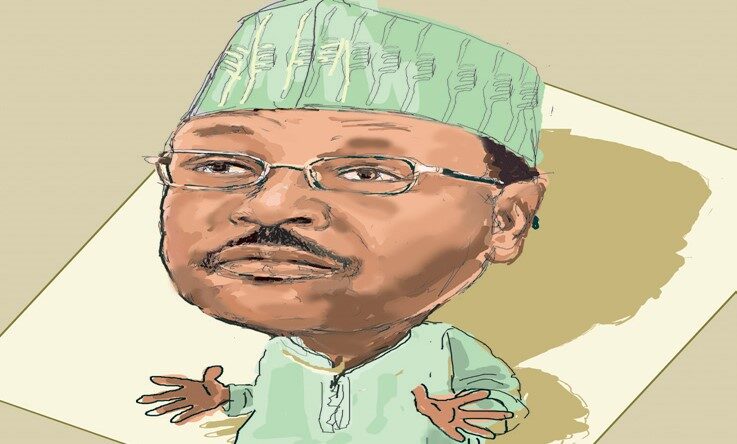
IN a political season already thick with debate, President Bola Tinubu’s latest ambassadorial nominations have opened a new front of national conversation, one that stretches from the halls of the presidency to the opposition war parlours, from media news rooms to the streets where citizens trade opinions with equal parts passion and suspicion.
This week, the president sent 32 names to the Senate for confirmation as ambassadors, a list notable for its blend of political heavyweights, former public office holders and prominent technocrats.
Among those nominated are former INEC Chairman Mahmood Yakubu; ex-minister Femi Fani-Kayode; former presidential aide Reno Omokri; former Abia governor Okezie Ikpeazu; former Lagos deputy governor Femi Pedro; Ondo Senator and businessman Jimoh Ibrahim; former Ekiti First Lady Erelu Angela Adebayo; and former Senator Grace Bent, among others.


But as News Point Nigeria observed, no nominee has generated more controversy nor ignited more raw political heat than Prof. Mahmood Yakubu, the man who presided over Nigeria’s electoral commission for a decade, through two administrations, several off-cycle governorship contests and the intensely debated 2023 general election.
News Point Nigeria takes a closer look at the rising storm around his nomination, the political undercurrents behind it, and the widening divide it has triggered across Nigeria’s political space.
The moment Yakubu’s name appeared on the list, Nigeria’s opposition parties, particularly the Peoples Democratic Party (PDP), erupted in anger.
In a statement sent to News Point Nigeria, the PDP’s spokesman Ini Ememobong declared the nomination “scandalous,” accusing the Tinubu administration of rewarding electoral failure rather than punishing it.
He argued that Yakubu’s tenure was marred by “double speaks, flip-flops and undelivered promises,” insisting that his nomination sends the wrong message to Nigerians struggling with declining trust in the electoral system.
According to the PDP, the move suggests an attempt to “incentivise” the new INEC leadership ahead of the 2027 elections, a charge the party calls dangerous for democracy.

The PDP is not alone.
The African Democratic Congress (ADC) described the nomination as “embarrassingly insensitive,” especially coming so soon after Yakubu’s departure from INEC and so close to Nigeria’s next political cycle.
Speaking for the ADC, Bolaji Abdullahi warned that the appointment dangerously blurs the line between electoral referees and political actors. If allowed, he argued, it could normalize the idea that electoral officials serve with one eye on future compensation.


To him, the consequences for Nigeria’s fragile democracy could be profound: “Once that mindset enters the bloodstream of our electoral system, neutrality becomes impossible, and elections become transactional.”
The ADC went as far as urging Yakubu to reject the nomination outright, framing such a move as an act of patriotism necessary to preserve both institutional trust and his personal legacy.
As the controversy deepened, legal experts and academics joined the fray.
On Channels Television’s Morning Brief, lawyer Goddy Uwazurike said bluntly that Yakubu’s appearance on the ambassadorial list “makes no sense.” He questioned the timing, the optics, and what he described as avoidable damage to Nigeria’s democratic credibility.
Yet, not everyone agrees.
Professor Nichola Anuchu, a scholar of Public Administration, countered that there is nothing unusual about appointing a long-serving public officer to diplomatic service especially one who introduced several reforms to the electoral process. To him, it is simply “a call to serve,” consistent with global practice.
But another political voice, Dr. Sani Ibrahim from Kaduna, offered a harsher assessment. For him, the nomination reflects “political morality gone missing,” a move that suggests compensation rather than national interest.
He urged Yakubu to walk into the Senate and reject the offer.
These divergent opinions reflect the larger national malaise: a democracy still wrestling with trust, perception and accountability.
A senior Presidency source told News Point Nigeria that public outrage was misplaced. According to him, the president has the constitutional authority and the personal judgment to choose whomever he believes can help drive the nation’s interests abroad.
“This is the best the President has seen for the interest of his administration and for Nigeria,” he said. Whether critics accept it or not, he insisted, “it is his discretion.”
He added that the president’s appointments are shaped by national priorities economic, security and cultural not public emotion.
Interestingly, the source revealed that Tinubu had originally planned to give Yakubu an even more significant role after he completed his tenure at INEC.
According to him, during Yakubu’s final days in office, the president reportedly told him: “Well done, Yakubu. You served well, and I have bigger work for you to do for Nigeria.”
Why that plan changed remains unknown, but what is clear is that the president sees Yakubu as a man who still has something to contribute.
With the Senate preparing for screenings, the debate continues to widen. Is Yakubu being rewarded? Recycled? Trusted? Or rehabilitated?
For some, he is a public servant completing a circle of national service. For others, he represents the problem with Nigeria’s political patronage structure. And for many, he is simply a reminder of elections that left deep emotional scars.
But beyond political noise, the episode exposes Nigeria’s ongoing struggle to define the boundaries between institutions and politics, between service and reward, between perception and legitimacy.
As Nigerians watch the Senate’s next steps, one thing is clear: the conversation around Mahmood Yakubu is more than a debate about a posting, it is a window into the soul of a democracy still trying to steady itself.