Setting the Records Straight from the Published Budget Performance Report
AS a citizen of Kano State with an abiding interest in good governance, transparency and responsible public discourse, I consider it necessary to independently examine the figures currently circulating under the headline: “Kano Spends ₦26.5bn on Govt House, Governor’s Office, Travels in Six Months.”

Read also: A Tribute To Na’ibin Zazzau, Alhaji Usman Shuaibu Nai’ibi – By Mairo Muhammad Mudi

Public expenditure must be subjected to scrutiny. The media has an indispensable responsibility to hold governments and public institutions accountable. However, such scrutiny achieves its purpose only when figures extracted from official financial documents are presented within their correct accounting and administrative context.


I have therefore examined the Kano State Second Quarter 2026 Budget Performance Report, the publicly available document from which the figures in the report appear to have been derived. My review reveals a number of important facts which members of the public deserve to know.
I. THE ₦25.869 BILLION IS NOT THE GOVERNOR’S PERSONAL EXPENDITURE
The official Budget Performance Report indeed contains an expenditure figure of approximately ₦25.869 billion under the broader Government House administrative classification.
However, this classification is not synonymous with the personal expenditure of the Governor, nor does the amount represent expenditure exclusively incurred by the Governor’s immediate office.
Rather, it is an umbrella administrative classification encompassing several offices, directorates, agencies and governmental functions.

It would therefore be misleading to interpret or present the entire ₦25.869 billion as money spent personally by the Governor or exclusively by his immediate office.
II. GOVERNMENT HOUSE PROPER RECORDED APPROXIMATELY ₦3.288 BILLION
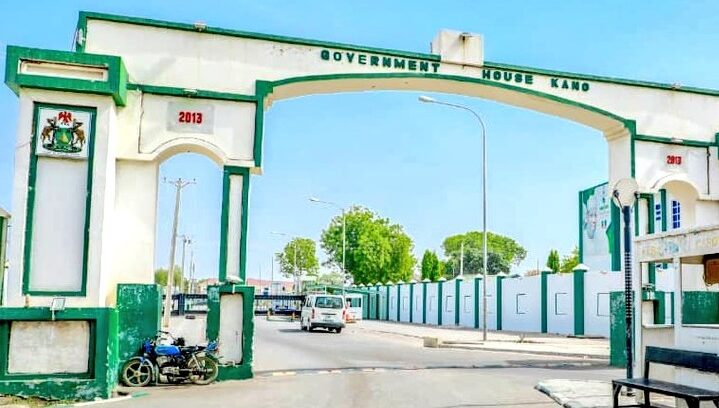
A closer examination of the same official document shows that Government House proper, under administrative code 011100100100, recorded cumulative expenditure of approximately ₦3.288 billion as at June 2026.


This was against an approved annual provision of approximately ₦39.514 billion, meaning that only about 8.3 per cent of the annual provision had been utilised at the end of the first six months.
This distinction is fundamental.
The difference between the ₦3.288 billion expenditure attributable to Government House proper and the ₦25.869 billion aggregate expenditure under the wider administrative classification should not be overlooked in any objective analysis.
III. THE ₦25.869 BILLION COVERS SEVERAL ESTABLISHMENTS
The broader ₦25.869 billion figure incorporates expenditure attributable to several establishments and governmental functions administratively grouped under Government House.
These include, among others, the Deputy Governor’s Office, Protocol Directorate, Media and Publicity establishments and other offices and agencies.
For example, the official report indicates that approximately ₦4.471 billion recorded under the Deputy Governor’s Office was capital expenditure. The Protocol Directorate also accounts for a substantial component of expenditure contained within the broader administrative classification.
These are distinct governmental expenditures and should not be portrayed as the Governor’s personal expenditure.
Read also: Nigerians’ Mental Health Is Under Siege – By Boma West
IV. THE ₦626.95 MILLION DESCRIBED AS “TRAVEL”
The additional figure of approximately ₦626,947,782.13 deserves particular attention.
The amount does appear in the official Q2 2026 Budget Performance Report. However, examination of the underlying document shows that the figure appears under the Primary Healthcare expenditure reporting section, specifically against Local Travel and Transport: Training.
This raises a legitimate question as to the basis for adding the ₦626.95 million to the broader Government House administrative expenditure to arrive at the headline figure of approximately ₦26.5 billion.
If the expenditure is classified in the official document under Primary Healthcare and relates to local travel and transport for training, it should not be presented in a manner capable of creating the impression that the amount represents the Governor’s travel expenditure.
V. THE COMPARABLE EXPENDITURE ACTUALLY DECLINED
There is another important fact which deserves equal prominence.
The broader Government House administrative expenditure reportedly stood at approximately ₦28.84 billion during the first six months of 2025, compared with approximately ₦25.87 billion during the corresponding period of 2026.
This represents a reduction of approximately ₦2.97 billion, or about 10.3 per cent.
The year-on-year comparison therefore indicates a decline rather than an escalation in expenditure under the broader administrative classification.
MY FINDING
Having examined the underlying figures, my considered view is that the headline “Kano Spends ₦26.5 Billion on Govt House, Governor’s Office, Travels in Six Months” requires substantial clarification and context.
The ₦25.869 billion figure is contained in the official Budget Performance Report, but it represents expenditure under a broader administrative classification encompassing several offices, agencies, directorates and governmental functions. Government House proper recorded approximately ₦3.288 billion.
Similarly, the additional ₦626.95 million presented as travel expenditure appears in the official document under a Primary Healthcare expenditure section relating to Local Travel and Transport: Training. It should therefore not, without further evidence, be interpreted as the Governor’s travel expenditure.
Furthermore, the comparable broader administrative expenditure declined from approximately ₦28.84 billion in the first half of 2025 to ₦25.87 billion in the first half of 2026, representing a reduction of about 10.3 per cent.
Accountability is not served by shielding government from scrutiny. Neither is it served by presenting legitimate public expenditure figures without their necessary administrative and accounting context.
As citizens, we must continue to demand prudence, transparency and accountability from those entrusted with public resources. In the same spirit, public discourse particularly on matters involving billions of naira of taxpayers’ money—must be anchored on accuracy, context and fairness.
Read also: Why We Omitted Pantami, Adebutu, Gwarzo From 2027 Governorship List – INEC
The records are public. The figures can be verified. Let the facts speak for themselves.
Kiru, FCIA is Former Commissioner for Education, Kano State and of the Concerned Kano Citizen.