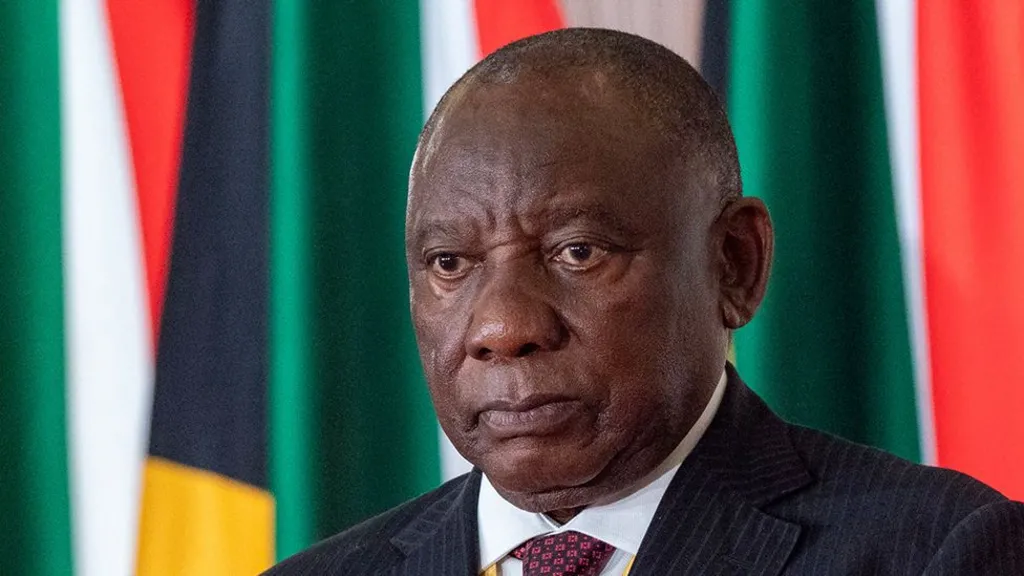

SOUTH Africans voted in national and local elections on May 29, exactly one year after Nigeria inaugurated its current president. Since 1994, this election has been the most significant post-apartheid election and the most unpredictable in the country’s 30 years of democratic rule. The ruling African National Congress (ANC) lost its parliament majority for the first time, possibly paving the way for the country’s first coalition government.
With voter discontent , leading opposition parties, including the Democratic Alliance (DA), the Economic Freedom Fighters (EFF), and newcomer umKhonto we Sizwe (MK), put pressure on the ANC through uninterrupted mass campaigns and countrywide rallies, promising sweeping reforms in hopes of swaying most registered voters to their side. Unlike in most parts of Nigeria, the elections proceeded smoothly, without violence, ballot snatching, or shootings. South Africans demonstrated discipline and respect for the law. This notwithstanding, the stakes were high, and ANC’s historical advantage was side-stepped. This election significantly shakes the existing political order and deepens democracy in South Africa.
Read also: Nigerians’ Mental Health Is Under Siege – By Boma West
Economic concerns had a massive impact on the election’s result. South Africans shifted their focus from a “freedom-centric politics” to an “economy-centric politics”. Under the ANC administration, South Africa has had to deal with a high unemployment rate, the highest murder rate in 20 years, and pervasive corruption. Their economic concerns include a lower GDP per person than in 2008 and the state is becoming less effective. A case in point, in 1997, South Africa ranked 47th of 123 countries in the Economic Freedom Index, a ranking by the Fraser Institute, a Canadian think-tank, based on the size of the public sector and the extent of regulation, but by 2021 it had slipped to 94th, just ahead of Nicaragua; national debt as a share of GDP has more than tripled, from 24% in 2008 to 75%; a staggering unemployment rate of 33% with above 40% employment among youths and black people; massive infrastructural decay and deficiency.

Last year, Eskom, the state-run power company, with a generation capacity of 44,175MW, way above Nigeria’s 4,000MW, had to schedule a record number of blackouts because its generation fell so far short of demand, and customers lost almost 40% of piped water before it reaches customers. The railway system is dysfunctional. The World Bank reckons that crime costs South Africa at least 10% of GDP annually. South Africa was the seventh most crime-saddled country in the world, according to an index compiled by the Global Initiative Against Transnational Organized Crime.
These issues played on the minds of many of the voters, who are predominantly young and black people and are a bit distanced from the Apartheid politics of freedom and liberation that helped ANC dominate the political space in South Africa. Although ANC won most parliamentary seats, it increasingly requires forming a coalition government because it is not getting the dominance of yesteryears in the political space. Their mismanagement of the economy and the high level of crime and corruption in the system have forced some party loyalists to move to other smaller parties, and voters are increasingly demanding a change. Although we may still have ANC in power, their dominance has eroded, and their power and authority are challenged. The more the generation that saw apartheid and is sentimentally attached to ANC as the freedom party fades away, the more ANC must rely on young voters who will vote based on the vagaries of the economy. Many young people interviewed after the elections pointed to economic reasons as the most crucial consideration in voting for candidates and parties.


This is a new trend across Africa. In most African democracies, especially those with a high young population, the foremost considerations in the voting pattern are shifting from traditional religious, ethnic, or tribal considerations steeped in the country’s history to economic reasons. A cursory look at the core campaign issues and discussions indicates that they centred on the economy, poor governance, crime, and insecurity. This implies that politics in countries facing economic difficulties are increasingly making economic issues the main burner, although other factors may still be entrenched. What can we learn from the seismic shift in SA political landscape ?
The first implication is that Africans, especially young Africans, have started to expect and demand good economic development from their governments. This is a welcome development for the deepening of democracy in Africa. Young Africans are harshly affected by poor economic management by governments, and they have started to mobilise and understand that politics defines the economy because the people who handle the economy are elected to office by them. Although this is at an early stage, we hope it continues and takes root in our politics. The only negative aspect of this is the level of political apathy among the youth.
Read also: South Africa Deputy Police Chief Resigns Amid Sex Offence Charges

The second implication is that the more the economy becomes the centre stage of political rhetoric and discussion, the more efficient management of the economy becomes the dominant political agenda. This is good for African politics. African nations need better economic managers now more than at any other time in their history. With the booming young population, substantial natural resources, and an emerging educated and upskilled workforce in science, technology, and the arts, Africans are poised to bring about sustainable economic development across the continent.
The new politics of pro economic growth is the only hope for Africa if it must get it right and leverage its great potential, especially youthful population , to harness the greatness of its strengths. Here lies the paradox. These strengths and potentials are time bombs that, unless adequately managed by democratically elected leaders who are savvy in the economy, the crisis and doom it will turn to will shock Africa. The evidence of this is the level of increase in crime and insecurity in many African countries.
The mix of economics and politics is the new order, and every serious party of any African nation must take note of this and reshape the vision accordingly. It spells doom when party leaders like Mr Ramaphosa repeatedly prioritised the interests of his party over those of the country. ANC has paid a hefty price for this mistake, and we hope they and other big parties across Africa will learn from it. Leave out the economy at your peril. Young people are looking for answers to Africa’s many problems, especially economic problems. They need solutions, not identification of problems. Everywhere in Africa, economics determines politics.

South Africa has gone to the polls, and Nigeria must learn many lessons from them. First, the elections were free, fair, and well-organised, with citizens disciplined. Even when there were minor hitches, it did not undermine the integrity of the electoral process. In contrast, elections in Nigeria are always overly the opposite. The elections are not primarily free and fair because of many irregularities, which are too many to elucidate here. During elections, some Nigerians are lawless, undisciplined, and unpatriotic. In the words of Basil Odilim, “No nation has ever achieved development with citizens who are undisciplined, lawless, and unpatriotic.
Consequently, Nigeria’s economic journey is on the road to nowhere.” We must put our economic journey on the road to somewhere. A patriotic, disciplined, and creative mindset is needed for economic growth. The best way to show patriotism is by participating in the electoral process and electing leaders who will manage our economy well and prioritise productivity over consumption and corruption. The election is the first step to getting good leaders in Africa.
Every South African voter was concerned about a cocktail of widespread corruption, a high unemployment rate, electricity failure, and stifled economic growth. Nigeria’s democracy will focus more on economics and quality of life than on trivial matters as we cross the 25th anniversary of democracy and more young people join the political process. South African voters were concerned about the same issues we are dealing with in Nigeria. This speaks to Chinua Achebe’s “Things Fall Apart” proverb about an old woman being uneasy whenever dry bones are mentioned. The government’s inability to address economic issues and raise the standard of living for many South Africans was blamed for the ANC’s diminishing support.
Failing to tackle the myriad economic problems that the majority faces is a call for political realignment compared to our fledgling democracy. Nigeria will soon have off-season elections for some states, and we hope that voters in these states will prioritise the economic knowledge skills of the candidates over pecuniary interests that are, at best, parochial. Just like in South Africa, young people must learn to use the election tool as the power to reshape their country and their future.
Dr Peterside is a chieftain of the All Progressives Congress (APC) and former Director-General of Nigeria Maritime Administration and Safety Agency (NIMASA). His syndicated column appears on News Point Nigeria newspaper on Mondays.