Close Menu
    Facebook X (Twitter) Instagram
    Trending
    • ADC Rejects Revised INEC 2027 Election Timetable
    • Ramadan: Gombe Governor Distributes Food Palliatives To Support Vulnerable Households
    • National Universities Commission Issues Guidelines On Award Of Honorary Doctorates
    • Court Nullifies Malami, Son, Wife’s Bail, Sends Them To Kuje, Suleja Prisons In N8.7bn Trial
    • Adamawa Governor Fintiri Defects To APC As Presidency Taunts Atiku
    • DSS Arrests Mastermind Of Kogi ECWA Church Attack, Shafiu Usman
    • NSCDC Commandant-General, Ahmed Audi Bows Out Of Service
    • Domestic Airlines Fault FCCPC Over Price Fixing Claims
    Facebook X (Twitter) Instagram
    NEWS POINT NIGERIANEWS POINT NIGERIA
    • HOME
    • NEWS

      ADC Rejects Revised INEC 2027 Election Timetable

      February 27, 2026

      Ramadan: Gombe Governor Distributes Food Palliatives To Support Vulnerable Households

      February 27, 2026

      National Universities Commission Issues Guidelines On Award Of Honorary Doctorates

      February 27, 2026

      Court Nullifies Malami, Son, Wife’s Bail, Sends Them To Kuje, Suleja Prisons In N8.7bn Trial

      February 27, 2026

      Adamawa Governor Fintiri Defects To APC As Presidency Taunts Atiku

      February 27, 2026
    • COLUMN

      El-Rufai: What A Good Turn Didn’t Deserve – By Azu Ishiekwene

      February 27, 2026

      Nigerians’ Exodus To Benin Republic: When A Country Abandons Its Citizens – By Zainab Suleiman Okino

      February 26, 2026

      The Silent Link Between Fake Products And The Rise Of Kidney Disease In Nigeria – By Boma West

      February 25, 2026

      Tinubu’s Executive Order: Between Old Cabals And New Sheriffs – By Yemi Kolapo

      February 24, 2026

      Board Of Peace, Bleeding Republic – By Dr Dakuku Peterside

      February 23, 2026
    • EDUCATION

      FG Names Prof. Adamu Acting Vice-Chancellor To Steer UniAbuja For Three Months

      August 9, 2025

      13 Countries Offering Free Or Low-Cost PhD Programmes For Non-Citizens

      January 25, 2025

      NECO: Abia, Imo Top Performing States In Two Years, Katsina, Zamfara Come Last

      October 3, 2024

      NBTE Accredits 17 Programmes At Federal Polytechnic Kabo

      August 20, 2024

      15 Most Expensive Universities In Nigeria

      May 19, 2024
    • INTERNATIONAL

      ‘No Cause Justifies Killing Civilians In Gaza,’ India’s Modi Tells Israel

      February 27, 2026

      Afghanistan Launches Attacks Against Pakistan, Draws ‘Immediate Response’

      February 27, 2026

      Israel Killed More Journalists Than Any Other Nation In Modern History – Media Watchdog

      February 26, 2026

      US Issues New Iran Sanctions On Eve Of Nuclear Talks In Geneva

      February 26, 2026

      Israeli Forces Fired Over 900 Bullets To Kill Gaza Medics In 2025 – Report

      February 25, 2026
    • JUDICIARY

      FULL LIST: Judicial Council Recommends Appointment Of 11 Supreme Court Justices

      December 6, 2023

      Supreme Court: Judicial Council Screens 22 Nominees, Candidates Face DSS, Others

      November 29, 2023

      FULL LIST: Judicial Commission Nominates 22 Justices For Elevation To Supreme Court

      November 16, 2023

      Seven Key Issues Resolved By Seven Supreme Court Judges

      October 26, 2023

      FULL LIST: CJN To Swear In Falana’s Wife, 57 Others As SANs November 27

      October 12, 2023
    • POLITICS

      What Peter Obi May Lose If He Joins Coalition As VP Candidate

      May 25, 2025

      Atiku Moves To Unseat Wike’s Damagum As PDP Chairman, Backs Suswam As Replacement

      April 15, 2024

      Edo’s Senator Matthew Uroghide, Others Defect To APC

      April 13, 2024

      Finally, Wike Opens Up On Rift With Peter Odili

      April 2, 2024

      El-Rufa’i’s Debt Burden: APC Suspends Women Leader For Criticising Kaduna Gov

      March 31, 2024
    • SPORTS

      Man City Get Real Madrid, Chelsea Face PSG In Champions League’s Last-16

      February 27, 2026

      Chelle Breaks Silence On $130,000 Salary Demand, Insists He’s Staying With Super Eagles

      February 27, 2026

      Sacking Ruben Amorim Could Cost Manchester United Nearly £16m

      February 27, 2026

      Madugu Explains Oshoala’s Shock Omission As Super Falcons Step Up WAFCON Preparations In Cameroon

      February 26, 2026

      Vinicius Jr Scores As Real Madrid Beat Benfica To Reach Champions League Last 16

      February 26, 2026
    • MORE
      • AFRICA
      • ANALYSIS
      • BUSINESS
      • ENTERTAINMENT
      • FEATURED
      • LENS SPEAK
      • INFO – TECH
      • INTERVIEW
      • NIGERIA DECIDES
      • OPINION
      • Personality Profile
      • Picture of the month
      • Science
      • Special Project
      • Videos
      • Weekend Sports
    NEWS POINT NIGERIANEWS POINT NIGERIA
    Home - The Language That Doesn’t Say ‘No’

    The Language That Doesn’t Say ‘No’

    By EditorDecember 31, 2022
    4DAB4336 CD02 4435 A2E4 234E0D5A8B3C

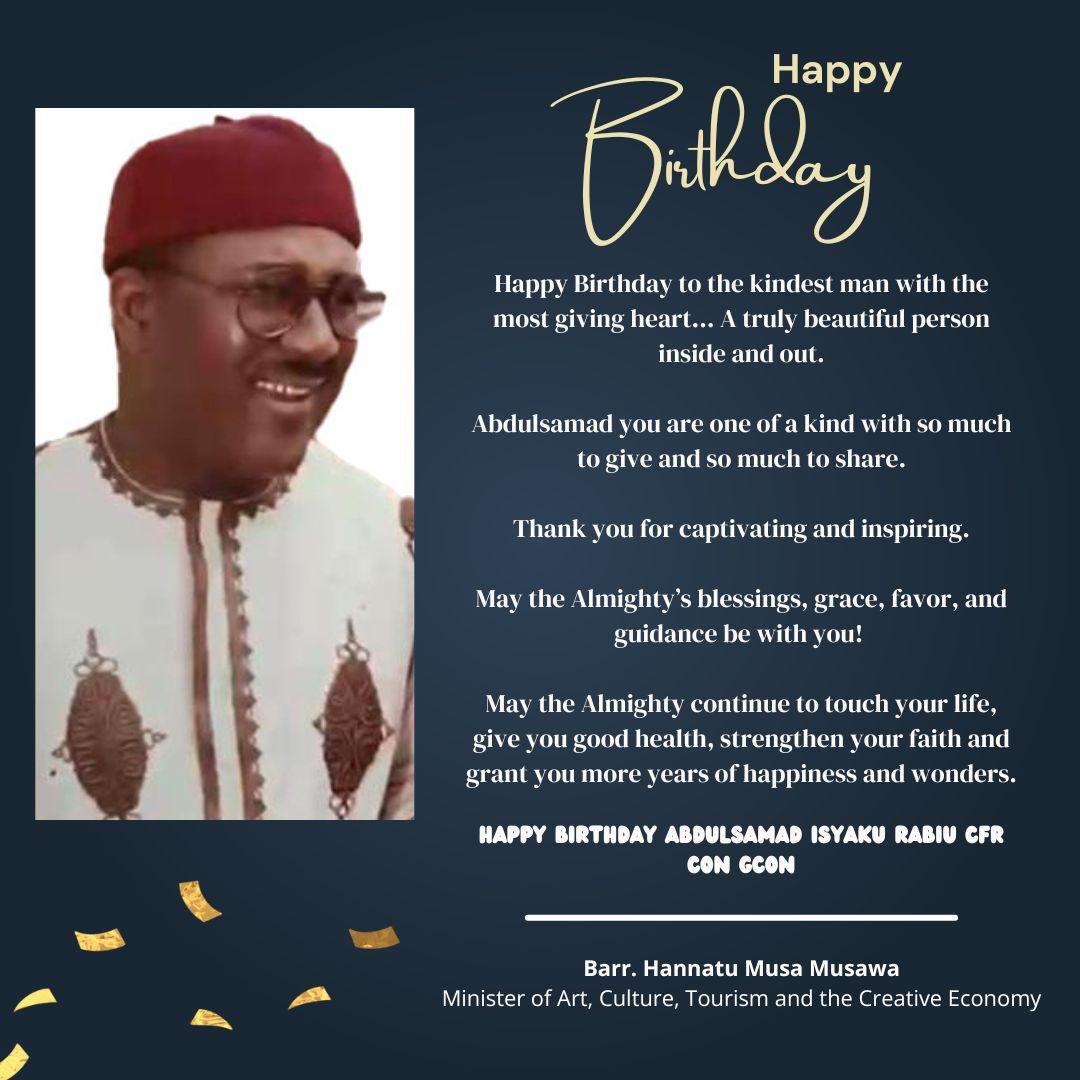
    NEPAL’s Kusunda language has no known origin and a number of quirks, like no words for “yes” or “no”. It also has only one fluent speaker left, something linguists are racing to change.


    RAMADAN KAREEM

    Through the winter mist of the hills of the Terai, in lowland Nepal, 18-year-old Hima Kusunda emerges from the school’s boarding house, snug in a pink hooded sweatshirt.

    Hima is one of the last remaining Kusunda, a tiny indigenous group now scattered across central western Nepal. Their language, also called Kusunda, is unique: it is believed by linguists to be unrelated to any other language in the world.


    Silk

    Scholars still aren’t sure how it originated. And it has a variety of unusual elements, including lacking any standard way of negating a sentence, words for “yes” or “no”, or any words for direction.


    According to the latest Nepali census data from 2011, there are 273 Kusunda remaining. But only one woman, 48-year-old Kamala Khatri, is known to be fluent. The Kusunda are highly marginalised and impoverished within Nepali society.

    Today, most live in west Nepal’s Dang district, a sleepy region of yellow mustard fields and misty, wooded hills. It is here the Language Commission of Nepal has been running Kusunda classes since 2019 in an effort to preserve the language.

    In the last decade, as the government of Nepal has launched schemes to help Nepal’s indigenous groups, it has also begun paying for Hima and other Kusunda children from remote areas to board at Mahindra High School in Dang – sometimes as much as a 10-hour drive away – where they are also being taught their native language.

    Hima, originally from the rural Pyuthan district bordering Dang, has been learning Kusunda for two years. She now is able to speak it at a basic level. “Before coming to school in Dang, I didn’t know any Kusunda language,” she says. “But I am proud to know Kusunda now, even though I didn’t learn it from birth.

    “I used to listen to other [ethnic groups], like Tharus and Magars, speaking their language, and wonder what it would be like to converse in my mother tongue. I think it is very important for me, and others, to protect this language.”

    Nigerian TAX Reform - Federal Goverment

    A language on the brink

    Originally semi-nomadic, the Kusunda lived in the jungles of west Nepal until the middle of the 20th Century, hunting birds and monitor lizards, and trading yams and meat for rice and flour in nearby towns. While they are now settled in villages, they still call themselves the Ban Rajas, or kings of the forest.


    But as Nepal’s population grew and farming increasingly fragmented the jungles, pressure on the Kusundas’ homeland increased. Then, in the 1950s, the government nationalised great swathes of forests, presenting further obstacles to their nomadic life.

    National Orientation Agency Page UP
    National Orientation Agency - Down

    The Kusunda were forced to settle, turning to jobs in labouring and agriculture. Low numbers in the group and the disparate nature of their population meant they mostly married neighbouring ethnic groups. Almost all stopped speaking their language.

    For the Kusunda people, losing their language means losing a link to their past, and to their identity. From a linguistic point of view, it is a loss in other ways, too.

    Madhav Pokharel, emeritus professor of linguistics at Tribhuvan University in Kathmandu, has been overseeing the documentation of the Kusunda language over the last 15 years. He explains that several studies have attempted to link it with other language isolates, such as Burushaski from north Pakistan and Nihali from India. But all have failed to find any robust conclusions.

    Currently, linguistic researchers believe Kusunda is a survivor of an ancient aboriginal language spoken across the sub-Himalayan regions before the arrival of the Tibetan-Burman and Indo-Aryan tribes.

    “We can trace all other language groups in Nepal to people coming from outside Nepal,” says Pokharel. “It is only Kusunda whose origins we don’t know.”

    Alongside its mysterious beginnings, linguists have noted Kusunda’s many rare elements. Bhojraj Gautam, a linguist with in-depth knowledge of Kusunda, describes one of the most peculiar: there is no standard way of negating a sentence.

    Indeed, the language has few words implying anything negative. Instead, context is used to convey the exact meaning. If you want to say “I don’t want tea”, for example, you might use the verb to drink, but in an adjusted form which indicates a very low probability – synonymous with the speaker’s desire – of the drinking of tea.

    Kusunda also has no words for absolute directions, such as left or right, with the speaker using relative phrases such as “to this side” and “to that side” instead.

    Meanwhile, linguists say Kusunda does not have the set, rigid grammatical rules or structures found in most languages. It is more flexible, and phrases must be interpreted relative to the speaker. For example, actions are not divided into past and present. When saying “I saw a bird” compared to “I will see a bird”, a Kusunda speaker might indicate the past action not by tense, but by describing it as an experience directly related to the speaker. Meanwhile, the future action would remain general and not associated to any subject.

    Ironically, these rare qualities – a large part of what makes Kusunda so fascinating to linguists – are partly why it has struggled to continue.
    Kusunda Nepal
    Share. Facebook Twitter WhatsApp LinkedIn Telegram Email

    Related Posts

    ‘No Cause Justifies Killing Civilians In Gaza,’ India’s Modi Tells Israel

    February 27, 2026

    Afghanistan Launches Attacks Against Pakistan, Draws ‘Immediate Response’

    February 27, 2026

    Israel Killed More Journalists Than Any Other Nation In Modern History – Media Watchdog

    February 26, 2026

    US Issues New Iran Sanctions On Eve Of Nuclear Talks In Geneva

    February 26, 2026
    Add A Comment
    Leave A Reply Cancel Reply

    Latest Posts

    ADC Rejects Revised INEC 2027 Election Timetable

    February 27, 2026

    Ramadan: Gombe Governor Distributes Food Palliatives To Support Vulnerable Households

    February 27, 2026

    National Universities Commission Issues Guidelines On Award Of Honorary Doctorates

    February 27, 2026

    Court Nullifies Malami, Son, Wife’s Bail, Sends Them To Kuje, Suleja Prisons In N8.7bn Trial

    February 27, 2026

    Adamawa Governor Fintiri Defects To APC As Presidency Taunts Atiku

    February 27, 2026
    Advertisement
    News Point NG
    © 2026 NEWS POINT NIGERIA Developed by ENGRMKS & CO.
    • Home
    • About us
    • Disclaimer
    • Our Advert Rates
    • Privacy Policy
    • Terms of Use

    Type above and press Enter to search. Press Esc to cancel.

    Join Us On WhatsApp