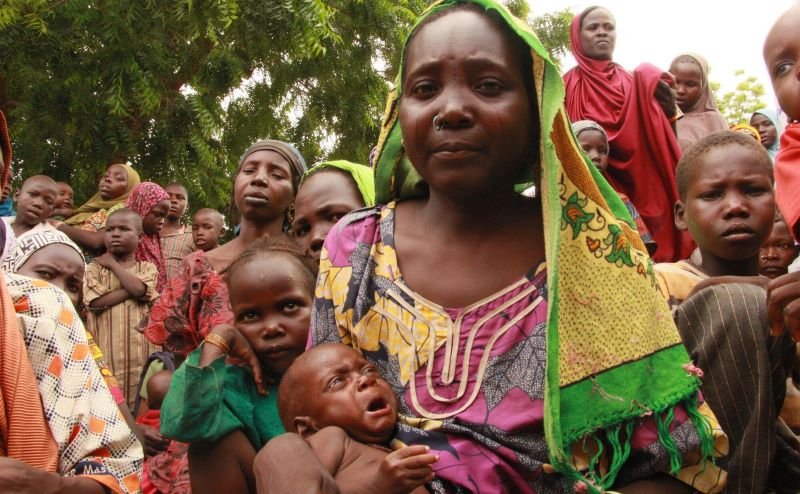
THE number of Internally Displaced Persons (IDPs) in Nigeria’s Northwest geopolitical zone increased by 143,189 within six months, representing a 22 per cent rise, according to the latest data obtained from the United Nations High Commissioner for Refugees (UNHCR).

The figures, published in late May 2026 through the UNHCR Nigeria Forcibly Displaced Populations dashboard, showed that the Northwest’s IDP population climbed from 650,345 recorded in December 2025 to 793,534 by May 2026.

Read also: Newly Recruited Sokoto Teacher Killed By Bandits Hours After Salary Verification
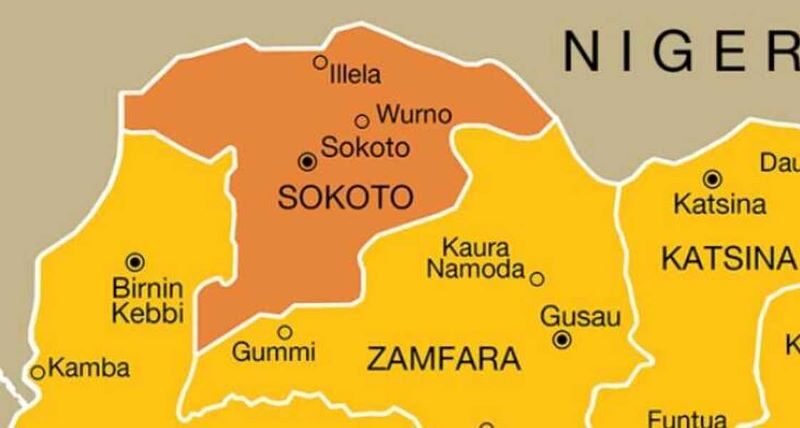
According to the data obtained by News Point Nigeria, the sharp increase was driven largely by a dramatic rise in the number of displaced persons in Sokoto State, where insecurity and violent attacks have continued to force thousands from their homes.

The displacement dashboards are jointly produced by the UNHCR and the Federal Government through the National Commission for Refugees, Migrants and Internally Displaced Persons. The reports draw from registration records, biometric enrolment data and field assessments conducted across affected states.
Other agencies contributing data include the Nigeria Immigration Service, the International Organisation for Migration (IOM), and the Displacement Tracking Matrix.


A breakdown of the figures showed that Sokoto State recorded the highest increase in displacement. The state’s IDP population rose from 88,562 in February 2026 to 181,526 in March, representing an increase of 92,964 persons or a staggering 105 per cent jump.
Zamfara State, one of the regions hardest hit by banditry and armed attacks, also witnessed a significant rise. The state added 74,648 displaced persons during the period under review, bringing its total IDP population from 204,576 to 279,224, an increase of 36.5 per cent.
Together, Sokoto and Zamfara accounted for the bulk of the displacement surge recorded across the Northwest.

Nationally, the UNHCR dashboard showed that the total number of internally displaced persons in Nigeria stood at 3,711,314 as of May 2026.
The report further noted that Nigeria accounts for 3.5 per cent of the estimated 117 million forcibly displaced persons globally.
According to the UNHCR, persistent banditry and communal violence in Katsina, Kebbi, Sokoto and Zamfara states have severely disrupted agricultural production, commercial activities and access to basic social services, forcing nearly 1.4 million people from their homes. About 80 per cent of the displaced persons are currently residing within host communities rather than formal camps.


Despite the worsening humanitarian situation across much of the Northwest, Katsina State recorded a decline in displacement figures.
Historically among the states most affected by insecurity in the region, Katsina’s IDP population dropped from 235,898 to 206,071, representing a reduction of 29,827 persons or 12.6 per cent.
Kaduna State, however, recorded a modest increase in displacement, with the number of internally displaced persons rising from 110,813 to 115,466, an addition of 4,653 persons.
Read also: Mother, Two Children Among Victims As Six Die In Sokoto Auto Crash
The report also highlighted a rise in the number of Nigerian refugees from the Northwest seeking refuge in neighbouring Niger Republic. The figure increased from 258,359 in December 2025 to 268,967 in May 2026, indicating that an additional 10,608 people crossed the border during the period.
By February 2025, more than 580,000 people, mostly women and children, had already been displaced across Katsina, Sokoto and Zamfara states due to escalating insecurity.
The growing displacement crisis comes amid intensifying violence across the Northwest and parts of North Central Nigeria.
Data showed that at least 2,266 people were killed by insurgents and bandits during the first half of 2025 alone, exceeding the total number of casualties recorded throughout 2024.
A broader assessment covering the first two years of President Bola Tinubu’s administration revealed that no fewer than 10,217 people were killed in attacks carried out by armed groups across Benue, Edo, Katsina, Kebbi, Plateau, Sokoto and Zamfara states.
The security situation was further complicated in 2025 by the emergence of Lakurawa, a new armed group with cross-border operations extending into Niger Republic and Mali.
On July 1, 2025, suspected members of the Lakurawa group, believed to be affiliated with the Islamic State Sahel Province, attacked Kwallajiya community in Tangaza Local Government Area of Sokoto State. Between 15 and 17 people were reportedly killed while many residents were preparing for afternoon prayers.
Similarly, on April 23 and 24, 2026, bandits launched coordinated attacks on the communities of Kurfan Danya, Faransi and Mai Zogo in Ruwan Jema Ward of Bukkuyum Local Government Area, as well as Keta community in Tsafe Local Government Area of Zamfara State.
In response to the worsening humanitarian situation, the Federal Government, through the Northwest Governors’ Forum and with technical support from the United Nations Development Programme, officially launched the State-Level Adoption of the National Policy on Internally Displaced Persons and corresponding State Action Plans on Durable Solutions for Katsina and Zamfara states on February 16, 2026.
The International Organisation for Migration also expanded its humanitarian interventions beyond the Northeast to include Katsina and Zamfara states in a bid to address growing needs in underserved communities across the Northwest.
Efforts to obtain the Federal Government’s reaction to the latest displacement figures were unsuccessful, as the Special Adviser to the President on Information and Strategy, Bayo Onanuga, could not be reached. Calls and a text message sent to his mobile line were not answered at the time of filing this report.
However, in his third-anniversary address to Nigerians on May 29, President Bola Tinubu acknowledged that security challenges remained but insisted that progress was being made across several parts of the country.
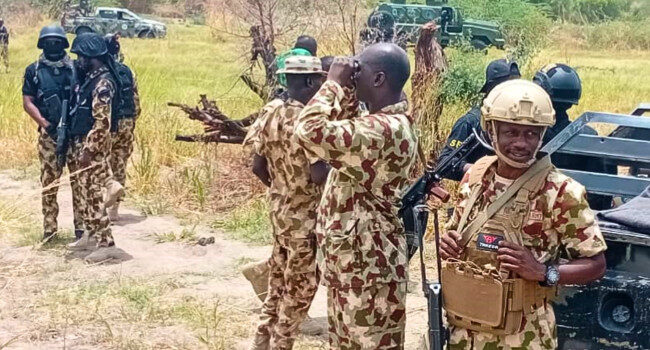
“Our Armed Forces and security agencies have intensified operations against terrorists, bandits, kidnappers, oil thieves, and criminal networks. While challenges remain, many communities and highways are becoming safer and more economically active.
“I want to assure you that this government will not relent until every Nigerian can live, work, travel, and dream in safety,” the President stated.