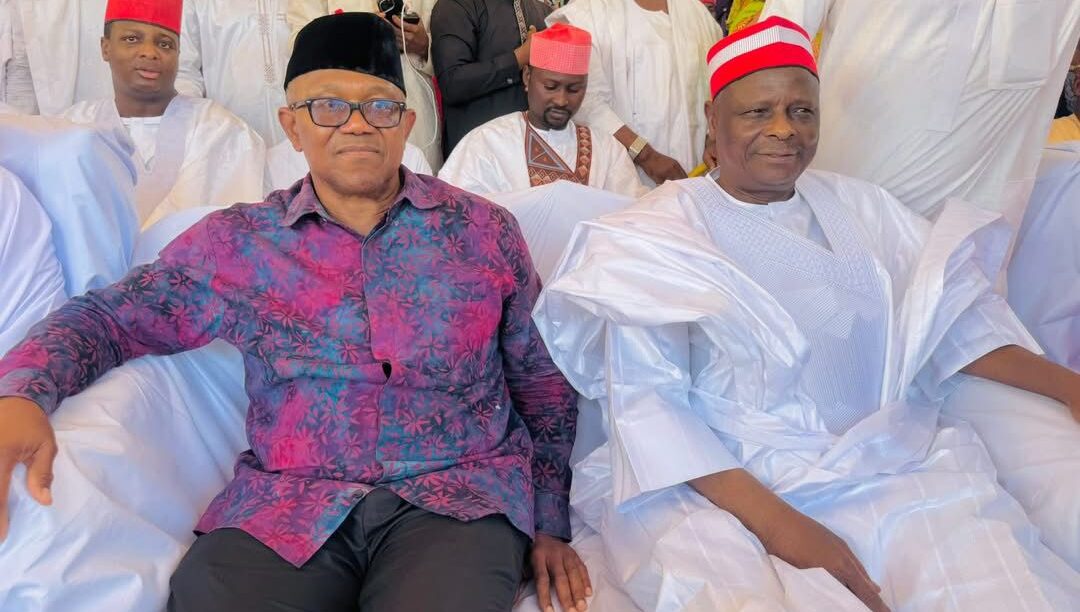
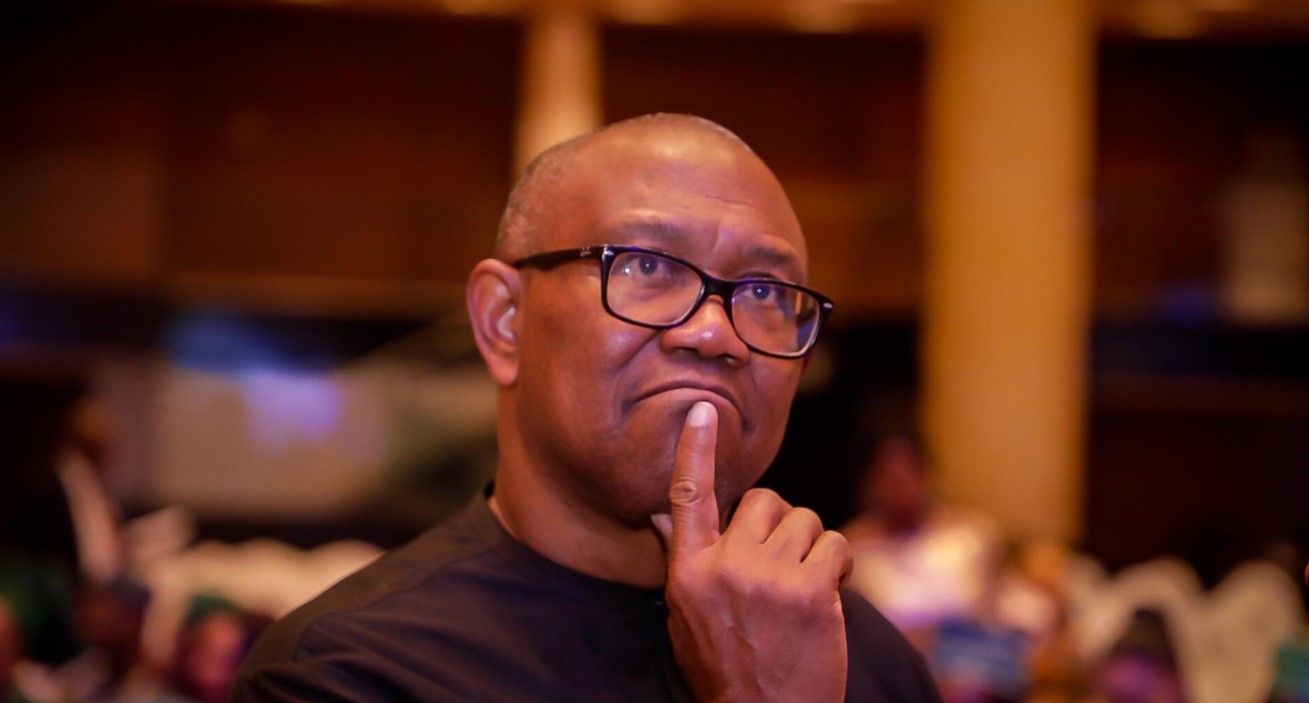
THE presidential candidate of the Nigeria Democratic Congress (NDC), Peter Obi, has distanced himself from the 59-member Presidential Campaign Council recently constituted by the Obi-Kwankwaso (OK) Movement, saying the group should operate strictly as a support organisation for the party.
Obi made his position known on Thursday during an appearance on Prime Time, an Arise Television programme, where he said the OK Movement and other support groups should support the NDC rather than assume responsibilities belonging to the political party.
News Point Nigeria reports that Obi said the NDC was the political party to which he, his running mate, Rabiu Musa Kwankwaso, and their supporters belonged, while the OK Movement, Obidient groups, Kwankwasiyya and other organisations should function as support groups.

“First, NDC is the political party we all belong to. And I agree entirely with the position of the leader (Seriake Dickson),” Obi said.
“OK Movement, Obidient group, Kwankwasiyya, and other support groups are supporting groups. They must play their role as support groups, supporting the party.


“They should not play the role of the party. We’ve found a situation where one of the supporting groups is using the nomenclature, that is forming Presidential Campaign Council. It shouldn’t be. No.”
Asked whether the OK Movement campaign council was created with his knowledge or approval, the former Anambra State governor said he was not aware of the decision and did not approve it.
Read also: ADC Alleges Suppression Of Opposition As APC Names Wike, Adeleke, Soludo In Campaign Council

“Not at all. And I say it here, it is wrong. You are supporting — OK Movement is Obi and Kwankwaso. So whatever you do must have express approval of both of us,” he said.
The development followed the unveiling of a 59-member Presidential Campaign Council by the OK Movement on September 17. The structure comprised zonal and state coordinators as well as directors responsible for mobilisation, women’s affairs, strategy, security, legal affairs and other areas.
John Ughulu, the movement’s Director-General, and Saadatu Sani, its National Secretary, were named Director-General and Secretary of the campaign council respectively.


The NDC subsequently distanced itself from the structure, with its National Chairman, Cleopas Moses, saying the campaign council did not emanate from the party and urging the public to disregard the list. The party maintained that only its leadership could constitute and announce its official Presidential Campaign Council.
However, the OK Movement rejected the NDC’s position, insisting that it was an independent organisation with its own leadership and internal processes and did not require the approval of an individual within the NDC to carry out its organisational functions.
Sani also said the movement would continue to mobilise support for Obi and Kwankwaso as the NDC presidential and vice-presidential candidates, as well as for other party candidates it had resolved to support.
Read also: Opposition May Pick Consensus Candidate Days To 2027 Election, Lukman Says
The dispute has centred on the respective roles of the NDC and the OK Movement, with Obi now backing the position of NDC National Leader Seriake Dickson that support groups should complement the party rather than establish structures that perform the functions of the party.
Meanwhile, the NDC has said it is moving to establish its own official Presidential Campaign Council for the 2027 election, with Obi and Kwankwaso expected to nominate some officers in consultation with party leaders.