

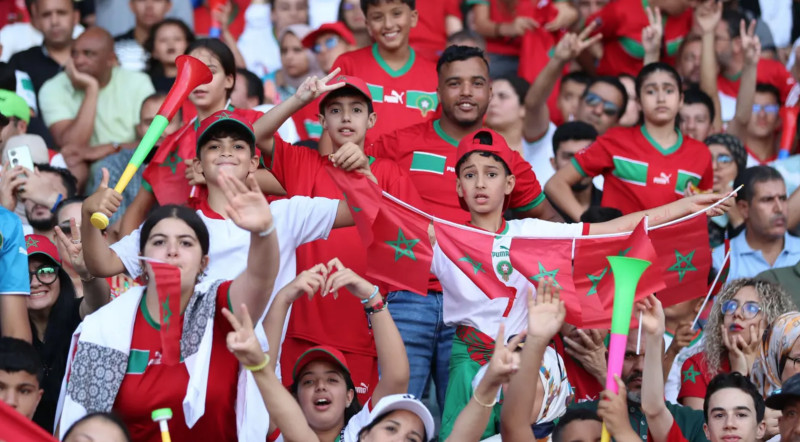
AFCON shows us one powerful truth: Africa can come together.
With over 2,000 languages, 40 currencies, 55 flags, and over 100 borders, one continent, despite our differences in tongue, tradition, beliefs and territory, for 90 minutes, we become one people, one continent, one heartbeat. Streets empty, nations pause, and millions of Africans across the world share the same emotions at the same time. Joy, pain, hope, belief, that is not ordinary, It is a proof. Proof that a new United Africa is possible.
Africa cannot unite only when a football is kicked. African unity should not be seasonal, It should not appear only during AFCON tournaments and disappear when the final whistle blows. If we can suspend our differences for a game, then we can do the same for our future.


Africa can also connect through trade, by building African businesses from within, strengthening local industries, and ensuring that African values circulates inside African economies. ‘A continent cannot grow strong while exporting raw potential and importing finished value.’
True independence begins when Africans produce what they consume, consume what they produce, and invest in one another. When African capital funds African ideas, when local markets support local manufacturers, and when cross-border trade within Africa becomes the norm rather than the exception, unity moves from symbolism to structure.
Trade is not just economic activities; it is trust, collaboration, and shared destiny. An Africa that trades together builds resilience, creates jobs, and lays the foundation for long-term prosperity driven from within, not dependence from outside.
We can connect through stories and media, by telling our own narratives, documenting our truths, archiving our history, and shaping how the world sees us without waiting for permission or validation from outside. A continent that controls its stories controls its identity.
Technology is evolving rapidly, yet some how, Africa remains a consumer when it has the capacity to be a creator. We import solutions that were not designed with our realities in mind, when we can build our own technology and drive our own innovation.
Africa must create African solutions for African problems, designed, owned, and controlled by Africans. From fintech to agriculture, healthcare to education, our innovations should reflect how we live, how we work, and what we truly need.

Technology should not be an adaptation of foreign systems, but tools rooted in our environments, economies, and cultures.
When Africans own their technology, we own the data, the value, and the future. Innovation should speak our realities, scale across the continent, create jobs, and serve our people first before export, before validation, before profit. This is how technology becomes not just progress, but power.
We live in an age of connectivity yet we are bared from each other, Benin Republic, Rwanda, Seychelles, The Gambia and Kenya are leading the way for full visa free entry by all Africa passport holders, it is applauding but they’re just a fraction, Free and easier movement across borders, shouldn’t be negotiated nor asked for, because Africa is our home, not a collection of foreign territories divided by lines on a map, or except we want it so.
A continent cannot truly unite when its own people are treated as outsiders in their neighboring countries. Restrictive borders limit opportunity, exchange, and connection, while freedom of movement fosters understanding and cooperation. We are our own problem, while we restrict ourselves, our doors are open to foreign nationals who come in whenever they like.


Mobility allows Africans to share ideas, trade, culture, and knowledge more fluidly. It strengthens personal and professional networks, builds trust across communities, and breaks down misconceptions born from isolation. When Africans can travel, work, and live across the continent without unnecessary barriers, we create a shared sense of belonging and a practical unity that mirrors the spirit we celebrate during AFCON. True continental integration starts when every African feels at home anywhere in Africa.
We can connect through education and shared knowledge, building a generation that thinks Pan-African by default. Education is more than schools and degrees, it is the foundation for mindset, vision, and collaboration. When knowledge flows freely across borders, young Africans can exchange ideas, learn from each another, and tackle challenges together rather than in isolation.
A Pan-African approach to learning encourages collaboration in science, technology, business, and the arts, creating networks that span the continent. It helps students and innovators see opportunity in unity rather than division, fostering problem-solvers who understand that Africa’s strength lies in cooperation.
By sharing knowledge, we not only equip future leaders with skills but also instill a sense of continental identity, pride, and responsibility ensuring that the next generation works for an Africa that is interconnected, resilient, and self-determined.
Nigeria is building a massive 700km road project, nicknamed, The Lagos-Calabar Costal Highway, it connects Lagos to about 7 other states and by extension even more, the aim is to boost trade and connectivity within Nigeria. This can be Africa, we can connect through transportation, agriculture, and industry, by building the infrastructure that moves people, goods, and ideas efficiently across the continent. Roads, railways, ports, and digital networks are more than conveniences, they are the arteries of growth, linking communities, markets, regions and nations.
Agriculture and industry must also be reimagined as continental priorities. Food security, industrial development, and economic stability cannot remain the responsibility of individual nations alone, they are shared challenges that require collective action, planning, and investment. When African countries collaborate on large-scale agricultural projects, manufacturing, and supply chains, we reduce dependence on imports, create jobs, and keep value circulating within the continent.
African yearn to travel out not because they hate home, it is because sometimes home doesn’t feel like home, home is plagued with insecurity, lack of jobs, etc and this is because we keep taking our raw materials out to be processed abroad and we import the finished product, leaving our people jobless and hungry.
Investing in transportation, agriculture, and industry is not just about building systems, it is about building a connected Africa, where opportunity, resources, and prosperity flow freely, and where progress benefits all rather than a few. This is the foundation for a self-reliant, resilient, and united continent.
African music and films are powerful tools of connection. For music, you do not need to understand the language to feel the vibe, move to the rhythm, or connect with the story. In many ways, our music is doing more to unite Africa than we are. It crosses borders effortlessly, travels faster than policy, and reaches people without permission. But music alone is not enough, we must build on this power through cultural collaboration, not competition.
There’s need to improve our connectivity through fashion, languages, art and culture, traditions, festivals, storytelling, despite our national differences, our heritage, creativity, and spirit are deeply continental. Culture has always understood unity better than policy. It creates bonds no law or border can break. The task before us is to support it, protect it, and use it intentionally as a foundation for a more connected Africa.
Our shared values accountability, dignity, responsibility, and integrity. These are the principles that underpin strong societies and institutions. When Africans collectively embrace the belief that the continent deserves better leadership, fairer systems, and institutions that serve the people rather than personal interests, unity becomes more than symbolic; it becomes practical. Shared values guide collaboration, inspire trust, and ensure that every effort, whether in governance, business, or community building reflects a commitment to a stronger, more resilient Africa.
By combining culture with values, we create a continent that not only celebrates its diversity but channels it toward collective progress, proving that unity is not an idea it is a practice.
Through economic integration, Africa can become a continent where prosperity flows freely across borders instead of being trapped within individual nations. This begins with serious conversations around a shared or continental currency, stronger regional markets, and policies that ensure African wealth circulates within Africa rather than leaking outward.
Economic integration is more than signing trade agreements, it is a long-term strategy for collective growth, stability, and self-reliance. When African countries work together on infrastructure, banking, and commerce, they create the conditions for businesses to scale across the continent, for jobs to be created locally, and for economies to grow from within. By reducing dependence on external systems and strengthening internal cooperation, economic integration turns unity into a practical advantage and shared prosperity into a continental reality.
By prioritizing African prosperity over outside interests, we lay the foundation for a unified economic ecosystem one that supports innovation, empowers local communities, and strengthens the continent’s voice and influence in the global economy. Economic integration turns unity from aspiration into reality, showing that when Africa works together, it thrives together.
AFCON reminds us that unity is possible.
It shows us that the problem has never been our differences but what we choose to do with them. The real question is: Can we carry that same energy into how we trade, govern, travel, create, and build together? Africa does not lack unity.
We simply need to practice it beyond football.
- Iregbu is a Nigerian filmmaker and cultural commentator.