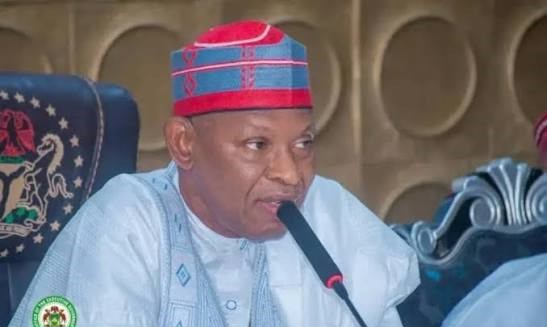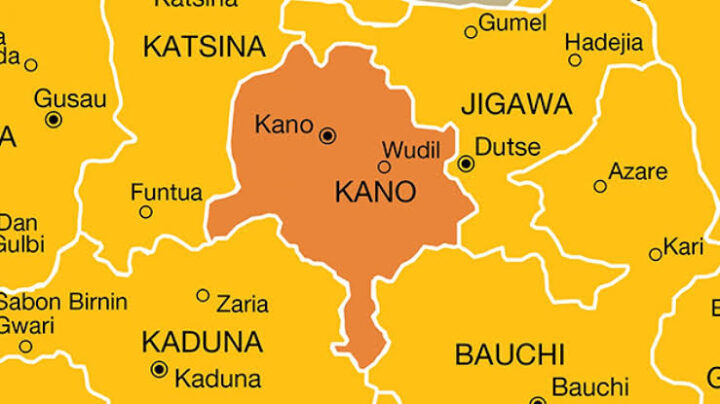
A FRESH wave of misinformation has once again cast a spotlight on Kano’s increasingly toxic political landscape, after a doctored video and manipulated images were used to falsely malign the Kano State Government, prompting a strong warning from an expert, Dr Ibrahim Yunusa Sani, against what he described as dangerous and irresponsible politicking.
News Point Nigeria reports that the controversy erupted after a viral post on social media claimed that the Kano State Government distributed pants to women as part of an empowerment programme or campaign gesture.

Read also: JAMB Warns Universities Against Issuing ‘Unauthorised’ Admission Letters To Candidates
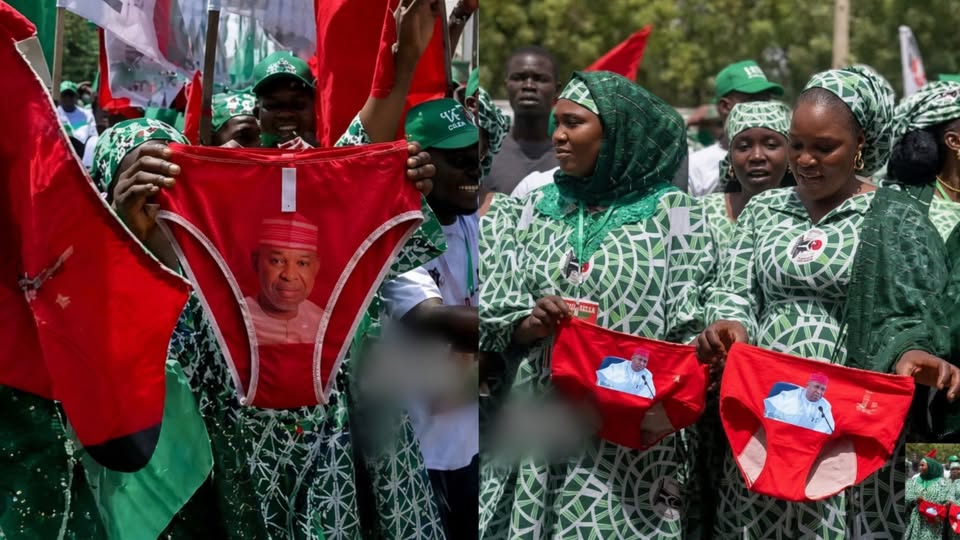
The claim was accompanied by images showing women holding red underwear, with captions suggesting the items were officially handed out by the government.

However, forensic findings and expert analysis have since debunked the claim, revealing that the visuals were manipulated to create a false narrative capable of misleading the public and damaging reputations.
Error Level Analysis (ELA), a digital forensic technique used to detect image manipulation, was applied to the viral images. In a typical, unedited photograph, most areas display uniform levels of brightness or “noise” due to consistent compression.


In contrast, the disputed image showed a noticeably brighter patch on the pants, an inconsistency that strongly suggests that part of the image was edited or inserted separately before being recompressed.
By comparison, the original version of the image displayed uniform brightness and noise levels across the same area, indicating no alteration.
Put simply, the bright patch detected in the viral image serves as a clear red flag that the image had been tampered with.

Further forensic checks confirmed that the original image was altered to insert the image of Governor Abba Kabir Yusuf, thereby creating the false impression that he personally distributed the underwear.
Investigations revealed that the images were extracted from a viral video featuring supporters of the governor, popularly known as Gida-Gida TikTokers.
The video itself was recorded during the visit of Nigeria’s First Lady, Oluremi Tinubu, to Kano on Thursday.


In the footage, the group was seen displaying red pants in front of the Kano Government House while chanting songs mocking Rabiu Musa Kwankwaso.
They repeatedly used the phrase “Dan kamfan tsula” (loosely translated as “Tsula’s pants”), a term rooted in local political rhetoric.
Read also: ‘Leave Us Alone’, Kwankwaso Tells ADC To Address ‘Serious Allegations’ Against Atiku
“Tsula,” a Hausa word for white small monkey, is often used as a derogatory label in political exchanges targeting Kwankwaso. The expression gained wider prominence through songs by APC praise singer Dauda Kahutu Rarara.
The video reportedly surfaced through a TikTok influencer, Teemah Cool, identified as a leading figure among the Gida-Gida TikTokers. It quickly generated backlash, particularly from supporters of Kwankwaso, who described the act as indecent and reflective of declining political standards.
Teemah, however, defended the display, insisting she had no regrets. According to her, the action was a response to earlier conduct by Kwankwasiyya supporters, who had publicly waved wrappers while chanting “Falle daya ce”, a slogan implying that Governor Yusuf would serve only one term.
Public reactions to the incident were sharply divided.
A Facebook user, Wali Halliru Habib, defended the act, stating: “We will chant it again, Tsula’s pants… Just because we said Tsula’s pants and you are saying we are wrong? We will continue to say it.”
Another user, Sanusi Yahuza, criticised it, saying: “This is very wrong. Who is Tsula again? What kind of thinking is this?”
Similarly, Sule Ya’u Tariwa, a Special Reporter with the Kano State Government, condemned the display, describing it as a troubling reflection of political discourse.
“I have never seen such foolishness done in the name of politics. This is madness in its rawest form. There are different approaches to express political opinions or to send a message to opponents, but this one defies reason,” he said.
Reacting to the doctored “empowerment” images that later surfaced, he added: “The damage has been done, and no amount of explanation can convince these people otherwise. God forbid.”
Findings further showed that the “pants empowerment” narrative only began circulating on Friday, one day after the original video of the political stunt indicating that the claim was a later distortion rather than part of the actual event.
Dr Sani fruther warns that Nigeria’s political space remains highly vulnerable to misinformation, particularly during periods of heightened political tension.
Satirical or provocative actions are often taken out of context, digitally altered, and recirculated as factual claims to mislead the public or discredit opponents.
Read also: Sokoto Road Stabbing: Kano Court Remands Man Over Alleged Murder, Injuries
The claim that the Kano State Government distributed pants to women as empowerment or campaign gifts has therefore been established as false.
Evidence shows that the viral content originated from a political display by supporters and was subsequently manipulated to misrepresent the situation.