AT a store in Beirut, a shopowner breaks into laughter.
“No, I don’t want to comment on the negotiations,” he told Al Jazeera, referring to Thursday evening’s direct talks between Israel and Lebanon in Washington, DC. “If I say the wrong thing, someone might come hit me.”

Read also: Suspected Israeli Online Operations Cause Alarm In Iran, Lebanon
His response represents the polarisation and controversy surrounding the negotiations inside a country deeply divided over the best way to end Israel’s war on it.

For some, the negotiations are the Lebanese state’s only choice. Others, however, reject the talks outright and believe only Hezbollah’s path of armed resistance will lead to a positive outcome for Lebanon.
On March 2, Israel intensified its war on Lebanon once again. That came after Hezbollah responded to incessant Israeli attacks for the first time in more than 15 months. Hezbollah said its response was also a retaliation for the Israeli-US killing of Iran’s Supreme Leader Ayatollah Ali Khamenei two days earlier.


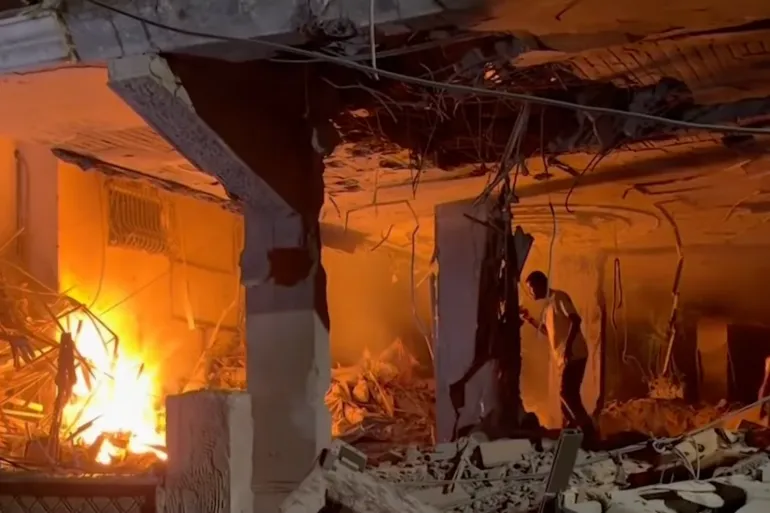
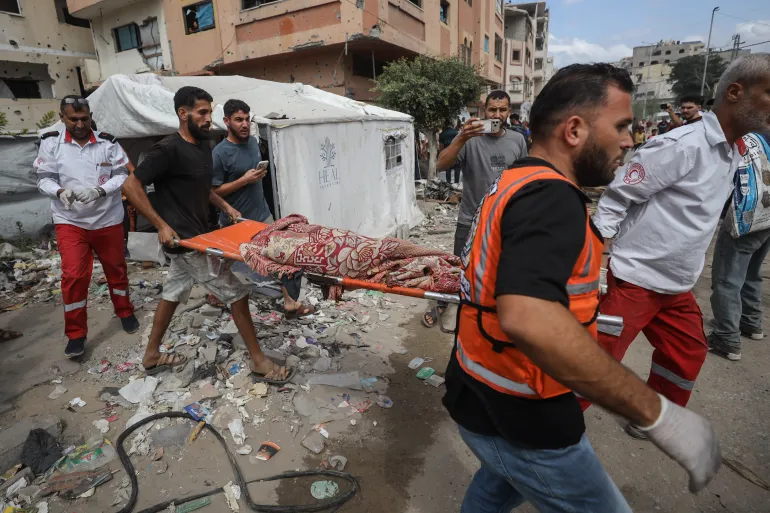
Israel has killed 2,294 people in Lebanon since March 2, including journalists and medics. It has also displaced more than 1.2 million people while expanding its invasion of Lebanon and establishing what it calls a “yellow line” around 10km (6 miles) from the border. Residents are not allowed to return to their homes if they are within that Israeli-claimed buffer zone, and Israel has demolished homes and villages in it.
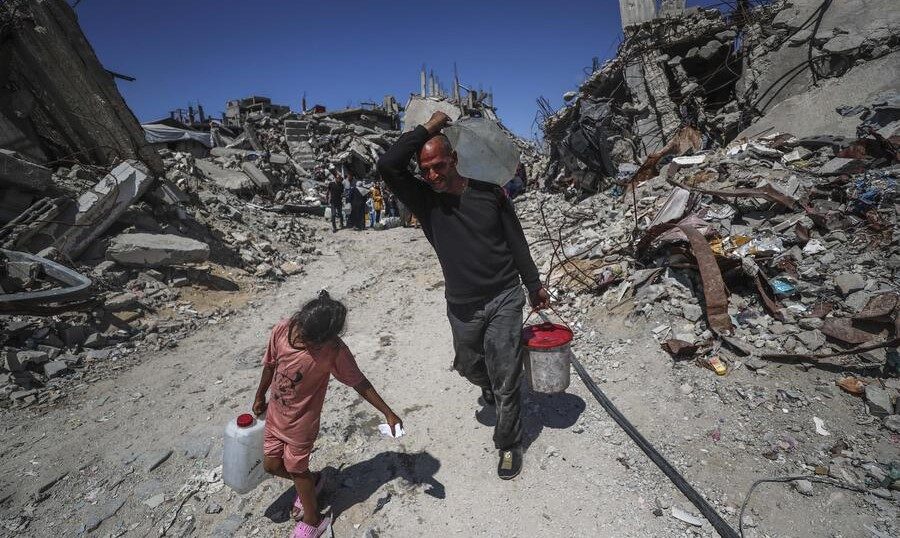
Al Jazeera visited three towns – al-Mansouri, Majdal Zoun, and Qlaileh – on a tour organised by Hezbollah, the Lebanese political and military group that controls the area. The towns were rife with destruction, with buildings reduced to dust and rubble.
Read also: Trump’s Press Secretary Katie Zacharia Leaves Job After Five Days

Thursday’s talks are set to take place while Israel is still on Lebanese land and conducting demolitions and attacks on targets there. On Wednesday, Israel killed five people in Lebanon, including front-line reporter Amal Khalil. And on Thursday, the Lebanese Health Ministry reported that an Israeli attack had killed three people.
The talks are the first direct negotiations between the two sides in decades and follow an initial meeting on April 14 in Washington, DC. They will bring together Lebanon and Israel’s ambassadors to the United States, as well as the US ambassadors to Lebanon – Michael Issa – and Israel – Mike Huckabee – with the US Secretary of State Marco Rubio. All were present in the initial meeting, apart from Huckabee.
The Lebanese side will ask for an extension to the current ceasefire, which Israel has repeatedly violated, as a precondition for continuing the talks. Lebanon’s Prime Minister Nawaf Salam has said his country will also seek a full Israeli withdrawal and the return of Lebanese captives held by Israel.


For its part, Hezbollah has rejected the talks. And a day before the previous talks earlier in April, hundreds of protesters descended on downtown Beirut to show their opposition to the talks, too.
Some of these opposing talks believe that Iran, Hezbollah’s longtime benefactor, has more leverage to negotiate on its behalf. But others oppose the talks simply because they believe the Lebanese state has little leverage and because Israel rarely delivers or upholds its end of bargains.
“Probably the only deal that’s possible right now at the moment is anything that’s very favourable to Israel, as we have seen in the past many years, and especially since Lebanon is going there unprepared, with no leverage and no deterrence,” Fouad Debs, a lawyer, told Al Jazeera. “The only deterrence that they have at the moment is the resistance [Hezbollah], and the government and president are fighting it internally.”
Read also: Albanian Prime Minister Blames ‘Foreign Hands’ For Riots As Student Protests Intensify
Debs said that Lebanon could look at other pathways, such as going to the International Criminal Court and teaming up with the growing number of countries that are trying to hold Israel accountable.
Shortly after Hezbollah’s attacks on March 2, the Lebanese government declared Hezbollah’s military activities illegal.