

NIGERIA’s opposition political landscape took a dramatic turn on Saturday as a broad coalition of parties resolved to bury longstanding differences and rally behind a single presidential candidate to challenge the ruling All Progressives Congress (APC) in the 2027 general elections.
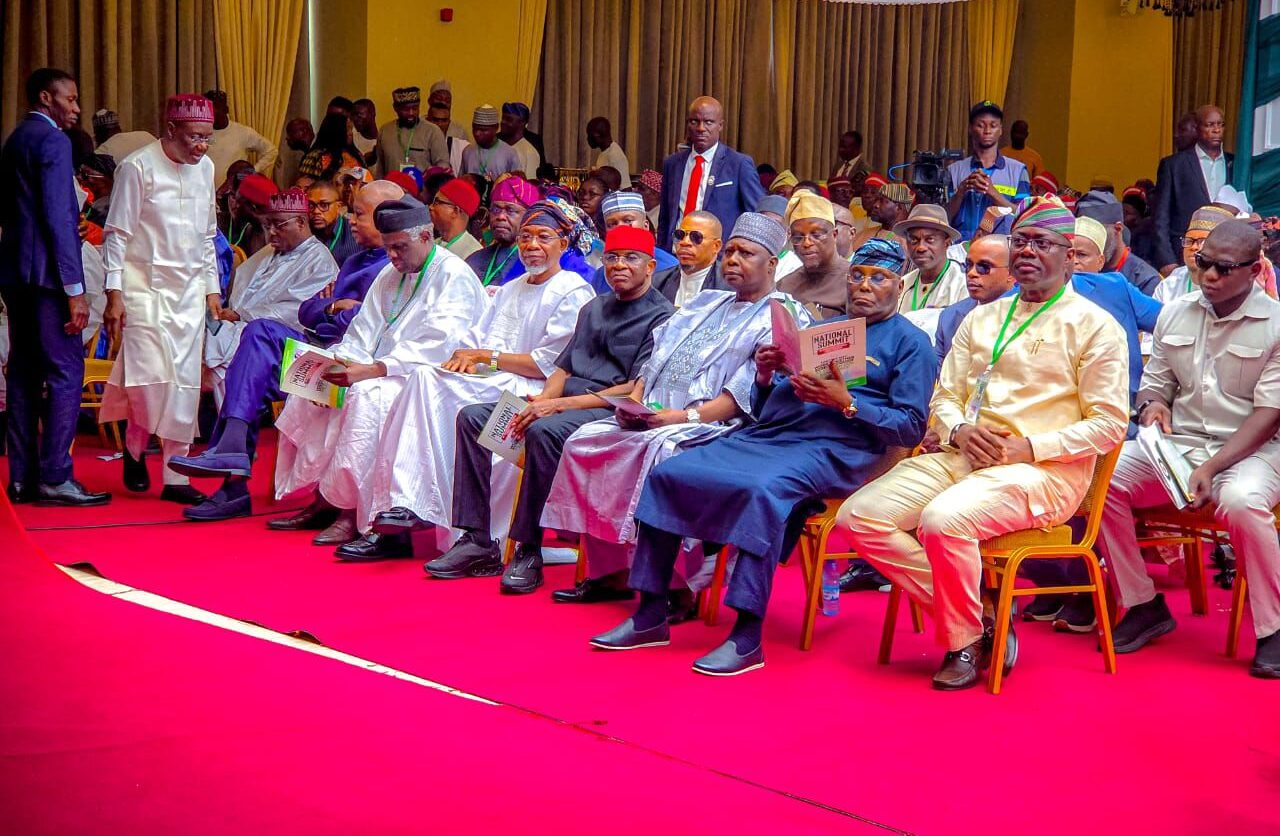
News Point Nigeria reports that the decision, formally tagged the ‘Ibadan Declaration’, emerged as the defining outcome of a high-stakes national summit of opposition parties held on April 25, 2026, in Ibadan, the Oyo State capital, marking what participants described as a decisive moment in the country’s democratic evolution.

Parties that participated in the summit included the Peoples Democratic Party (PDP), African Democratic Congress (ADC), Peoples Redemption Party (PRP), New Nigeria Peoples Party (NNPP), National Democratic Coalition (NDC), Labour Party (LP), Action Peoples Party (APP), Accord Party, Allied Peoples Movement (APM), Action Alliance (AA), Democratic Labour Party (DLA), Young Progressives Party (YPP), Action Democratic Party (ADP), and Zenith Labour Party (ZLP), among others.

Presenting the communiqué on behalf of the coalition’s leadership, PDP National Chairman, Taminu Turaki (SAN), declared that the move to adopt a unified presidential candidate was not merely strategic but an existential imperative aimed at what he described as rescuing Nigeria from the tightening grip of the APC.


According to the communiqué, the coalition’s foremost objective is to halt what it perceives as a drift toward a one-party state. The opposition bloc alleged that the APC was already positioning President Bola Ahmed Tinubu as a sole candidate for the 2027 race, a development it vowed to counter through a united political front.
“We shall work towards fielding one presidential candidate for the 2027 elections, which shall be agreed and supported by all participating opposition parties to rescue our nation and her long-suffering masses,” the communiqué read.
Beyond electoral strategy, the summit delivered a blistering critique of the Independent National Electoral Commission (INEC), passing a vote of no confidence in its chairman, Prof. Joash Amupitan. The coalition accused him of overt partisanship in favour of the ruling party, warning that his continued leadership could undermine the credibility of the electoral process and potentially trigger a national crisis.
The declaration called for his replacement with what it described as a neutral and independent figure capable of restoring public trust in the electoral body.
In outlining its broader reform agenda, the Ibadan Declaration urged the National Assembly to urgently review and amend provisions of the Electoral Act 2026 which, according to the opposition, threaten the integrity of elections.

The coalition also criticised recent guidelines issued by INEC, describing them as deliberate barriers designed to disadvantage opposition parties. It demanded an extension of the deadline for party primaries to the end of July 2026 to allow for broader participation and internal democratic processes.
The communiqué further called for the immediate release of prominent political figures allegedly facing harassment or detention over bailable offences, framing such actions as violations of fundamental human rights and democratic norms.
Despite the tensions highlighted, opposition leaders praised Nigerians for what they described as resilience in the face of mounting political and economic pressures. They reaffirmed their commitment to sustaining a vibrant multiparty democracy and pledged to resist any attempts to suppress political competition.


The summit also paid tribute to Oyo State Governor, Seyi Makinde, for hosting the gathering, describing Ibadan as the stage for what many delegates termed a historic and epoch-making convergence ahead of the 2027 elections.