

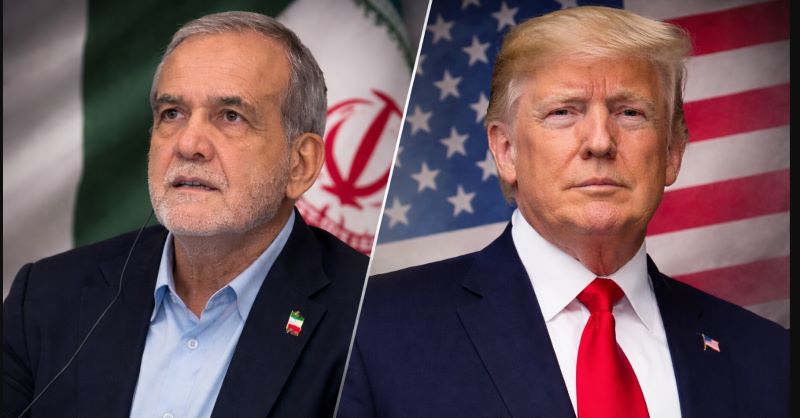
STOCK markets across the Asia Pacific have surged following the announcement of a deal between Washington and Tehran to end the US-Israel war on Iran.
Japan’s Nikkei 225 benchmark index soared 5.5 percent in morning trading on Monday, while South Korea’s Kospi jumped as much as 5.7 percent.

Taiwan’s Taiex climbed as much as 2.7 percent, while the ASX200 in Australia rose about 1.5 percent.


In Hong Kong, the Hang Seng Index rose about 1 percent, before giving up most of its gains later in the morning.
Futures for US stocks, which are traded outside of regular market hours, also climbed, with those tied to the benchmark S&P500 and the tech-focused Nasdaq Composite rising about 1 percent and 1.8 percent, respectively.
Brent crude, the primary benchmark for global oil prices, fell about 4.5 percent to below $83.40 per barrel.
“While markets had already reacted late last week when President Trump indicated that a deal was close, actual confirmation spurred a further rally,” Khoon Goh, the head of Asia research for ANZ, told Al Jazeera.
“The fall in oil prices will provide some relief for central banks around the world who were worried about the inflation outlook. Focus now turns to the US Federal Reserve, which decides on interest rates this week.”
Currency traders work at the foreign exchange dealing room of the Hana Bank headquarters in Seoul, South Korea, on June 15, 2026 [Ahn Young-joon/AP]
US President Donald Trump announced the ceasefire deal in a social media post on Sunday, saying he had authorised the toll-free reopening of the Strait of Hormuz and the immediate removal of the US naval blockade of Iranian ports.

“Ships of the World, start your engines,” Trump wrote on Truth Social. “Let the oil flow!”
Iran’s Supreme National Security Council and Deputy Minister of Foreign Affairs Kazem Gharibabadi later confirmed that the sides had reached a deal.
Pakistani Prime Minister Shehbaz Sharif, whose government helped broker the deal, said that an official signing ceremony would take place in Switzerland on Friday.


Specific details of the agreement have not been officially confirmed, though the Iranian news agency Mehr reported that it includes an immediate cessation of hostilities on all fronts – including in Lebanon – the suspension of sanctions on Iranian oil sales, and the release of $24bn in frozen Iranian assets.
If implemented successfully, the agreement would pave the way for a return to normal shipping in the Strait of Hormuz, whose effective closure due to Iranian threats and attacks, as well as the US naval blockade, has roiled global energy markets for nearly four months.
The blockage of the strait has caused a daily shortfall of about 14 million barrels of oil per day, according to the International Energy Agency, driving up energy prices worldwide and spurring fuel shortages in numerous countries.