

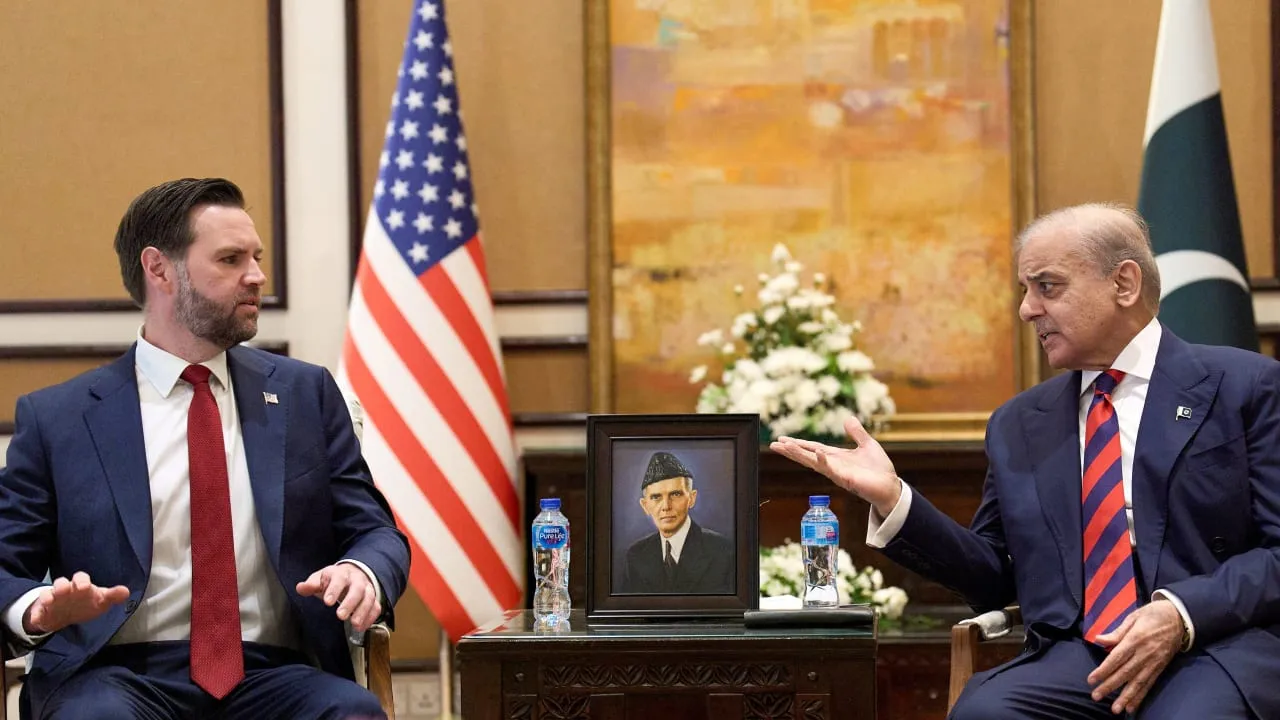
PAKISTAN’s Prime Minister, Shehbaz Sharif, has announced that a peace agreement has been reached between the United States and Iran following intensive diplomatic negotiations, describing the development as a major breakthrough in efforts to end hostilities between the two countries.

Sharif, who said Pakistan had been playing a mediating role in the talks, made the announcement in a statement posted on X, declaring that both sides had agreed to permanently halt military operations and pursue a diplomatic resolution to the conflict.

“Following intensive talks, we are pleased to announce that the Peace Deal between the United States of America and Islamic Republic of Iran has been REACHED,” the Pakistani leader wrote.

According to Sharif, the agreement includes “the immediate and permanent termination of military operations on all fronts, including in Lebanon,” marking what could become a significant turning point in tensions that have rattled the Middle East and the wider international community.


He further disclosed that an official signing ceremony for the agreement is scheduled to take place in Switzerland on June 19, where both parties are expected to formally endorse the peace accord.
The Pakistani Prime Minister commended both Washington and Tehran for choosing diplomacy over confrontation and thanked regional partners who participated in mediation efforts aimed at securing the breakthrough.
“We would like to thank the United States of America and the Islamic Republic of Iran for their commitment to finding a diplomatic solution to the conflict,” Sharif stated.
He also expressed appreciation to Qatar for its support during the mediation process, while praising the leadership of Saudi Arabia and Türkiye for what he described as their immense contributions toward achieving the agreement.
According to Sharif, mediators will now facilitate a series of meetings in the coming days to prepare for implementation of the accord. He explained that the discussions would establish the framework for technical negotiations ahead of the formal signing ceremony in Switzerland.

Shortly after Pakistan’s announcement, Donald Trump publicly confirmed that an agreement had been reached between Washington and Tehran.
Writing on Truth Social, Trump declared: “The Deal with the Islamic Republic of Iran is now complete.”
The US president also announced a series of immediate measures tied to the agreement, including authorization for the reopening of the strategically important Strait of Hormuz and the removal of the United States naval blockade.


“I hereby fully authorize the toll free opening of the Strait of Hormuz, and, simultaneously herewith, authorize the immediate removal of the United States Naval blockade,” Trump wrote.
In a message aimed at global energy markets and maritime operators, he added: “Ships of the World, start your engines. Let the oil flow!”
Meanwhile, Iranian state television also reported that a deal had been reached between Iran and the United States. However, the broadcaster attributed the announcement to the statement issued by Pakistan’s Prime Minister rather than an official declaration from Iranian authorities.
During its broadcast, the Iranian state TV presenter described the development as an outcome in which the United States “was forced to sign an agreement to end the war with the Islamic Republic of Iran and the Resistance Front.”
Several Iranian media outlets similarly framed the reported agreement as a victory for Iran, emphasizing Tehran’s position in the negotiations.
As of the time of reporting, no senior Iranian government official had publicly commented on or independently confirmed the agreement. Nevertheless, the statements from Pakistan, the United States and Iranian state media have fueled expectations that a formal announcement could follow ahead of the planned signing ceremony in Switzerland on June 19.
If finalized, the agreement would represent one of the most significant diplomatic breakthroughs in recent years, potentially easing tensions across the Middle East, restoring stability to key global energy routes and opening a new chapter in relations between Washington and Tehran.