
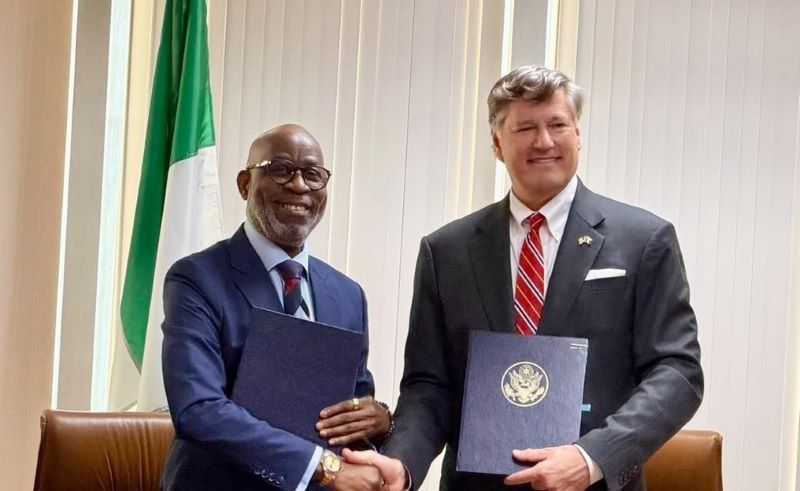
THE Arewa Consultative Forum (ACF), the apex mouthpiece of Northern Nigeria, has demanded full details of the agreement signed by the Federal Government of Nigeria and the United States on September 23, 2026, in New York, relating to the exploitation of critical and/or strategic minerals.

This was contained in a statement issued by the National Publicity Secretary, Professor Tukur Muhammad Baba, and made available to newsmen in Kaduna on Wednesday.

Read also: Kano Doctors Threaten Two-Week Warning Strike Over Unmet Demands
News Point Nigeria reports that the Forum expressed concern over what it described as a lack of transparency surrounding the agreement, particularly the absence of sufficient publicly available information about its terms, scope, financial commitments and implementation frameworks.

The statement averred that, “ACF’s basis for concern is that the reported deal remains opaque, particularly in the absence of sufficient publicly available information regarding the terms, scope, financial commitments, and implementation frameworks.”
It noted that, “while the Forum recognises the potential benefits of responsible international investment and technical cooperation, it considers transparency, accountability, national sovereignty, economic justice and the protection of Nigeria’s national interests.”


ACF therefore maintained that full public disclosure and scrutiny were very critical and should not be treated cavalierly.
Additionally, the Forum said it was mindful that Northern Nigeria possesses significant deposits of gold, lithium, lead-zinc and other commercially valuable minerals.
“Properly exploited and developed within a transparent and accountable legal framework, these resources could contribute substantially to employment generation, industrial development, public revenue and the diversification of the regional economy.”

For the ACF, the central issue is not simply whether these resources will attract foreign investment, but whether their development will translate into demonstrable or measurable and substantial benefits for the people of the region or elsewhere in the country, as legitimate aspirations.
Read also: Nigeria’s Passport Ranking Plunges From 90th To 181st As Visa-Free Destinations Fall To 24
The Forum said it was particularly concerned that the spate of insecurity pervading many parts of the northern region could expose mineral-bearing communities to unlawful exploitation, population displacement, environmental degradation and the loss of legitimate economic opportunities.

It stressed that development strategies for mineral resources must not create additional vulnerabilities for communities already engaged in economic activity.
“The FGN and relevant security and regulatory institutions should therefore explain the safeguards that will prevent illegal exploitation, protect mining sites and host communities, as well as ensure that the proceeds of lawful mineral development contribute to legitimate economic activities.
“Such benefits should include meaningful Nigerian participation in mining and related industries, skills acquisition and development, local processing where commercially and technically viable, infrastructure development, environmental protection, fair compensation for affected communities and the creation of enduring economic opportunities.”
To this end, ACF demanded full disclosure on the instant, citing three constitutional and legal provisions.
The first is Section 14(2)(b) of the Constitution of the Federal Republic of Nigeria (as amended), which specifically establishes the principle that the security and welfare of the people shall be the primary purpose of government.
The second is Section 16(1)(a) and (b), which addresses the management of national resources and the promotion of economic welfare.
Read also: After Eight-Month Wait, Mexico Approves Reno Omokri’s Appointment As Nigeria’s Ambassador
The Forum said these two provisions are critical components of Chapter II of the Constitution but must be considered alongside Section 16(6)(c), which generally limits judicial enforcement of the provisions of the same chapter, except as otherwise provided by the Constitution.
The third provision cited by ACF is the Freedom of Information Act (2011), which provides a statutory framework through which aggrieved citizens may seek access to records held by public institutions, subject to applicable limitations.


