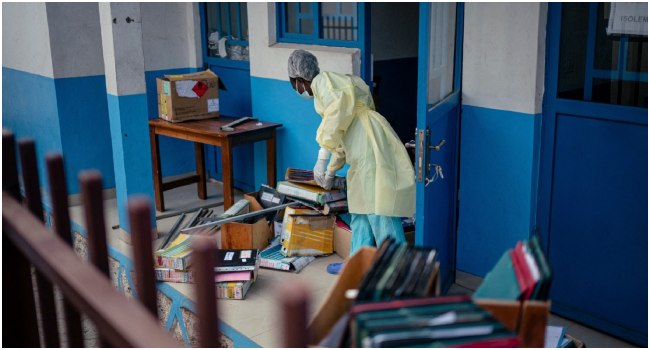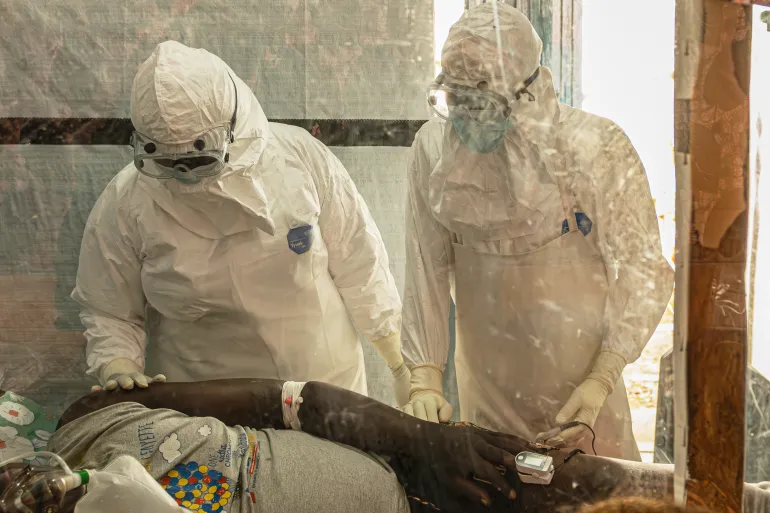

THE Ebola outbreak in the Democratic Republic of the Congo (DRC) has spread to another health zone in the east, while a fatal imported case in Kenya has underscored the risk of cross-border transmission.
The World Health Organization (WHO) said in an October 8 update that Alimbongo health zone in North Kivu province had reported cases for the first time. As of October 6, four confirmed cases, including two deaths, had been recorded there.

Read also: South Africa Protests Turn Violent Amid Rage Over Asylum Ruling
The outbreak is caused by the Bundibugyo virus, a species of Ebola virus. According to the WHO, cases had been reported in 64 health zones across seven provinces in the DRC. Ituri remained the worst-affected province in cumulative cases, while North Kivu was accounting for a growing share of newly confirmed infections.
As of October 6, the WHO had recorded 8,728 confirmed cases and 4,205 confirmed deaths in the DRC. A further 2,269 people had recovered, and the crude case fatality ratio stood at 48.2 percent.
Kenya confirmed its first imported case of Bundibugyo virus disease on October 6, according to the WHO. The patient, a Kenyan citizen who had been living in the DRC, fell ill there and received treatment at several health facilities before travelling to Kenya through Uganda.
The patient travelled by road to Kampala, Uganda, before flying to Nairobi, arriving on October 3. The patient was isolated in hospital and tested positive for the virus. Despite supportive treatment, the patient died on October 5, the WHO said.

Read also: Ethiopia, Eritrea Accuse One Another Of Launching War
Kenyan authorities identified 28 contacts, including family members and healthcare workers. The WHO also reported efforts to trace passengers and crew members from the flight to Nairobi.

Public health measures have been initiated in Kenya and Uganda, including contact tracing and enhanced surveillance.
On October 8, preliminary laboratory results for a suspected Ebola case in Kenya’s Wajir County came back negative, according to the county governor. The result eased concerns about a possible second case, although monitoring continued.
The imported infection has underscored the importance of surveillance and coordination between neighbouring countries. Identifying exposed people and monitoring them for symptoms are central to detecting infections early and interrupting further transmission.


In the DRC, the response is facing mounting pressure from limited treatment capacity, insecurity and difficulties securing cooperation from some communities.
Read also: 85-Year-Old South African Judge Navi Pillay Wins Nobel Peace Prizes
Daniel Makasi Levergénois, founder of Watoto Radio, said insecurity and misinformation were undermining efforts to contain the outbreak. In Beni and Butembo, both in North Kivu, rumours and misconceptions about Ebola had contributed to reluctance among some residents to cooperate with response teams, he said.
In an October 5 update, medical charity Doctors Without Borders, known by its French initials MSF, said North Kivu accounted for nearly 40 percent of newly confirmed cases nationwide, up from 24 percent at the end of August.