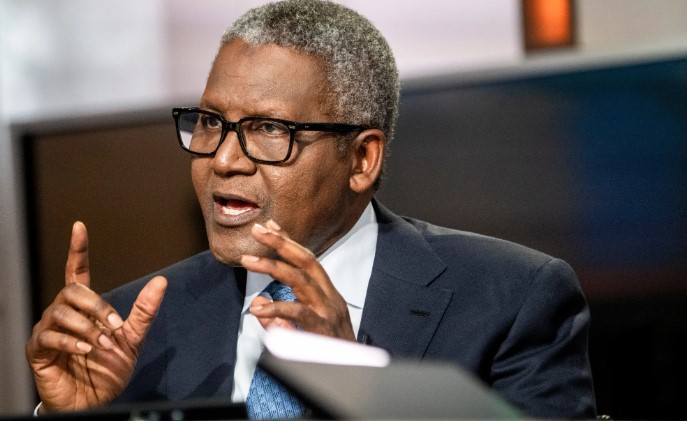

NIGERIAN billionaire and President of the Dangote Group, Aliko Dangote, has blamed local marketers and international oil companies for fuelling protests over land earmarked for his proposed $16 billion oil refinery in Lamu, Kenya.
News Point Nigeria reports that Dangote and Kenyan President William Ruto performed the groundbreaking ceremony for the refinery in Lamu on Wednesday, even as a court halted construction activities over a land dispute.

Read also: Why Dangote Refinery Still Lacks Crude Despite Tinubu’s Naira-For-Crude Policy – Presidency
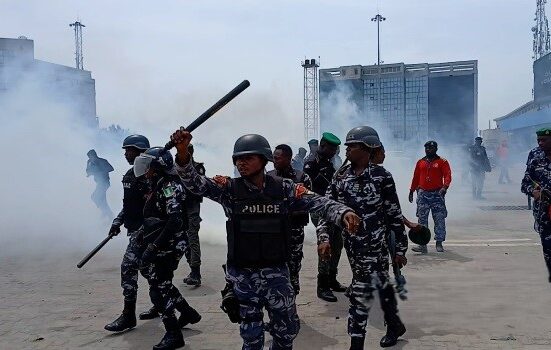
Dangote made the allegation while speaking to the BBC’s Focus on Africa programme, amid protests by some residents over compensation for land acquired for the refinery project.

The refinery is expected to have a processing capacity of 700,000 barrels per day when completed in 2030. Dangote disputed claims that his company had taken more land than it required, saying it only used the portion allocated to it by the Kenyan Government.
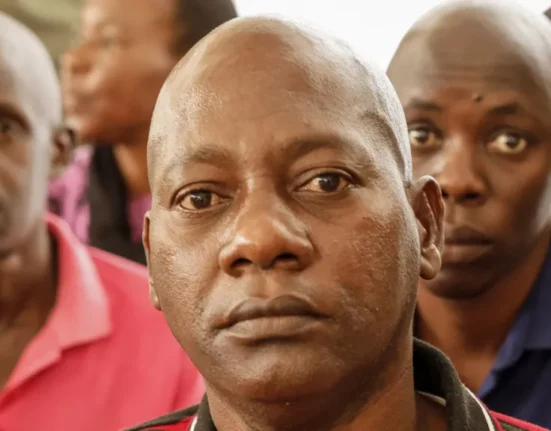
“They said some people are demonstrating; demonstrating about what? Have you ever seen people demonstrating against themselves in terms of development?” he asked.


Africa’s richest man dismissed the protests as “games played by local marketers and international players”, insisting that the refinery would go ahead and would be ready by 2030 as planned.
The groundbreaking ceremony was also attended by the leaders of Uganda, Ethiopia, Togo and Benin. Dangote has offered regional governments a combined 30 per cent stake in the refinery, according to Reuters.
Read also: ‘Why I Can Sleep In the Worst Hotel Despite My Wealth’, Dangote Preaches Simplicity

The billionaire insisted that the protests would not stop the refinery project, which he described as his largest proposed investment outside Nigeria.
The project is expected to become the largest refinery in East Africa and Kenya’s biggest infrastructure project since independence, surpassing the $5.1 billion Standard Gauge Railway.
Dangote said the refinery would demonstrate that the success recorded with his 700,000-barrels-per-day refinery in Nigeria could be replicated elsewhere on the continent.

“Lekki proved that it can be done, Lamu must prove that it can be repeated,” he said.
However, the Save Lamu campaign group has raised concerns about the environmental impact of the project on the local community. The co-founder of the group, Walid Ali, told the BBC that residents wanted to see the findings of the environmental impact assessment and the proposed mitigation measures.
A group of 133 Lamu residents had approached the Kenyan High Court in a bid to stop construction work. Following the legal action, activities including excavation and construction on the disputed land have been restricted pending the next court hearing, scheduled for October 14.
Read also: Police Fire Tear Gas As #EndSARS Activists Mark Sixth Anniversary at Lekki Toll Gate
Dangote said the refinery would create about 60,000 jobs at the peak of construction, with local communities expected to benefit from the project.
The refinery will also include a 1,000-megawatt power plant designed to supply Dangote’s operations and other industries expected to establish businesses in the area.