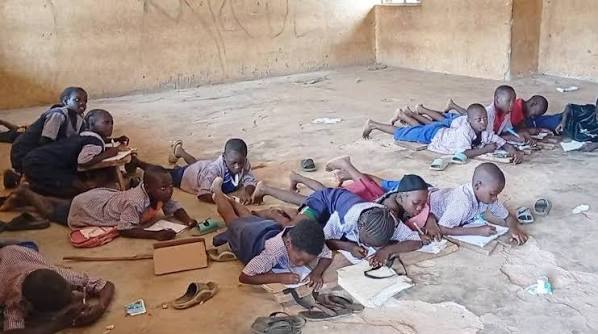
DESPITE repeated promises by state governors to transform schools and improve the future of Nigerian children, basic education stakeholders have raised fresh concerns that many states are failing to translate their commitments into action, leaving more than N332 billion in education funds unutilised while millions of children continue to await improved learning conditions.
News Point Nigeria reports that the stakeholders have challenged state governments to move beyond merely accessing education funds and focus on deploying the resources to deliver better and measurable learning outcomes, teaching standards and access to quality schooling for millions of Nigerian children.
Read also: Reps Summon Finance Minister, Accountant-General Over ₦75bn UBEC Debt
The concern formed the central message at the opening of the 30th Quarterly Meeting of the Management of the Universal Basic Education Commission (UBEC) and Executive Chairmen of State Universal Basic Education Boards (SUBEBs), which commenced on Tuesday in Asaba, Delta State.

The four-day meeting, with the theme, “Repositioning Basic Education in Nigeria to Optimise Investment and Impact,” is expected to examine how investments in basic education can produce measurable improvements in teaching, learning and access to quality schooling across the country.
The Executive Secretary of UBEC, Dr Aisha Garba, raised the alarm over the challenge of unused education funds, warning that money allocated for basic education would have little or no impact if state governments failed to deploy it.


She disclosed that more than N65 billion in counterpart funding and about N267 billion in previously released intervention funds remained unutilised.
“Accessing funds is only part of the responsibility before us. These resources cannot improve education while they remain in accounts,” the UBEC Executive Secretary said.
Garba urged state governments to strengthen their capacity to plan, execute and monitor education projects, stressing that the true purpose of funding should be improved learning outcomes and not merely the completion of projects.

Her warning comes amid growing concerns that, despite the numerous promises made by governors to prioritise education, huge sums meant to improve schools, classrooms, teaching and learning are still lying unused.
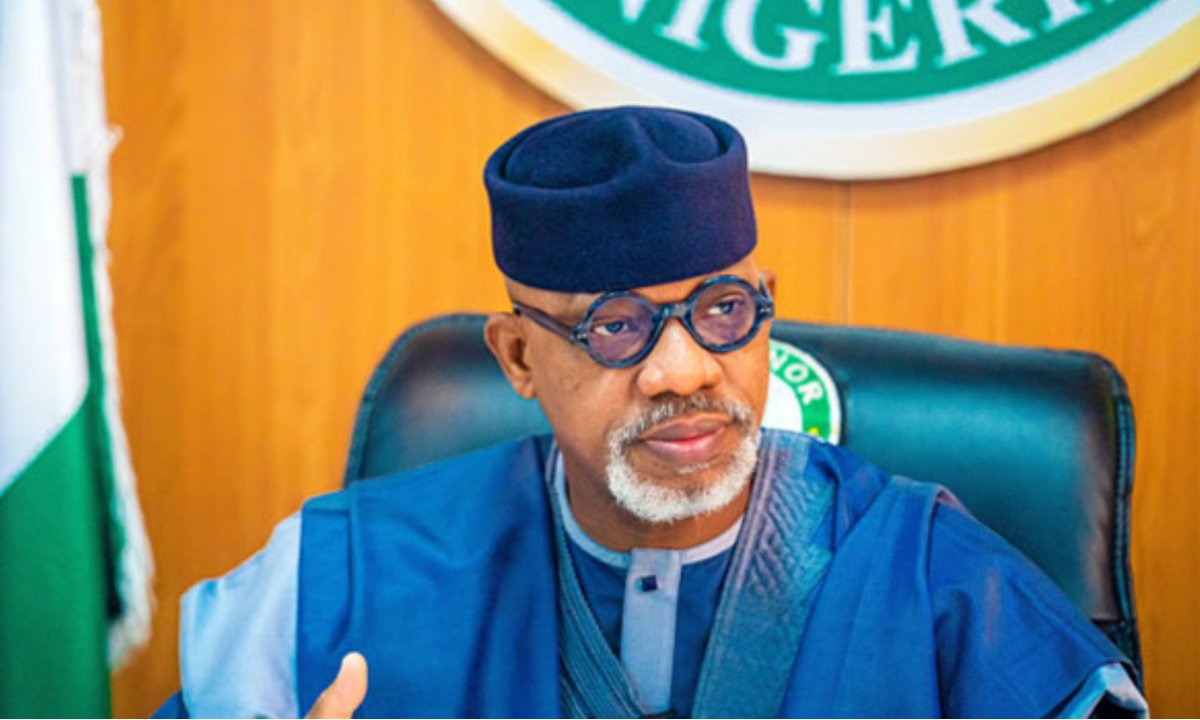
However, the Delta State Governor, Sheriff Oborevwori, said his administration regarded education as a major pillar of its MORE Agenda, adding that investments in the sector must ultimately translate into better opportunities for children.
Represented by his Deputy Governor, Monday Onyeme, Oborevwori said more than 302,000 pupils were enrolled in Delta’s public basic schools, with over 187,000, representing about 62 per cent, benefiting directly from various government interventions.


The governor said his administration had constructed 174 classrooms, renovated 815 others and commenced the construction of 24 additional classrooms in partnership with the Delta State Universal Basic Education Board.
He added that 39 perimeter fences and gatehouses, 230 VIP toilets and 12 solar-powered boreholes had also been provided to improve safety, sanitation and the general learning environment in public schools.
Oborevwori also highlighted the development of the SMART School in Orogun, where hostels, refectory blocks and staff quarters had been completed to support technology-driven learning.
Read also: ‘Why I Can Sleep In the Worst Hotel Despite My Wealth’, Dangote Preaches Simplicity
The governor further disclosed that he had approved the state’s 2026 UBEC counterpart fund after fulfilling its 2025 obligation, stressing that the government would continue to invest in education because of its importance to the future of Delta State.
“The true measure of investment in education lies not in what we spend, but in the quality of learning we deliver, the opportunities we create, and the future we secure for our children,” Oborevwori said.
He said UBEC had approved two additional Model SMART Schools for Delta, adding that the state government had already provided the land required for the projects.
Oborevwori also said more than 5,500 teachers had undergone training in Jolly Phonics, STEP, SMASE and School-Based Training programmes, while 53 community tutors had been deployed to underserved communities.
The Chairman of the Delta State Universal Basic Education Board (D-SUBEB), Samuel Mariere, said the state’s hosting of the meeting reflected the importance the government attached to basic education.
Mariere, who hosted the meeting, commended UBEC for its partnership with Delta and praised Governor Oborevwori for creating what he described as an enabling environment for investment in education.
“These initiatives reflect a leadership philosophy in which investment in education is viewed not simply as expenditure, but as an investment in the future of Delta State,” he said.
The SUBEB chairman also highlighted the deployment of SMART Board technology and digital monitoring systems designed to address teacher absenteeism in public basic schools.
“Technology can be deployed not merely as a learning tool but also as an instrument for improving accountability and institutional effectiveness,” Mariere said.
The Asagba of Asaba, Prof. Epiphany Azinge, described education as the most important investment any country could make, warning that Nigeria’s future depended on the quality of its human capital.
“The true wealth of Nigeria lies not beneath her soil but within the minds of her children,” the monarch said.
Other stakeholders at the meeting called for greater cooperation among UBEC, SUBEBs, development partners, traditional institutions and communities to ensure that available resources were effectively utilised and produced the desired impact.
Read also: Tinubu, Oborevwori, Kalu, CAN, Governors Mourn Ex-Delta Governor Uduaghan
The four-day meeting, which began on Tuesday, is expected to continue with technical sessions focusing on education planning, utilisation of resources, digital transformation, accountability and strategies for expanding access to quality basic education across Nigeria.
As stakeholders continue to demand accountability, the major challenge before state governments remains whether their numerous promises to prioritise education will translate into meaningful action, particularly at a time when more than N332 billion already earmarked for basic education remains unused.