

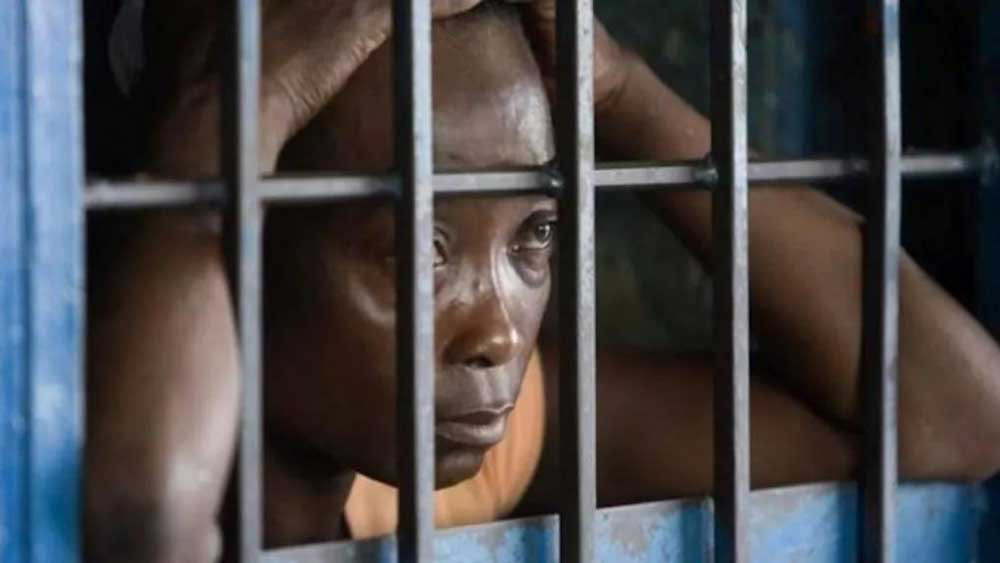
THE Nigerian Bar Association (NBA) has expressed concern over what it described as the growing trend of excessive and unrealistic bail conditions imposed by courts and law enforcement agencies, warning that the practice is effectively turning bail into a tool for pre-trial detention.
News Point Nigeria reports that the association said many defendants who have been granted bail remain behind bars because the conditions attached to their release are beyond their financial and social reach.

In a statement issued on Friday, NBA President, Afam Osigwe, said the increasing insistence on sureties who are senior civil servants and demands for high-value landed properties have made it nearly impossible for many accused persons to enjoy their constitutional right to liberty while awaiting trial.

According to him, the trend undermines the principle that every accused person is presumed innocent until proven guilty by a competent court of law.


“The frequent insistence on sureties who are senior civil servants of specified grade levels, coupled with demands for landed properties of extraordinary value, has in many cases transformed bail from a mechanism for securing attendance at trial into a tool of pretrial detention,” Osigwe stated.
He noted that although such defendants are technically granted bail, many remain incarcerated because they are unable to satisfy the stringent conditions attached to their release.
“The consequence is that many persons who are constitutionally presumed innocent and have ostensibly been granted bail remain incarcerated because the conditions attached to their release are beyond their reach,” he added.
The NBA president stressed that bail was never intended to serve as a punishment or a means of indirectly detaining suspects before their guilt has been established.
“Bail is designed to secure the attendance of an accused person at trial. It is neither a punishment nor a mechanism for imposing pre-trial incarceration by indirect means,” he said.

Osigwe argued that the law is clear on the issue, insisting that bail conditions must be reasonable, practical and capable of being fulfilled by the accused person.
He warned that requirements such as producing serving civil servants on specific salary grades as sureties or presenting landed properties of extraordinary value effectively amount to a denial of bail.
“Conditions requiring sureties who are serving civil servants on specific salary grades, ownership of landed properties of extraordinary value, or other burdensome requirements effectively convert the grant of bail into a denial of bail,” he said.


Questioning the rationale behind such requirements, Osigwe maintained that there is no evidence showing that civil servants are more reliable as sureties than other responsible and law-abiding citizens.
According to him, such restrictions unnecessarily narrow the pool of eligible sureties and create artificial barriers to the enjoyment of a constitutional right.
The NBA president cited judicial precedents, including the decision of the Court of Appeal in the case of Dasuki v. Director-General, State Security Service & Others, which criticised the practice of making serving public officers a mandatory category of sureties.
He also referenced Section 165(1) of the Administration of Criminal Justice Act (ACJA) 2015, which grants courts discretion in bail matters but expressly provides that bail conditions must not be excessive.
Osigwe urged judges and magistrates across the country to ensure that bail terms remain fair, proportionate and attainable.
“Courts must guard against imposing terms that render the grant of bail illusory or nugatory,” he said.
He further emphasised that access to bail should not be determined by a person’s wealth, status or political connections.
“Bail should not become a privilege reserved only for those with extraordinary means or connections,” he said, adding that it must remain a legal mechanism aimed at guaranteeing attendance at trial while safeguarding the liberty of persons who have not been convicted of any offence.