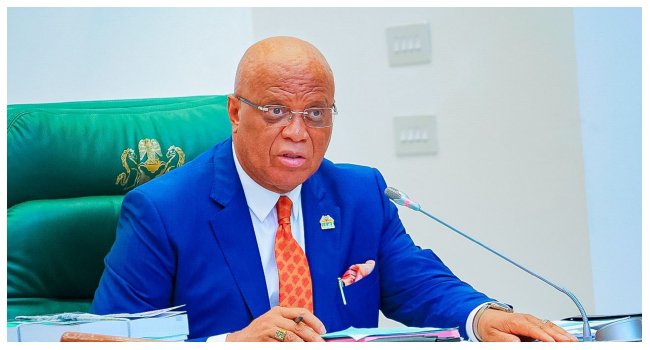
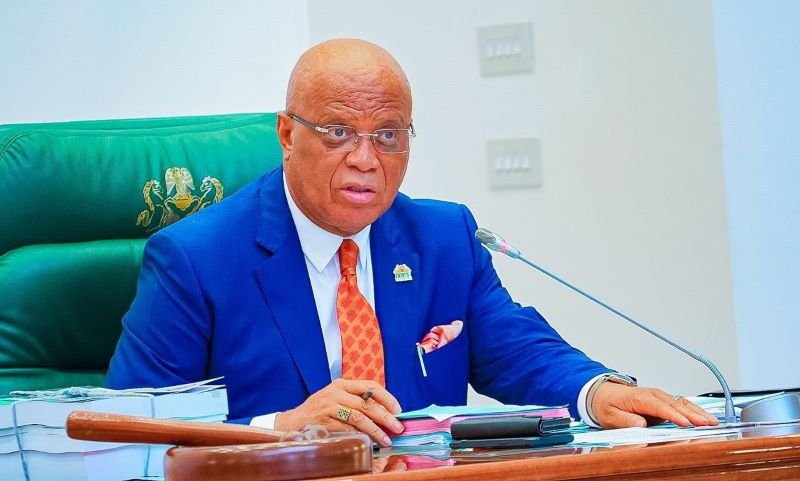
AKWA Ibom State Governor, Umo Eno, has revealed that a food business he started with akara and bread was generating at least N10 million monthly before he ventured into politics, offering a personal example of how a modest enterprise could grow into a substantial business through innovation and patronage.
News Point Nigeria reports that Eno’s disclosure has revived the debate over the potential of petty businesses to provide income for Nigerians amid the country’s economic pressures, particularly following First Lady Oluremi Tinubu’s earlier call on Nigerians to consider ventures such as akara, roasted corn and kuli-kuli as avenues for improving their livelihoods.
Read also: Ogun 2027: It’s Now Clear Ladi Adebutu Is Next Governor, Says Running Mate, Sowunmi-Kolapo
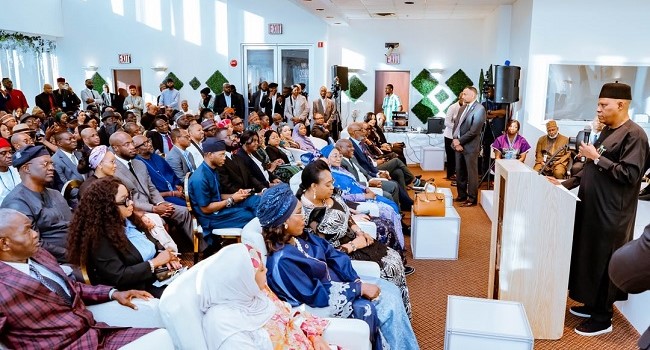
The governor made the disclosure during the state’s monthly covenant prayer service, where he reflected on his entrepreneurial experience before entering public office and explained how he started small before expanding his business interests.

Eno recalled that he initially sold akara and bread, which he branded “Akara Burger”, before expanding the venture into a coffee shop.
“We still have that shop there. I started selling Akara and bread. Back then, I was doing Akara Burger. We open the bread and put it inside for you,” Eno said.


According to him, the business attracted strong patronage from workers, especially those heading to ExxonMobil in the morning.
“People going to Exxon Mobil will buy it in the morning, take coffee. We started coffee shop and then they will take it,” he said.
He explained that customers would buy the akara and bread combination alongside coffee before proceeding to work, helping the business grow into a major source of income.

“At a point, that business was making not less than N10 million every month,” Eno said.
The governor said his experience in the business demonstrated how a modest venture could be developed into a substantial enterprise through innovation and patronage, while also showing that successful businesses could emerge from small beginnings.
His revelation comes against the backdrop of renewed debate over the potential of small-scale businesses to provide income for Nigerians amid economic pressures.

The debate was triggered in part by comments from First Lady Oluremi Tinubu, who had encouraged Nigerians to consider petty businesses, including akara, roasted corn and kuli kuli, as avenues for improving livelihoods.
The remarks, made in June after a Renewed Hope Initiative meeting with wives of state governors in Abuja, attracted criticism from some Nigerians.
Some Nigerians questioned whether such ventures could sufficiently cushion the economic hardship confronting households, with critics arguing that petty trading alone might not adequately address the scale of economic difficulties facing citizens.
The First Lady subsequently clarified that the empowerment programme was not limited to akara sellers.
She explained that it also covered other petty traders dealing in items such as tomatoes, pepper, vegetables and roasted plantain.
She later announced a N100 million intervention for 2,000 petty traders in Jigawa State, with each beneficiary receiving N50,000 to strengthen and recapitalise their businesses.
President Bola Tinubu also joined the public conversation when he jokingly referred to his wife as “Iya Alakara” at a Presidential Press Corps Dinner.
Eno’s personal account, however, presented a different dimension to the debate, having demonstrated through his own entrepreneurial journey that a business built around an everyday food item could, according to his account, become a substantial source of income.
His account also comes against the background of a career that included substantial involvement in business before his transition into government.
The governor’s official profile describes him as a businessman and entrepreneur, with his business career extending beyond the akara and bread venture into the hospitality and tourism sector.
He was involved in the hospitality sector and served as chairman of the Akwa Ibom Hotels and Tourism Board before his political career gathered momentum.
Eno was appointed Commissioner for Lands and Water Resources in Akwa Ibom State in 2021 before emerging as the Peoples Democratic Party’s candidate for the 2023 governorship election.
He won the election and was sworn in as governor on May 29, 2023.
Eno’s account illustrates how the business evolved beyond the sale of akara and bread after he identified an opportunity among morning commuters and workers.
By combining akara with bread and branding the product as “Akara Burger”, he introduced a different presentation of a familiar Nigerian food, while the subsequent addition of coffee expanded the business into a broader breakfast offering.
Workers heading to ExxonMobil became part of the regular customer base, according to the governor, as they stopped to buy akara, bread and coffee before proceeding to work.
The experience, he said, reinforced the importance of innovation, customer patronage and the ability to build an enterprise from a modest beginning.
However, while the N10 million monthly figure has attracted significant attention, Eno’s remarks as reported did not provide further details on the period during which the business generated the stated amount or whether the figure referred to gross revenue, turnover or profit.
The distinction is significant because a business recording N10 million in monthly turnover would not necessarily be making N10 million in net profit after accounting for the cost of ingredients, labour, rent, transportation, fuel, electricity and other operating expenses.
Read also: Governor Inuwa Yahaya Releases N149m To Secure Dangote Shares For 28,284 Vulnerable Women
Nevertheless, Eno’s account has added a personal dimension to the national conversation over whether small businesses can provide meaningful economic opportunities for Nigerians.
For the governor, the akara business was part of an entrepreneurial journey that eventually extended into larger commercial interests before he moved fully into politics.