
THERE are numbers that deserve applause. There are numbers that deserve concern. And then there are numbers that should make an entire society sit down, shut up for a moment and ask itself: What exactly are we doing?

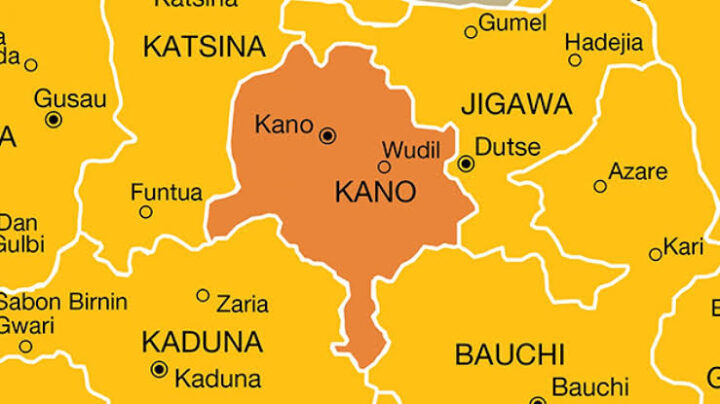
Kano has just given us one: 875,593.

Read also: The One-Term Gambit – By Jonathan Nda-Isaiah
That is the newly verified number of children between the ages of five and 18 who are currently out of school across Kano State’s 44 local government areas. Eight hundred and seventy-five thousand, five hundred and ninety-three children. This is not a statistic floating somewhere in Abuja. These are not children in some distant country. These are our children. Kano’s children.

The figure is actually an improvement from the 989,234 children recorded in UNICEF’s 2023 data, representing a reduction of 113,641, or 11.5 per cent. And yes, give credit where it is due: a reduction is a reduction. The Kano State Government deserves recognition for the progress and, perhaps more importantly, for producing a new statewide survey with verified and disaggregated data rather than continuing to operate largely on estimates. But forgive me if I am not throwing confetti just yet, because 875,593 is still an emergency.
And somehow, in Northern Nigeria, we have become remarkably talented at treating emergencies as background noise.


I wrote some time ago about the Almajiri child, the child we see every morning on our streets, bowl in hand, moving from house to house in search of food, money or whatever kindness the day can spare. We look at him. We shake our heads. We complain about the system. We blame poverty. We blame parents. We blame politicians. We blame everything and everybody. Then we go home.
But perhaps we need to ask a more uncomfortable question: Where did this child come from?
He did not fall from the sky. He was born into a family. That family was born into a community, and that community exists within a society. That society has spent decades reproducing the same problems and then acting shocked when the next generation arrives carrying them.

This is where our conversation about the decline of Northern Nigeria must become more honest. Because northern decline is not only about bandits, terrorists and politicians. It is not only about poverty. Sometimes, decline looks like a child who should be holding a schoolbook but is instead selling sachet water at a traffic light. Sometimes, it looks like a teenager who has never sat inside a classroom. Sometimes, it looks like a young man whose greatest qualification is surviving another day.
Sometimes, it looks like a girl whose childhood quietly ended because her family could not afford to keep her in school. And sometimes, painfully, it looks like adults bringing more children into a system that is already struggling to educate the ones it has.
Which brings me, reluctantly, to the wedding. Yes, that wedding.


The Kano mass wedding that brought 1,500 couples together earlier this month was presented as a social welfare intervention designed to help vulnerable people, widows, divorcees and low-income families overcome the financial burden of marriage. Let me say this clearly before somebody decides to misunderstand me: I am not against the mass wedding.
If you asked me whether helping a poor widow who wants to remarry is a bad thing, I would say no. If you asked me whether helping people who genuinely cannot afford the cost of marriage is compassionate, I would say yes. And if you asked me whether government should sometimes intervene to help vulnerable citizens, absolutely.
But if you asked me whether, given Kano’s circumstances, I would advise the government to make mass weddings a priority, my answer would probably be no.
And not because marriage is bad, but because marriage is the beginning, not the achievement. The wedding lasts a day. The marriage lasts years. The children last generations. And that is where my concern begins.
We have just been told that 875,593 children are already outside school. Now imagine the 1,500 couples who have just begun their new lives. In five years, how many children will they have? In 10 years, how many?
And when those children arrive, who will educate them? Who will feed them? Who will provide healthcare? Who will provide jobs when they grow up? Or will we meet some of them years from now on the same streets where today’s Almajiri children sit?
Are we solving tomorrow’s problem or simply preparing tomorrow’s version of it?
That question became even more uncomfortable when I watched interviews surrounding the wedding. One elderly man proudly explained that this was his third marriage. Another spoke about taking another wife if his condition permitted it.
And I found myself thinking: Wonderful. But does his condition also permit him to educate every child those marriages may produce?
Read also: Will A Nobel Solve The World’s Trump Problem? The President Thinks So – By Azu Ishiekwene
There is a huge difference between being able to marry a woman and being able to raise children. There is a difference between being able to provide a wedding ceremony and being able to provide a future. There is a difference between saying “Allah ya sa albarka” and actually having the capacity to provide food, education, healthcare, shelter and opportunity to the lives that follow that blessing.
And before anyone accuses me of attacking polygamy, please breathe. This is not an argument against polygamy. It is an argument for responsibility.
If a man can afford two, three or four wives, that is between him, his conscience, his circumstances and his religion. But the children did not negotiate the number of households they would be born into. They simply arrive. And when they arrive, society inherits the consequences of our choices.
This is where I worry about the North.
We have spent years talking about population as though numbers automatically equal strength. They do not. A large population without education is not necessarily an asset. A large population without jobs is not necessarily an economic advantage. A large population without healthcare, skills and opportunity can become a permanent cycle of desperation.
Numbers are only powerful when the people behind the numbers are empowered. Otherwise, population becomes another name for a crisis waiting to happen.
UNICEF has long warned that Nigeria’s education crisis is particularly severe in the North, where poverty, geography and social and cultural factors contribute to educational exclusion. It also notes that many children receiving only Qur’anic education are officially classified as out of school because they do not receive basic literacy and numeracy skills.
This is why the Almajiri conversation cannot be separated from the out-of-school conversation. And the out-of-school conversation cannot be separated from poverty. Poverty, in turn, cannot be separated from family size, economic opportunity, governance and the choices we make as a society.
We cannot keep picking one piece of the problem, putting it on a billboard and pretending we have solved the puzzle. We cannot celebrate bringing people into marriage today and refuse to discuss what happens to the children produced tomorrow. We cannot keep asking God to bless the North while refusing to do the work required to build it.
And we certainly cannot keep producing generations of children and then acting surprised when there are not enough schools, teachers, jobs or opportunities for them.
Kano has 875,593 reasons to rethink what progress actually means. Not 875,593 reasons to despair.
The good news is that the number has fallen. The bad news is that 875,593 is still a staggering number of childhoods sitting outside the classroom.
So yes, let us celebrate the reduction. Then let us get back to work.
Let us build schools. Let us improve the ones already standing. Let us bring Qur’anic education and foundational literacy together where appropriate instead of forcing children to choose between faith and formal education. Let us make parents understand that education is not a luxury reserved for families who can afford it.
Let traditional rulers, religious scholars and community leaders become active voices for education. Let wealthy Northerners stop waiting for government before doing something meaningful. Let government spend money not only on ceremonies that make beautiful photographs, but on the boring, difficult and unglamorous work of building a generation.
Because the truth is painfully simple: The North does not need more children born into poverty; it needs more children born into possibility.
And if we genuinely want to reverse northern decline, we must stop asking only: How many people can we marry?
We must start asking: How many children can we educate?
Because 10 years from now, nobody will care how beautiful the wedding ceremony was. The children will bear the consequences.
Read also: Wife Scarcity: What Will Our Young Sons Do Now? – By Funke Egbemode
And when they stand before us educated or uneducated, employed or unemployed, hopeful or hopeless they will be the final report card on the choices we are making today.
That is the VOICE we should be listening to.
- Kabara is a writer and public commentator. Her syndicated column, Voice, appears in News Point Nigeria newspaper on Monday. She can be reached at hafceekay01@gmail.com.