

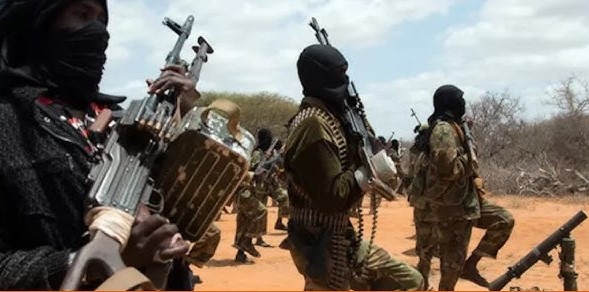
THE Kebbi State Government has raised concerns over the presence of the terror-linked ‘Sai Malam’ sect in Argungu Local Government Area, warning that the group could pose a significant security threat if not swiftly contained.
News Point Nigeria reports that the alarm was raised on Wednesday by the State Security Adviser, retired Colonel Danladi Ribah, during a town hall meeting between the Deputy Inspector-General of Police in charge of the North-West Geo-Political Zone, DIG Suleiman Muhammad Abdul, and security stakeholders in Birnin Kebbi.

Ribah disclosed that the sect was initially detected in neighbouring Sokoto State, where security agencies were able to contain its activities. However, he expressed concern that the group has now established a presence in parts of Kebbi State.

According to him, the state government is already engaging security agencies to address the situation before it escalates into a larger security challenge.


“Without an iota of doubt, Sai Malam adherents are present in large numbers in Argungu. They were earlier detected in Zuru, but in smaller numbers,” Ribah said.
The security adviser noted that Governor Nasir Idris has continued to convene monthly security meetings with heads of security agencies and has consistently provided logistics, equipment and financial support to security services operating across the state.
He explained that the support is aimed at combating bandits, Lakurawa, Mamudawa and other criminal elements threatening the safety of residents.
“The Lakurawa infiltrate Kebbi through hit-and-run attacks from Sokoto State and the Republic of Niger.
“Mamudawa elements enter our territory from Kwara and Niger states, while bandits attack Kebbi from Zamfara State,” he said.

Ribah assured residents that the government remains on top of the security situation and will continue to take all necessary measures to protect lives and property across the state.
The Sai Malam sect is a terror-linked cult group that reportedly operated in parts of Sokoto State before emerging in some communities in Kebbi State.
Its activities reportedly led to the arrest of its leader and several key members in Sokoto State. However, reports indicate that splinter factions of the group have regrouped in Argungu Local Government Area of Kebbi State.


The state government fears that the group’s activities could evolve into a serious security threat if left unchecked.
According to local residents, members of the sect are associated with ritual practices, fraudulent activities and the recruitment of vulnerable youths into their ranks.
One resident, who spoke on condition of anonymity for security reasons, told Daily Trust that the group has been operating in parts of Kebbi State for about two years without drawing significant attention from security agencies.
“I think it is because they do not operate like Lakurawa or bandits that many people have not paid attention to their presence in Kebbi State,” the resident said.
“They are also a serious security threat, but unlike other terrorist groups, they are not known to carry heavy weapons.
“They carry light but dangerous weapons such as knives, charms and other harmful objects which they use to attack or kill their victims,” he added.
Another resident confirmed that members of the sect are based within Argungu township.
“Not everyone can easily identify them. Some of us recognise them through their mode of dressing.
“They usually wear shorts and jalabiyas and prefer riding motorcycles popularly known as ‘rubber-rubber’, mostly painted red.
“They are wealthy and because of their wealth, many young people are attracted and recruited into the group.
“However, to the best of my knowledge, they have not carried out major attacks in Argungu as reported in some parts of Sokoto State,” he said.
Nigeria continues to grapple with widespread insecurity driven by various armed and extremist groups operating across different regions of the country, particularly in the North.
Among the most notorious are Boko Haram and Islamic State West Africa Province, which remain active mainly in the North-East.
Groups such as Ansaru and Lakurawa have maintained a presence in parts of the North-West, while Mamudawa elements have been linked to activities in sections of the North-Central region, particularly Niger and Kwara states.
Several armed groups, including bandits and militias, have also continued to terrorise communities, carrying out killings, kidnappings and other criminal acts while forcing thousands of residents to flee their homes.
Despite sustained military and security operations aimed at curbing their activities, many of these groups continue to pose significant security challenges across the country.
Human rights organisations estimate that terrorist and militant activities have claimed thousands of lives across Nigeria over the past decade.
Responding during the meeting, DIG Suleiman Muhammad Abdul acknowledged that security operations are highly capital-intensive and require sustained support.
He announced that the Nigeria Police Force has officially launched a Violent Crimes Response Unit (VCRU) within the Kebbi State Police Command.
According to him, the unit has been equipped with six operational vehicles and five motorcycles to strengthen rapid-response capabilities, enhance intelligence-led policing and improve efforts to combat violent crimes across the state.
The move, he said, forms part of broader efforts to reinforce security operations and address emerging threats, including the activities of groups such as the Sai Malam sect.