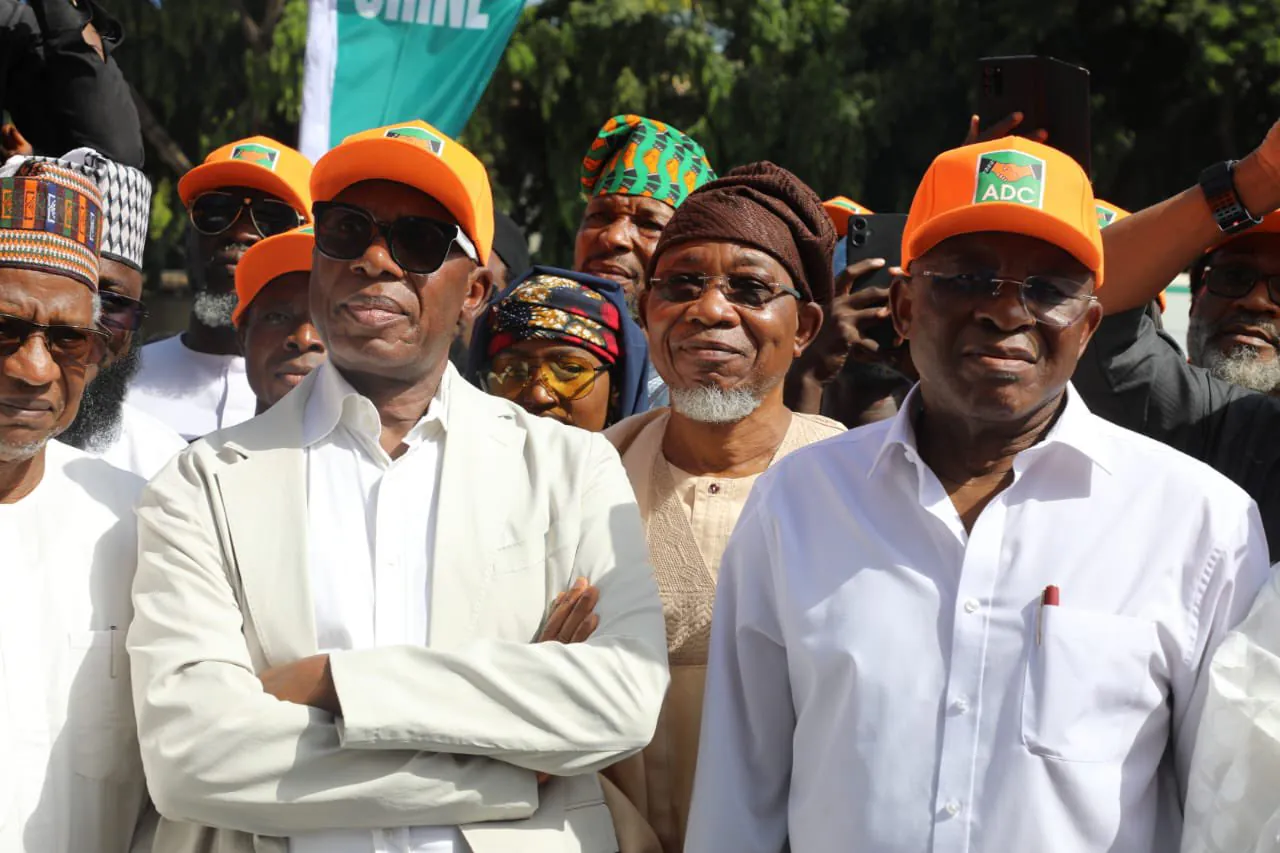

SOMETHING is quietly wrong inside the ruling All Progressives Congress, and the party’s handlers either don’t see it or they don’t care. Across the country, videos have been circulating of grown men , aspiring governors, would-be senators, House of Representatives hopefuls weeping like they just lost a parent. Not because they contested and lost. Because they were not even allowed to contest in the first place. The APC’s consensus arrangement has effectively slammed the door on their political ambitions, and the party is behaving as if this is entirely normal.
I want to be fair here. I can understand the logic , up to a point. When a sitting president or a first-term governor exercises some influence over his party’s ticket, that is not entirely alien to Nigerian politics or indeed to party politics anywhere. A governor who has spent four years building the party structure in his state has earned some political capital. Fine. I can live with that. What I cannot stomach is the scenario playing out in places like Nasarawa and Yobe, where a governor serving his second and final term wakes up one morning, points at a man and says, in effect, “this is your next governor” and the rest of the aspirants are expected to fold their forms and go home quietly.

Read also: Nigerians’ Mental Health Is Under Siege – By Boma West

Who gave him that right?I genuinely want to know. Because the last time I checked, the APC is a political party, not a private estate to be bequeathed to whoever the outgoing landlord fancies. The people being shut out are not strangers who wandered in from the street. Most of them are card-carrying members who have sacrificed years working for the party in their localities. Some of them spent real money substantial money buying their expression of interest and nomination forms, only to be told, with straight faces, that a consensus has been reached. By whom? In whose living room?


Mind you, this is not just about sentiment or bruised egos. There is a structural problem here that the APC’s hierarchy seems determined to ignore.
The Electoral Act of 2022 changed the game significantly. Under the old arrangement, a politician denied a party ticket could simply dust himself off, decamp to another party and contest. It was messy, but it served as a safety valve. That valve has now been welded shut. The new law places severe restrictions on cross-carpeting after primaries. So what happens to an aspirant in Kogi or Plateau who has mortgaged his property to pursue a senatorial ticket, is told the consensus candidate has already been chosen, and cannot legally decamp? He has nowhere to go except inward. And in Nigerian politics, when a man has nowhere to go, he goes underground. He becomes the quiet hand that stokes the fire on election day.
The APC of all parties should understand this better than anyone. Let me remind them how they got to where they are today. In 2015, the PDP was doing exactly what the APC is doing now handing out tickets by diktat, suppressing internal democracy, treating aspirants as nuisances rather than stakeholders. The result? Samuel Ortom of Benue and Atiku Bagudu of Kebbi, both denied fair contests under the PDP, crossed over to the APC and the rest, as they say, is history. Ortom ruled Benue for eight years and Bagudu governed Kebbi for two terms. The PDP’s arrogance handed the APC some of its most significant victories in 2015. Now the APC is handing the same ammunition to its opponents and to its own aggrieved members.
Like I have said previously on this page, anti-party activity is the most potent weapon in Nigerian politics. It does not announce itself. You will not see it in the campaign speeches or the party manifestos. It happens in the quiet conversations behind closed compound walls, in the phone calls on election eve, in the deliberate absence of ward coordinators on polling day. By the time the results are announced and the margin of loss is being dissected, the damage is done. The consensus arrangement, handled badly, is a factory for exactly this kind of organised sabotage.
The problem is even more acute at the National Assembly level. We are not talking about one or two states here. Across the country, aspirants who paid for forms and made their intentions known have been ambushed by consensus pronouncements from above. Some of them had already begun grassroots mobilisation, already built alliances with community leaders, already spent money they cannot recover. For these people, the consensus is not a party decision , it is a personal injury. And personal injuries in Nigerian politics rarely go unpunished.

Read also: APC Slams Atiku For Addressing Tinubu As ‘Bola’, Says 2027 Campaign Will Focus On Achievements
I am not saying consensus candidacy is always wrong. In certain circumstances, a party that closes ranks around a single candidate can project unity and ward off the opposition more effectively than one torn apart by a contentious primary. There are states where the incumbent governor leaves with a strong approval rating and his endorsement carries genuine weight. In those cases, aspirants who voluntarily stand down deserve respect and proper accommodation in the party’s future calculations.
But voluntary is the critical word. When men are forced to swallow a candidate they do not believe in, when their forms are rendered useless before a single vote is cast, you are not building consensus ,you are building a grudge. And Nigerian politicians do not forget grudges. They nurse them carefully, sometimes for years, then present the invoice at the worst possible moment.


What the APC leadership should understand is that 2027 is not going to be an easy election cycle for the party. The economic realities of the past two years have not been kind to the average Nigerian. Fuel prices, food inflation, the naira ,these are not abstract statistics, they are lived daily experiences, and people do not separate their economic pain from their ballot choices. The party is going into that election with a structural headache it did not need to create.
Here is the uncomfortable arithmetic. A governor picks his successor by fiat in a state with five or six serious aspirants. All five or six have networks, resources, and loyal supporters. Even one well-connected aggrieved aspirant who quietly tells his people to “sit down” on election day can flip the result in a state where the ruling party’s typical margin is five to ten percent. Multiply that across twenty states and you have the recipe for a National Assembly bloodbath.
The APC needs to rethink this approach urgently. The party should insist on transparent, verifiable primaries where aspirants can test their popularity among actual party members. Where consensus is genuinely desired, all parties must come to the table voluntarily and the terms must be explicit ,including how those who stand down will be rewarded or accommodated in the incoming administration. You cannot ask a man to sacrifice his political ambition and offer him nothing but vague promises of future consideration.
The party’s outgoing governors also need to be reminded of a basic truth: their political relevance expires the moment their tenure ends. The goodwill they carry into retirement depends entirely on whether they handed over a united party or a fractured one. A successor who crawls into office on the back of a compromised process, facing an army of internal enemies from day one, is a liability for the party not an asset.
Read also: Wike, Adeleke, Soludo, Dankwambo Make APC’s Revised Presidential Campaign Council List
Aggrieved candidates, now choked by an Electoral Act that prevents defection, after the primaries will find other ways to settle scores. Some will work quietly for the opposition. Because the APC is currently the ruling party, these cracks are not yet fully visible. Power has a way of papering over fractures that are deeper than they appear. But elections have a way of revealing everything.
The party’s national leadership owes its members a better deal than this. Internal democracy is not a luxury , it is the foundation of a party’s legitimacy with the electorate. When party members see that their own party does not respect their votes, why would they trust that party to respect the votes of the general public?
- Nda-Isaiah is a political analyst based in Abuja and can be reached on jonesdryx@gmail.com. His syndicated column appears on News Point Nigeria newspaper on Saturday.