For decades, Nigeria postponed the reckoning. Tinubu chose reform instead. The pain has been real, but so, increasingly, is the reason for hope.
A FEW days ago, a friend of mine, a university professor, and I were discussing the strike by lecturers in Lagos State.
I offered an opinion about the dispute with the Lagos State government. He listened and told me, in effect, that I was being insensitive.
People were struggling, he reminded me. Lecturers were struggling. There was hardship in the country. It was easy to talk about government finances and economic necessity when somebody else was trying to make a salary survive another month.
I disagreed with some of what he said.
But the accusation stayed with me.
Insensitive.
It is an uncomfortable word when it comes from someone whose intelligence you respect, partly because it forces you to consider the possibility that he has seen something in your argument that you have not.
And so I began thinking about what exactly I had been defending.
Was I becoming so persuaded by the economic case for reform that I had stopped seeing the people absorbing its consequences?
Was I looking at Nigeria from thirty thousand feet while Nigerians were trying to buy dinner on the ground?
Or was there another danger that our understandable anger at the pain of reform could make us nostalgic for economic arrangements that had become impossible to sustain?
I began writing because I could not quite dismiss either question.
This is where I landed.
I want the reforms to work.
I think Nigeria needed many of them.
And I think those of us who believe that have a particular obligation not to become casual about the suffering involved.
Because there is an old Nigerian method for dealing with an unpleasant economic fact.
Argue with it.
If petrol costs more than Nigerians can comfortably afford, subsidise it.
If the naira is worth less than the official exchange rate says it is, create another exchange rate.
If government is spending beyond its means, find a way to finance the difference.
If any of this becomes unsustainable, postpone the reckoning.
Nigeria became remarkably good at this.
Then Bola Tinubu arrived and, almost immediately, chose the reckoning.
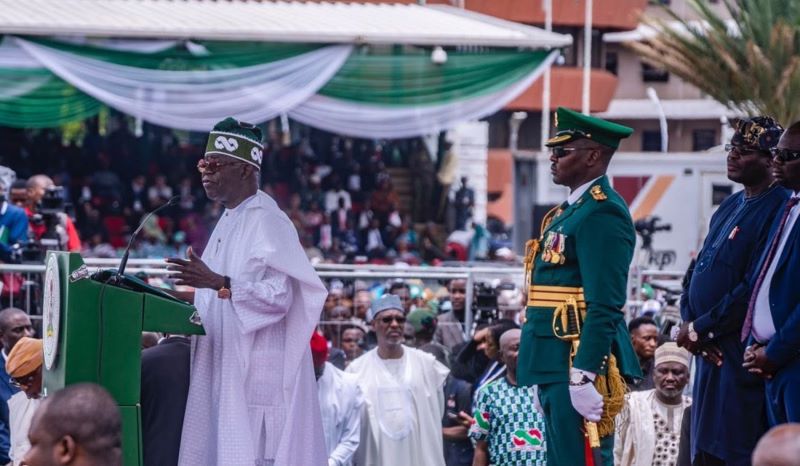
“Subsidy is gone,” he declared at his inauguration in May 2023.
It may prove to be the most consequential sentence of his presidency.
The petrol subsidy was removed. The foreign-exchange system was liberalised. The naira was allowed to find a price much closer to what scarcity actually dictated. Central Bank financing of government deficits was curtailed. Monetary policy tightened. Tax and revenue reforms followed.
Individually, many of these changes had been discussed for years.
Tinubu’s distinction was not discovering them.
It was doing several of them at once.
And that is where the argument about his presidency really begins.
Because Tinubu did something Nigerian governments have often struggled to do: he attacked arrangements that were politically useful precisely because they were economically difficult to sustain.
The problem was that those arrangements were not merely numbers in a budget.
People had built their lives around them.
Cheap petrol was not an economic theory to the man taking two buses to work.
The exchange rate was not an abstraction to the pharmacist importing medicine.
Deficit financing was invisible to most citizens until its consequences appeared as inflation.
Governments can correct prices overnight.
Families cannot correct incomes overnight.
My friend was right about that much.
Hardship is not an abstraction simply because the policy producing some of it can be defended.
But neither is economic reality.
And somewhere between those two truths lies the argument Nigeria now needs to have about Tinubu’s reforms.
The easiest way to defend Tinubu is to say that the reforms were necessary.
The easiest way to attack him is to point to the hardship that followed.
Neither gets us very far.
The harder question is whether Nigeria is suffering through the destruction of an old economic order or merely becoming more expensive.
There is now evidence for the first possibility.
The foreign-exchange market functions more normally than it did during the period of multiple rates. External reserves have strengthened. Inflation, though still painful, has fallen substantially from its earlier heights. Growth has improved. Government revenues have strengthened.
The IMF’s 2026 assessment concluded that reforms since 2023 had strengthened macroeconomic stability, reduced fiscal vulnerabilities, rebuilt external buffers and improved the functioning of the foreign-exchange market.
Those are not imaginary achievements.
Neither is hunger.
The same IMF estimates poverty at 63 percent under Nigeria’s national poverty line and says roughly 27 million Nigerians faced food insecurity in the fall of 2025.
There, in two paragraphs, is the contradiction I had been struggling with in that conversation with my friend.
The country can look healthier from thirty thousand feet while too many Nigerians are still struggling on the ground.
Both things can be true.
And politics happens on the ground.
This is where defenders of reform including people like me who want these reforms to succeed, have to be careful.
We cannot begin treating suffering as proof of seriousness.
Reform is painful, we say.
True.
But pain is not an economic indicator.
A patient screaming on the operating table is not evidence that the surgery succeeded.
The operation has to work.
That is the standard Tinubu himself has chosen.
Removing a subsidy is not the achievement. It creates an opportunity.
A more realistic exchange rate is not the achievement. It creates an opportunity.
Collecting more revenue is not the achievement. It creates an opportunity.
The achievement comes afterward.
What does Nigeria build with the fiscal space?
Can businesses plan?
Can factories obtain reliable electricity?
Can farmers move produce without insecurity and terrible roads swallowing their margins?
Can ports become less expensive?
Can a young Nigerian find productive work?
Can a university professor live with dignity on his salary?
That last question means more to me now than it did before that conversation.
Because macroeconomics eventually has to become microeconomics.
It has to arrive in somebody’s bank account.
The World Bank now describes Nigeria as having made meaningful progress toward macroeconomic stability while warning that household incomes have not fully recovered and poverty remains high.
That may be the most important fact about Nigeria’s economy today.
The reform has reached the balance sheet.
It has not fully reached the household.
Nigeria has been here before, though never quite like this.
Oil allowed successive governments to avoid choices other countries were forced to make.
When revenue was plentiful, inefficiency could be financed.
When it wasn’t, Nigeria borrowed against tomorrow.
Subsidies accumulated constituencies. Exchange-rate distortions created winners. Government became not merely an institution but a vast mechanism for distributing economic advantage.
Everybody knew parts of the system were broken.
Almost everybody benefited from some part of the breakage.
That is why reform was always easier to announce than sustain.
Nigeria would approach the cliff, look down, adjust slightly and retreat.
Tinubu’s gamble was to jump across.
History will care less about the courage of the jump than where the country lands.
And this is where my sympathy lies with the reform project.
Nigeria could not indefinitely subsidise yesterday.
Petrol has a cost.
Foreign currency has a price.
Debt has consequences.
Deficits eventually become somebody’s inflation.
Government revenue cannot permanently depend upon oil and monetary improvisation.
A country does not become prosperous by refusing to acknowledge what things actually cost.
Tinubu has forced Nigeria to confront some of those realities.
That matters.
But there is a seductive story governments tell themselves during periods of reform.
First comes sacrifice.
Then stability.
Then investment.
Then growth.
Then prosperity.
It is a beautiful sequence.
The trouble is that history contains countries that reached the last line and countries that got stuck somewhere around sacrifice.
There is nothing automatic about the journey from macroeconomic stability to mass prosperity.
Government still has to govern.
And arithmetic cannot be the final purpose of government.
A country is not a spreadsheet with a flag.
The Nigerian who has endured higher prices is entitled to ask when macroeconomic stability becomes personal stability.
When does the reform reach his salary?
When does it reduce the cost of doing business?
When does it create the job his daughter needs?
When does greater government revenue become a functioning hospital, university or railway rather than another impressive figure in a presentation?
When does sacrifice become dividend?
These questions are not evidence that Nigerians do not understand reform.
They are the entire point of reform.
Tinubu has already completed the politically dramatic part.
He broke with an economic order that had become increasingly difficult to defend.
Some results are now visible. External buffers have strengthened. The foreign-exchange market functions better. Inflation has moved significantly below its previous highs. The IMF says the reforms have increased Nigeria’s economic resilience.
That gives me reason for hope.
Not certainty.
Hope.
There is a difference.
Certainty requires pretending we already know how this experiment ends.
Hope means believing the direction can work while insisting that its success still has to be demonstrated in people’s lives.
Now comes the less dramatic and much harder part.
Building.
Power.
Transport.
Security.
Productivity.
Schools.
Universities.
Healthcare.
Jobs.
Competent public investment.
An economy in which Nigerians produce more rather than merely pay more.
That will determine the meaning of the Tinubu reforms.
Not whether the president was bold.
He was.
Not whether the old system contained serious distortions.
It did.
Not whether Nigerians suffered.
They have.
The unanswered question is what all that boldness and all that suffering purchase.
And perhaps that is what my conversation with my friend helped me understand.
You can believe that a country must endure difficult reforms without becoming indifferent to the people carrying their weight.
In fact, the more strongly you believe the reforms are necessary, the more demanding you should be about what comes after them.
Because sacrifice creates an obligation.
If Nigerians are asked to give up the comforts of an unsustainable economic order, government owes them more than better statistics in return.
It owes them a better economic order.
That is why I am rooting for these reforms to work.
Not because hardship is admirable.
Not because every decision has been correct.
And certainly not because governments deserve applause merely for being willing to inflict pain.
I am rooting for them because Nigeria has spent too much of its history postponing difficult choices and sending the bill to the next generation.
Tinubu has made a different wager.
That Nigeria can confront economic reality now and build prosperity afterward.
The first half of that wager is already well underway.
The second is the one that matters.
My professor friend reminded me, perhaps unintentionally, of how we will know whether it succeeds.
Not when the IMF says so.
Not when government says so.
Not even when people like me who believe in the reforms say so.
We will know when the lecturer no longer needs someone to explain the recovery to him.
When the market woman can feel it.
When the commuter can feel it.
When the young graduate can find a place in it.
When the numbers no longer need defending because ordinary life has begun making their argument for them.
That is the Nigeria I am rooting for.
And that is the burden Tinubu’s bet must now carry.

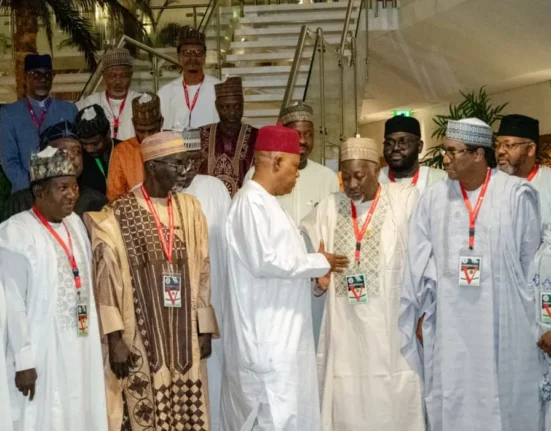
Read also: ‘Nothing To Fear If Tinubu Wins Second Term’, Shettima To Northern Leaders

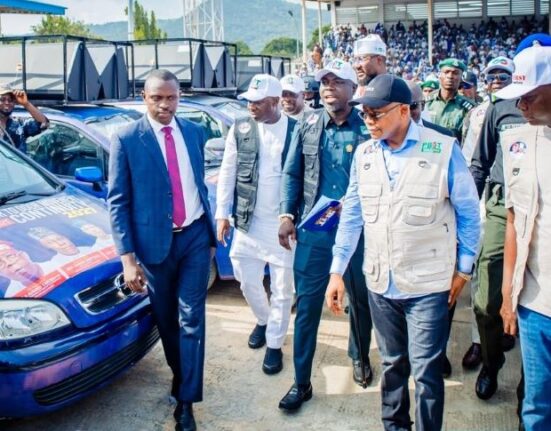
Read also: 2027: Tompolo Donates 25 Vehicles To Tinubu’s Re-Election Campaign In Kogi


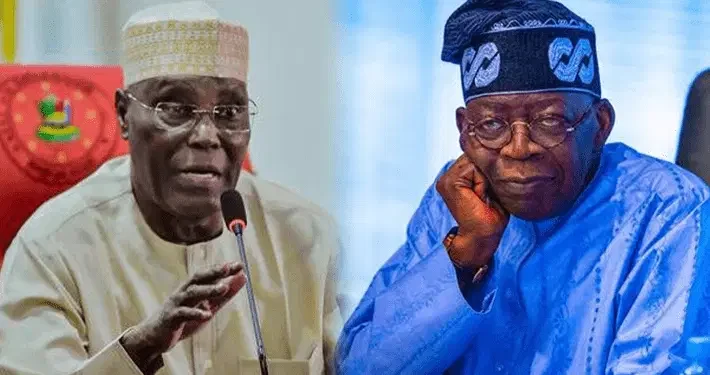
Read also: Atiku’s Demagoguery In The Face Of Tinubu’s Logical Policies – By Sunday Dare
- Opere is a filmmaker, columnist, and photographer who writes from Canada.