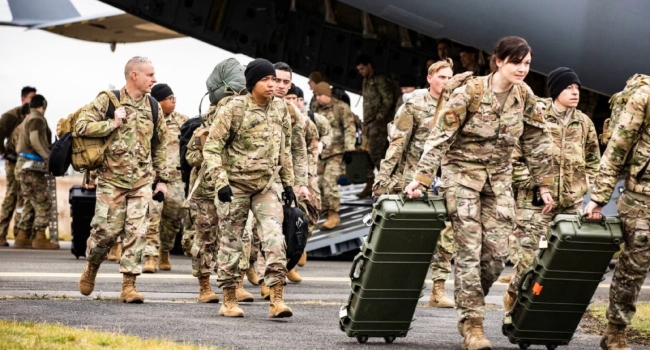
THE United States has withdrawn most of the troops it deployed to Nigeria for a recent counterterrorism mission after a joint operation with Nigerian forces targeting fighters of the Islamic State group in the North-East region.


News Point Nigeria reports that the Commander of the U.S. Africa Command (AFRICOM), General Dagvin Anderson, disclosed this during a digital press briefing on Thursday following the 2026 African Chiefs of Defence Conference held in Luanda, Angola.
Read also: Troops Arrest Suspected Terrorist Collaborator In Kaduna, Destroy Three Explosives In Zamfara



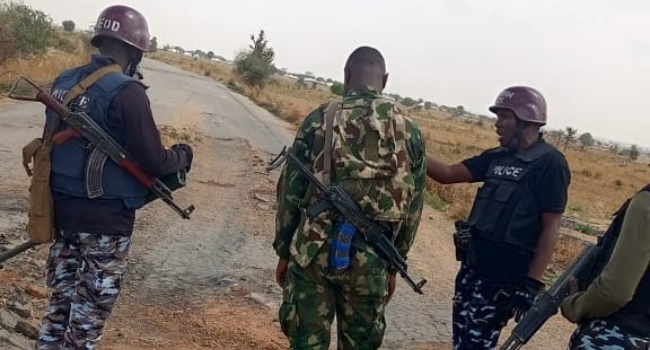
According to General Anderson, the operation was carried out in close partnership with the Nigerian military to jointly prosecute the number two leader within the ISIS/Daesh network, who was responsible for the group’s global operations, media, and recruitment activities.


He explained that the United States contributed specialised intelligence and operational capabilities, while Nigerian forces led the effort on the ground, adding that the deployment was temporary and that most U.S. personnel involved in the mission had since left Nigeria.

“And so that operation in the Lake Chad Basin of Nigeria not only helped the countries in that immediate region; it also helps countries globally as that disrupts the ISIS network. And then we have withdrawn much of our forces that were just there for that operation, but are continuing the partnership that Nigeria has asked for to help continue with the intelligence sharing and the understanding that’s necessary to be able to prosecute these difficult tasks,” he said.
General Anderson said the operation reflected AFRICOM’s wider approach of supporting African-led security efforts by providing capabilities that partner nations may not possess, rather than maintaining a long-term military presence.

“I think the partnership that we’ve shown recently with Nigeria, where Nigeria’s a very capable and large country, it’s got a strong economy; it’s got a large, educated population; it’s got a very capable military. But there are things that we have learned in the counterterrorist fight over several years that we were able to assist and integrate with them to help them with their intelligence and help with the intelligence sharing,” he said.
The commander said the operation showed how limited U.S. support could boost partner forces without constituting external interference. He added that after most U.S. personnel withdrew, Nigerian forces continued independently to sustain pressure on ISIS targets.

“So I think as we go forward, that is an example of how we’re looking at engaging with partners to help them be more effective by only bringing unique U.S. capabilities that allow the partner to be effective in these fights.
“Nigeria has been very active since that operation in May. They continue to prosecute targets themselves,” he said.
Anderson also said the operation had significantly weakened ISIS leadership and contributed to an increase in defections and surrenders among the group’s fighters in north-eastern Nigeria.


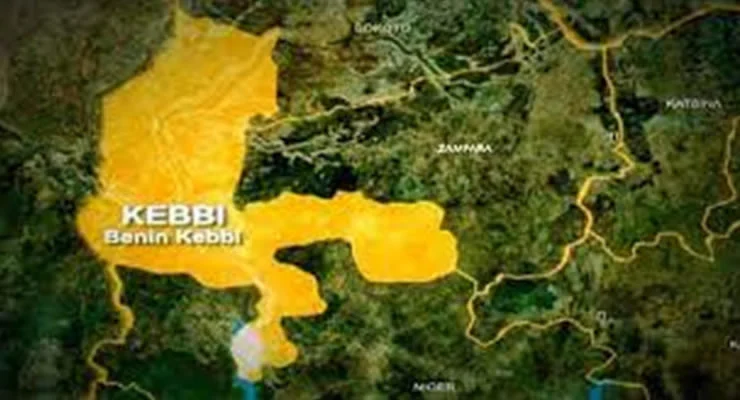
Read also: Troops Repel Lakurawa Attack On Kebbi Base, Recover 17 Motorcycles, Arms
“ISIS’s leadership has been significantly degraded there. That’s leadership locally that has been disrupted, but also their global network, which is limiting their ability to communicate,” he said.
He added: “They have allowed, or had more defections or surrenders of ISIS followers in that northeastern area of Nigeria. So that’s a combined effort that continues to build.”

The AFRICOM commander made the remarks while responding to questions on the United States’ long-term security strategy in Africa during the conference, which brought together defence chiefs from 35 African countries, alongside representatives from the United States, Brazil and other security partners.
General Anderson said the conference focused on strengthening African-led security solutions through intelligence sharing, innovation, economic cooperation and regional partnerships to address evolving security threats across the continent.
Meanwhile, Nigeria’s Defence Minister Christopher Musa told AFP that US combat troops had deployed to Nigeria specifically for the May operation.
That group was separate from the roughly 200 non-combat troops deployed to Nigeria earlier this year for broader training and technical assistance.
“They came in, did that, did their work, and took off,” Musa said.
It was unclear if some troops from the broader training mission had also pulled out, and if so, how many remained.
In February, the US deployed military personnel to Nigeria to support intelligence, surveillance, and counterterrorism operations.
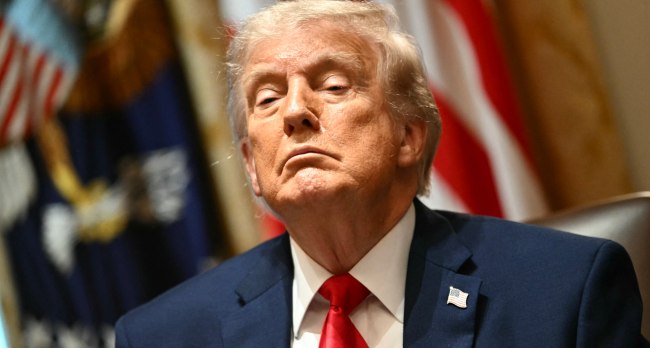
The move came after security collaboration between Nigeria and the US over the fight against terrorist groups. Last year, President Donald Trump had redesignated Nigeria as a Country of Particular Concern and promised to help Nigeria fight terrorism.
Read also: Macron To Visit Nigeria October 28, 29 For State Visit – Presidency Source
In December 2025, the US carried out strikes on terrorist enclaves in Sokoto, which the Nigerian government said were carried out jointly.
About two months ago, a joint US-Nigerian operation led to the death of Abu-Bilal Al-Minuki, the second-in-command of ISIS, at his hideout in Borno State.