

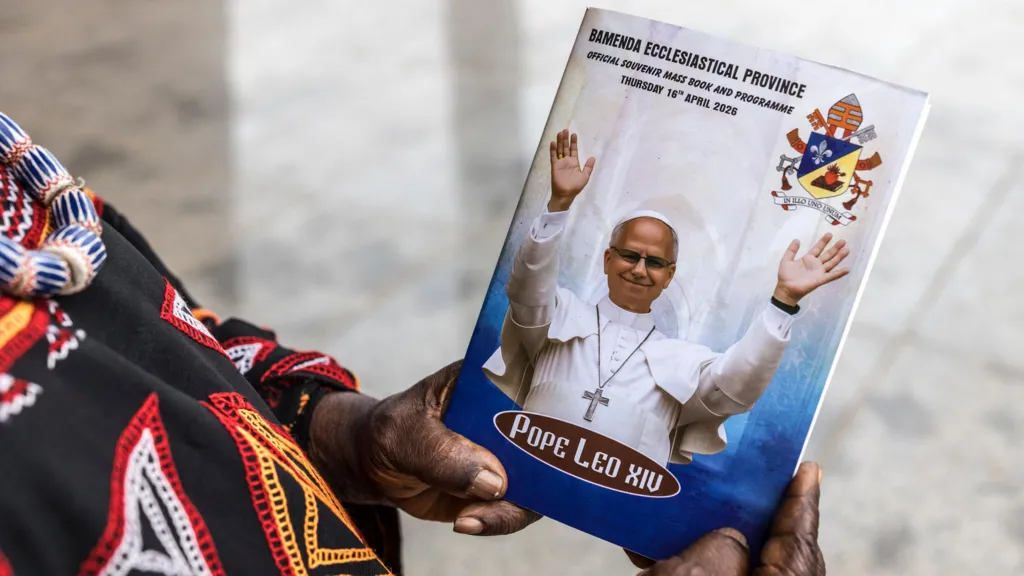
ANGLOPHONE separatists in Cameroon have announced a period of “safe travel passage” and halted fighting ahead of Pope Leo XIV’s visit to the conflict‑hit region this week.
Leaders of several armed and secessionist groups said the three‑day measure was in recognition of the “profound spiritual importance” of the papal visit, which starts on Wednesday, and the need to safeguard civilian life.

In a statement from Unity Alliance – which brings the groups together – they said they would facilitate the movement of those celebrating the visit. The government is yet to comment.


A near-decade of violence in the English-speaking regions has left at least 6,000 dead and many more forced from their homes.
Pope Leo is currently in Algeria for a second day as part of his 11-day tour of the continent, in which he will also visit Cameroon, Angola and Equatorial Guinea.
The pontiff arrived in Algeria on Monday, marking the first visit by any pope to the predominantly Sunni Muslim country.
It is also the birthplace of St Augustine, and Leo XIV is the first pontiff from the order to follow his teachings.
He is now in Annaba – where the saint was a bishop – and in the afternoon, and led Mass at the Basilica of Saint Augustine.
During a meeting at a nearby nursing home run by Catholic nuns, the Pope reiterated his message of peace.

“God’s heart is torn apart by wars, violence, injustice and lies,” he said, explaining that his heart was “not with the wicked, the arrogant or the proud”.
“God’s heart is with the little ones and the humble, and with them he builds up his kingdom of love and peace day by day, just as you are striving to do here in your daily service, friendship and life together.”
The Pope’s second country stop is Cameroon, where he will visit Bamenda, the capital of the country’s North-West region.


The city is regarded as the centre of Cameroon’s conflict between Anglophone separatists and state forces.
A national dialogue organised by the government in 2019 failed to end the violence in the country’s two English‑speaking regions.