

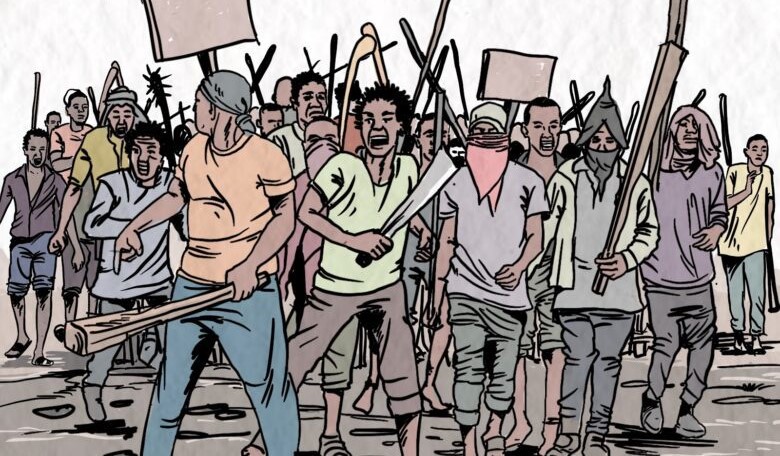
AS Nigeria gradually inches closer to the 2027 general elections, a new wave of anxiety is spreading across the country over the increasingly heated rhetoric dominating the nation’s political landscape. From threats of resistance at polling units to references to some of the darkest episodes in Nigeria’s political history, many Nigerians fear that the tone of political conversations is becoming dangerously combustible at a time the country is already battling economic hardship, insecurity, social distrust and deep political divisions.
In recent days, controversial remarks by leading opposition figures have triggered intense nationwide debate, with stakeholders warning that careless political statements could inflame passions, deepen tensions and push the country toward a dangerous path of confrontation and unrest.
The growing fears have also revived painful memories of politically motivated violence that once plunged parts of Nigeria into chaos, leaving many citizens worried about the direction of the nation’s democracy ahead of another crucial electoral cycle.


In this Sunday political feature, News Point Nigeria examines the rising temperature within Nigeria’s political space, the dangerous implications of inflammatory rhetoric ahead of 2027, and the growing calls for restraint from civil society organisations, election observers, political analysts, academics and concerned Nigerians, who warn that statements capable of inciting violence must not be ignored if the country hopes to preserve peace, stability and democratic order.
At the centre of the controversy is a statement credited to the Secretary of the Board of Trustees of the New Nigeria People’s Party (NNPP), Buba Galadima, who urged Nigerians to approach polling units armed with bottles and jerry cans of kerosene in order to defend their votes “by any means necessary.”
The statement, delivered during a stakeholders’ meeting organised by the Obi-Kwankwaso Movement in Abuja, immediately sparked outrage across political and civic circles, with many warning that such rhetoric could embolden political thuggery, voter intimidation and electoral violence.
Galadima’s controversial comments came barely one week after Seyi Makinde invoked the painful memory of “Operation Wetie” while cautioning against the dangers of one-party dominance in Nigeria.
Speaking last Saturday in Ibadan during the national summit of All Opposition Political Party Leaders, Makinde warned political actors against repeating the mistakes of the past.
“For those that are carrying on as if there’s no tomorrow, they should remember that ‘Operation Wetie’ started from here. This is the same Wild Wild West,” the governor said.

Although Makinde’s supporters argued that the governor merely referenced history as a warning against authoritarian politics, critics insisted that invoking one of the darkest periods in Nigeria’s political history was both dangerous and insensitive in the current political climate.
“Operation Wetie” remains one of the most violent chapters in Nigeria’s democratic evolution. The campaign of political violence rocked the old Western Region in the mid-1960s, particularly in Ibadan, following the highly disputed 1965 regional elections which were widely believed to have been manipulated in favour of the ruling faction.
The phrase, derived from a Yoruba expression meaning “wet it” or “soak it,” described the horrifying practice of dousing political opponents, homes and vehicles with petrol before setting them ablaze.


The crisis eventually spiralled into widespread unrest, killings, arson and instability that contributed significantly to the collapse of the First Republic and Nigeria’s eventual descent into military intervention.
For many Nigerians, therefore, references to “Operation Wetie” are not mere political metaphors. They are painful reminders of a violent era many hoped would never return.
Yet the controversy intensified further after Galadima openly urged Nigerians to prepare for what he described as a difficult democratic struggle against what he called “fascists.”
“Salvaging a country from the hands of fascists like this is not an easy thing. It needs sacrifice, strategy, and the use of the Internet. So, ladies and gentlemen, be prepared to be in the trenches to safeguard our freedom. Let no one deceive you that it is going to be an easy task,” he declared.
“In your revolution, I expect you to say, come rain, come shine, we must democratically, through the ballot box, remove this bad government. The ball is in our court.
“And during the elections, whether I am alive or dead, go to the polling centres with your bottles and jerry cans of kerosene. Either they do what is right, or we all die there. So there will be no beneficiary.”
While Galadima maintained that Nigerians must remain committed to democratic change through the ballot box, his comments generated widespread condemnation from civic organisations and election observers who warned that such statements could undermine confidence in the electoral process and trigger unrest.
The NNPP chieftain also accused the ruling All Progressives Congress (APC) of attempting to suppress opposition parties ahead of the next election cycle, alleging broader plans to impose a sole presidential candidate on Nigerians.
He further raised concerns over alleged plots to frustrate opposition parties, particularly the African Democratic Congress (ADC), through legal and procedural obstacles.
Galadima additionally expressed fears over the safety of opposition figures, alleging that desperate political actors could resort to extreme measures in the build-up to the elections.
However, despite these concerns, he insisted that Nigerians must remain steadfast in pursuing democratic change through constitutional means.
But for many observers, the problem lies not only in the allegations themselves, but in the language being used to communicate political grievances.
Civil society organisations and election monitoring groups say careless rhetoric has historically played a dangerous role in Nigeria’s electoral crises, warning that the country cannot afford another season of violence.
Speaking with this newspaper, the Executive Director of Yiaga Africa, Samson Itodo, described the comments as “very unfortunate and disappointing.”
According to him, no political provocation justifies encouraging citizens to embrace violence during elections.
He stressed the need for stronger accountability measures, calling on the Independent National Electoral Commission (INEC), political parties and the National Peace Committee to ensure strict enforcement of peace accords and sanctions against politicians who deploy inflammatory language.
Itodo also urged the international community to impose consequences such as visa bans and asset freezes on politicians who incite violence.
“The international community, as partners of Nigeria, should also use their partnership to help urge political leaders to account for some of the comments that they make,” he said.
“Sanctions like visa bans are some of those consequences that should be imposed on politicians who incite violence. Beyond that, there is a need for the international community to use its leverage to discourage any attempt to instrumentalise violence as a political strategy or campaign tool.”
On his part, the Chairman of the BallotEyes Election Observer Group, Abideen Opeyemi, warned that the comments by Makinde and Galadima could deepen voter apathy and discourage citizens from participating in elections.
“Such statements are deeply concerning, especially in a country already grappling with voter apathy. When politicians make remarks that suggest violence or self-defence at polling units, it discourages citizens from participating in the electoral process,” he said.
“It calls for sober reflection, not just from political actors, but also from the electoral umpire, security agencies, and citizens themselves. These comments are unnecessary and dangerous because they can scare away eligible voters and further depress turnout.”
Opeyemi explained that his organisation relies heavily on data-driven approaches to monitor and prevent election-related violence through intelligence gathering and predictive analysis.
“As a civil society organisation, we analyse patterns of violence based on field intelligence, observer reports, and data gathered from primary elections through the pre-election period. We use this to engage stakeholders, including security agencies and INEC, on potential flashpoints,” he explained.
“Through predictive modelling, we can map high-risk areas and raise early warnings. This approach proved useful in the last general elections, and we are currently working on another comprehensive report to identify emerging hotspots ahead of 2027.”
He added that modern technology and artificial intelligence could significantly strengthen efforts to prevent violence if security agencies act swiftly on credible intelligence.
Meanwhile, the ruling APC dismissed the opposition rhetoric as a reflection of frustration and political confusion within opposition camps.
Reacting, the National Secretary of the APC, Ajibola Basiru, described the opposition figures as politically directionless and aggrieved over what he termed loss of access to power and patronage.
According to him, no serious-minded Nigerian should take such comments seriously.
Basiru further questioned the preparedness of the opposition for the 2027 elections, noting that many opposition parties were still battling internal disputes over candidature and leadership.
“Which candidate are they fielding? You have not resolved the issue of candidature, and you are talking about the general election. It is like putting the cart before the horse,” he said.
“They should first sort out the litigation in their party, which the Supreme Court has said they should go to the High Court to resolve, and then address the issue of candidature. It is like someone who has not proposed to a wife and is already talking about what will happen at the naming ceremony.”
Beyond the partisan exchanges, however, political analysts say the deeper issue remains the increasingly toxic tone of political discourse in Nigeria.
One of the strongest warnings came from Kabiru Bashir Garba, who condemned recent inflammatory statements by both opposition and ruling party figures.
According to the political scientist, reckless rhetoric ahead of the 2027 elections could dangerously overheat the polity and threaten national stability.
Reacting specifically to Galadima’s comments urging voters to approach polling units with kerosene and bottles to defend their votes “by any means necessary,” Prof. Garba described the remarks as “deeply irresponsible, provocative and dangerous in a fragile democracy like Nigeria.”
He also expressed concern over Makinde’s references to “Operation Wetie,” warning that political leaders must avoid statements capable of reviving painful memories of violence, fear and ethnic tension.
The professor noted that the Western Region crisis of the 1960s remains one of the darkest periods in Nigeria’s political history, marked by killings, arson and widespread instability.
According to him, democracy thrives on dialogue, tolerance, credible institutions and political maturity not threats, intimidation or violent symbolism.
Prof. Garba warned that many elite politicians making reckless statements may ultimately flee the country if violence erupts, while ordinary Nigerians would bear the devastating consequences.
“If this country burns, many of these elite politicians will simply pack their bags and relocate abroad, but the poor masses will remain here to face the destruction, killings and hardship,” he warned.
He therefore called on security agencies, including the police and intelligence agencies, to begin proactive monitoring of political speeches and hold accountable anyone whose comments threaten public peace, regardless of political affiliation.
As the countdown to 2027 gradually intensifies, many Nigerians fear the country may once again be drifting toward a dangerous era where political disagreements are increasingly framed in combative and emotional terms rather than through democratic engagement and issue-based campaigns.
For stakeholders, the warning signs are already visible.
The memories of past electoral violence, ethnic tension, political assassinations and post-election crises remain fresh in the minds of millions.
Whether Nigeria’s political class will heed those warnings remains uncertain.
But what is increasingly clear is that many Nigerians are no longer comfortable with the rising temperature of political conversations ahead of 2027 especially when those conversations begin to echo some of the darkest moments in the country’s history.