
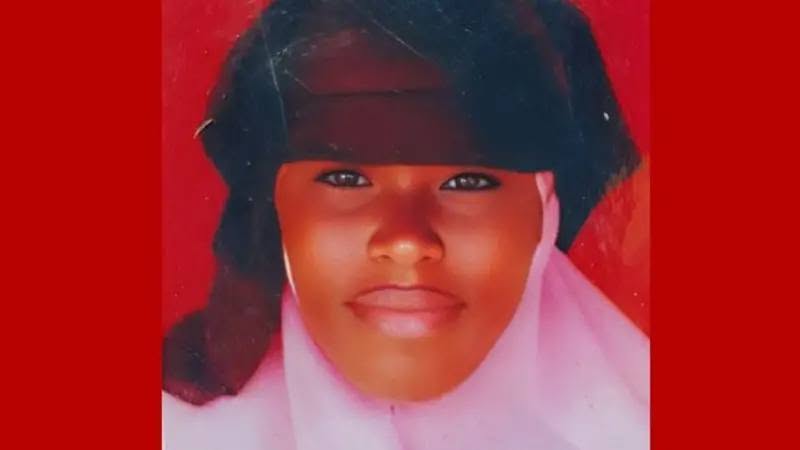
IN Maraban Jos, Kaduna State, grief and outrage continue to ripple through the community after the killing of an Islamiyya school teacher, Malama Ummulkhair Aliyu, who was lynched and set ablaze by a mob following a false accusation of child stealing. The incident, which occurred last Sunday in Igabi Local Government Area, has since ignited a national debate over mob justice, police response, and the widening cracks in public trust.
In this weekend feature, News Point Nigeria dissects the controversy, which has unfolded into a tangled web of conflicting accounts from residents, community leaders, police sources, and eyewitnesses. While one narrative points to a breakdown in police protection, another insists officers acted under extreme pressure to contain a rapidly escalating mob. At the centre of it all, however, remains the undeniable fact that a mother of four was killed without any judicial determination of guilt.

Read also: Buhari, Tinubu, Osinbajo And The Unanswered Question Of 2023 Succession
Days after the incident, Maraban Jos remains tense. Residents speak in whispers, arrests continue, and uncertainty hangs over the community as security operations intensify. Police sources and local accounts differ sharply on how events spiralled out of control at the Maraban Jos Police Division, now under intense scrutiny.

Malama Ummulkhair, an Islamiyya teacher and mother of four, was accused by some residents of attempting to steal children while she was reportedly on her way to attend an Islamic lecture on Sunday afternoon. The allegation, which spread rapidly through the community, triggered panic and anger.
Before long, a mob gathered and attacked her. Security operatives intervened and took her into protective custody at a nearby police station in Maraban Jos, Igabi LGA.


However, what was meant to be a protective refuge soon became the centre of a fatal escalation.
According to multiple accounts, hundreds of angry youths later besieged the police station demanding that Ummulkhair be handed over. Despite attempts by officers to restore order, the crowd reportedly grew increasingly violent.
Eventually, the mob overpowered security operatives and set her ablaze.

Another version of events, shared by a relative of the deceased who was reportedly present at the station, alleged that Ummulkhair was handed over to the mob by a police officer in an attempt to prevent the station from being burnt down. The police, however, have strongly denied the allegation, insisting that a full investigation is underway and all those involved will be brought to justice.
Five days after the incident, Maraban Jos appears subdued but tense. Residents describe a community under strain, with multiple arrests already made and fears of further detentions lingering.
A resident, Musbahu Ahmed, who spoke to Weekend Trust, condemned the killing but suggested that longstanding distrust of law enforcement may have contributed to the escalation.


He referenced previous unresolved cases, including alleged sexual assault incidents, claiming residents often feel justice is not served and suspects escape accountability.
Ahmed also noted that Maraban Jos has grown rapidly since the early 2000s following ethnic and religious crises in Kaduna State, transforming it into a busy commercial hub along a major highway populated by diverse groups, including travellers and truck drivers.
According to him, the area’s rapid expansion has brought both opportunity and challenges. While many youths possess vocational skills in mechanics, welding, vulcanising, and driving, he said a lack of formal education among some has contributed to aggressive responses during disputes.
He added that some arrests were made based on video footage and social media identification, as well as witness accounts.
Curfews were reportedly imposed after the incident, with residents told to remain indoors from 6 p.m. However, Ahmed said some individuals unrelated to the incident may have been caught up in late-night police operations due to the town’s location as a transport corridor.
Ahmed also questioned the handling of the crisis, arguing that the police should have acted more decisively in dispersing the crowd and relocating the suspect.
He claimed tear gas was initially used but later exhausted, allowing the mob to close in.
In a stark remark, he said: “The police should have allowed the station to be attacked rather than allowing the woman to be killed.”
Chairman of the Council of Imams in Maraban Jos, Imam Umar Yusuf, whose motorcycle was also burnt during the violence, condemned the killing and urged residents to stop taking the law into their own hands.
He warned that continued mob action would make the community increasingly uninhabitable, stressing that no one saw the deceased with any child and dismissing the allegations as rumours.
“It’s always wrong for people to act on rumours,” he said.
The Assistant Youth Leader of Maraban Jos, Mas’ud Abu Sufyan, rejected portrayals of the community as uneducated or lawless, insisting the town includes professionals such as doctors, professors, bankers, and religious scholars.
He described Maraban Jos as a peaceful and diverse settlement that has hosted schools and professionals for decades.
Read also: The One-Term Gambit – By Jonathan Nda-Isaiah
However, he acknowledged growing distrust in law enforcement, noting that some residents feel abandoned when seeking justice.
He said youth leaders have begun awareness campaigns on social media to discourage mob justice and encourage reliance on lawful institutions.
“We are hoping to see that innocent residents arrested are released after investigations are completed, while those found guilty face the law,” he said.
For many residents, the aftermath has brought fear and uncertainty. One long-term resident, Malam Usman Maraba, said the community has been on edge since the incident, with repeated raids and arrests.
Weekend Trust gathered that more than 200 people may have been arrested in connection with the unrest.
He described sudden arrests at homes, sometimes at night, adding to growing panic in the community.
Usman also accused the police leadership of failing in its duty to protect the victim after she had been taken into custody for safety.
He alleged that the Divisional Police Officer played a role in exposing her to the mob, though these claims remain unverified.
He also acknowledged internal social problems in the community, including poor parenting and lack of education among some youths.
Usman called for an emergency meeting involving parents, religious leaders, and traditional rulers to address youth behaviour and prevent future incidents.
He proposed that parents be held accountable if their children commit crimes and flee justice.
Kaduna State Police Command spokesperson, DSP Mansur Hassan, confirmed that over 100 people were arrested in connection with the incident.
He said 24 suspects have already been arraigned in magistrate court while investigations continue.
A police officer who spoke anonymously rejected allegations of negligence, insisting officers attempted to protect the victim under extremely difficult conditions.
He said officers were attacked with stones and that some protesters were injured during efforts to control the crowd.
He also dismissed claims circulating online that the DPO directly handed the woman to the mob, noting that no video evidence supports such allegations.
Data from national records shows that Nigeria has recorded 64 mob violence incidents in two years, affecting 113 victims, with 35 deaths and several others severely injured.
The Federal Capital Territory recorded the highest number of cases, followed by Plateau, Kebbi, Rivers, and Benue states.
Most cases were triggered by allegations of theft, kidnapping, or ritual crimes—often without any formal investigation.
In an emotional account, Ummulkhair’s husband, Aliyu Muhammed, described the moment his life changed forever.
He said he first received a phone call informing him that his wife had been accused of child trafficking while on her way to Islamic school. He immediately mobilised friends and relatives to the scene.
Moments later, he saw smoke rising in Maraban Jos before learning she had been killed.
He later alleged that his sister, who was with the victim at the police station, witnessed the DPO allegedly dragging her outside despite warnings that the mob would kill her.
He said the mob eventually attacked her, beat her, and set her and her motorcycle ablaze.