

FOR decades, Nigeria’s security challenges have continued to evolve from conventional threats to a complex web of terrorism, banditry, kidnapping, communal conflicts, oil theft, border insecurity and organised criminal activities. As these threats have expanded across different regions, successive governments have struggled with one major question: how can the nation’s security architecture be redesigned to respond faster and more effectively?
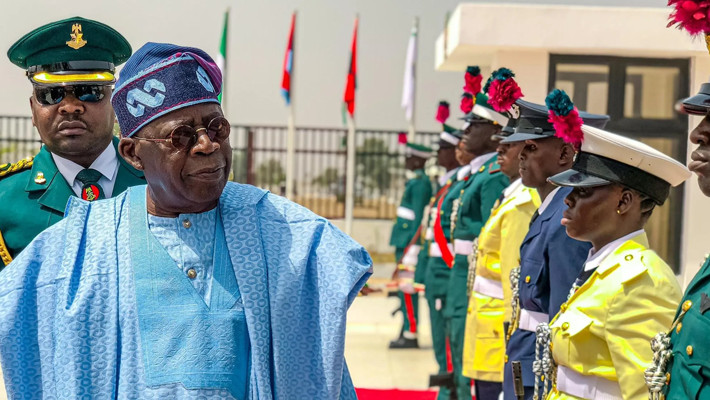
President Bola Ahmed Tinubu’s latest approval for a major restructuring of the Nigerian Army represents one of the most significant attempts in recent years to answer that question.

In this Weekend features, News Point Nigeria dissects and analyses the situation, examining the political, strategic and operational implications of the President’s decision to expand the Nigerian Army from eight to 12 divisions, recruit 28,000 additional personnel and reshape the military’s response mechanism across the country.

The decision, according to the Presidency, is aimed at strengthening the operational capacity of the Nigerian Army, improving command coordination, reducing response time and ensuring that troops are strategically positioned closer to emerging security threats.


The Special Adviser to the President on Information and Strategy, Bayo Onanuga, announced the approval, describing it as another demonstration of the administration’s commitment to strengthening national defence capabilities.
According to him, the move reflects President Tinubu’s determination to equip the Armed Forces with the manpower, resources and structure required to confront Nigeria’s changing security realities.
The expansion is not limited to the creation of new military formations. It forms part of a broader military investment plan involving additional recruitment, acquisition of military equipment and platforms, improved welfare for troops and continuous force modernisation.
The Presidency stated that the approval includes the recruitment of 28,000 additional military personnel, a move expected to increase the strength of the Nigerian Army and improve its ability to sustain operations across multiple theatres.
Under the new structure, the Army will operate 12 divisions strategically spread across the country, creating a more decentralised command system designed to bring military leadership closer to areas experiencing security challenges.

The newly established formations will be located in Makurdi, Ilorin, Jalingo and Benin City.
The Presidency explained that these new divisions would improve command and control, strengthen border security, protect critical national infrastructure, enhance counter-insurgency operations and provide faster responses to emerging threats.
The restructuring will create a new operational map for the Nigerian Army.


The existing divisions will continue to maintain their responsibilities, while the newly created formations will expand military presence across strategic locations.
The 1 Division Headquarters in Kaduna will continue to oversee Kaduna, Kano, Katsina and Jigawa states.
The 2 Division Headquarters in Ibadan will cover Oyo, Osun, Ekiti and Ondo states.
The 3 Division Headquarters in Jos will remain responsible for Plateau, Bauchi and Gombe states.
The newly created 5 Division Headquarters in Makurdi will oversee Benue, Nasarawa and Kogi states.
The 6 Division Headquarters in Port Harcourt will cover Rivers, Akwa Ibom and Cross River states.
The 7 Division Headquarters in Maiduguri will continue operations across Borno and Yobe states, which remain among the major theatres of counter-insurgency operations.
The 8 Division Headquarters in Sokoto will oversee Sokoto, Kebbi and Zamfara states.
The 9 Division Headquarters in Ilorin will take responsibility for Kwara and Niger states.
The 10 Division Headquarters in Jalingo will cover Taraba and Adamawa states.
The 81 Division Headquarters in Lagos will oversee Lagos and Ogun states.
The 82 Division Headquarters in Enugu will cover Enugu, Anambra, Abia, Ebonyi and Imo states.
The 83 Division Headquarters in Benin City will oversee Edo, Delta and Bayelsa states.
The Presidency believes that the spread of these formations will allow the military to respond more quickly rather than relying heavily on distant commands before deploying troops.
The restructuring will not happen overnight.
The Nigerian Army is expected to implement the expansion in phases to ensure operational stability.
The first phase will involve the establishment of the 5, 9 and 10 Divisions as well as the reorganisation of existing formations. This phase is expected to be completed by September 2026.
The second phase will involve the establishment of the 83 Division and further restructuring, with completion expected by December 2026.
The Army has also announced that the new formations will begin operations once they achieve Initial Operational Capability, while gradual steps will be taken towards achieving Full Operational Capability.
Military authorities said the phased approach is designed to ensure smooth transition, continuity of operations and effective deployment of personnel and resources.
While the decision has received praise from military experts and security stakeholders, analysts argue that the success of the expansion will depend on more than creating new divisions.
For many Nigerians, the major issue is whether the government can provide the funding, equipment, logistics and welfare required to sustain the expanded military structure.
Former Chief of Defence Staff, General Lucky Irabor (retd.), described the expansion from eight to 12 divisions as a step in the right direction.
Speaking during an interview on Arise Television’s Morning Show, Irabor said the move showed that the President understood the shortcomings within the military and was willing to address them.
“Expansion of the Nigerian Army from eight divisions to 12 divisions is the right step in the right direction,” he said.
However, he warned that the expansion came with significant responsibilities.
According to him, increasing the number of divisions would require major investments in manpower, equipment, accommodation and logistics.
He noted that existing formations must first be strengthened before the new ones could achieve their objectives.
Irabor also welcomed the planned recruitment of 28,000 soldiers, describing it as a positive beginning but stressing that Nigeria would need to continue expanding military capacity.
“I also commend the fact that the President has indicated that 28,000 soldiers will be recruited, which is barely a little over a division in terms of strength. But of course, it’s good to start from somewhere,” he said.
He expressed hope that similar reforms would extend to the Nigerian Navy and the Nigerian Air Force.
Beyond the expansion itself, some security experts believe the new formations must be designed to meet specific security realities.
The Special Adviser on Security to the Sokoto State Governor, Col. Ahmed Usman (retd.), has urged President Tinubu to designate the newly approved 5 Division Headquarters in Makurdi as a Special Forces Division.
Usman argued that Nigeria’s security environment has changed significantly and now requires specialised forces capable of rapid deployment, intelligence-driven operations and precision missions.
According to him, Nigeria is no longer dealing only with conventional security threats but also terrorism, banditry, kidnapping, communal violence and transnational crimes.
He said the location of Makurdi makes it strategically important because the North-Central region has increasingly become one of the country’s major conflict zones.
The former Special Forces Brigade, which is being upgraded into the new division, already has experience in training and developing specialised military personnel.
Usman believes building on that foundation would improve Nigeria’s ability to respond to complex security threats.
He argued that a Special Forces Division in Makurdi would not only serve Benue, Nasarawa and Kogi but could also support operations extending into parts of the South-East and South-South.
Despite the optimism surrounding the announcement, concerns remain over the welfare of troops who will be expected to carry the burden of the expanded security operations.
Executive Director of Civil Society Legislative Advocacy Centre (CISLAC), Auwal Ibrahim Rafsanjani, said improving troop welfare must remain a priority.
He argued that while funding has been allocated to security, the government must also address corruption, poor remuneration and challenges affecting military personnel.
Rafsanjani noted that the government had approved major security funding interventions, including emergency support funds and the acquisition of armoured vehicles and military platforms.
However, he warned that equipment alone would not solve the problem.
He expressed concern over reports of poor welfare conditions, delayed benefits for fallen soldiers’ families and inadequate support for wounded personnel.
According to him, restoring confidence in the security system requires the government to demonstrate commitment beyond announcements.
For retired military officer John Idode, the restructuring represents a major turning point.
He described the decision as “the game changer,” arguing that decentralising military operations would improve response time and strengthen Nigeria’s ability to deal with insecurity.
According to him, bringing command structures closer to affected areas would make security interventions faster and more effective.
He, however, joined other stakeholders in calling for improved welfare packages for security personnel.
President Tinubu’s decision to expand the Nigerian Army comes at a critical moment when Nigeria continues to battle multiple security challenges across different regions.
The creation of new divisions, recruitment of additional personnel and decentralisation of command structures represent an ambitious attempt to redesign the country’s security response.
But the ultimate success of the reform will depend on implementation.
A stronger Army requires not only more divisions and soldiers but also adequate training, modern equipment, effective intelligence systems, proper welfare and transparent management of resources.
As Nigeria enters a new phase of military restructuring, the central question remains whether this expansion will become the turning point that finally delivers a more responsive and effective security architecture.
For now, the Tinubu administration has placed its biggest security bet on a larger, more decentralised and better-positioned Nigerian Army. The coming years will determine whether the strategy transforms into lasting security gains for Nigerians.