

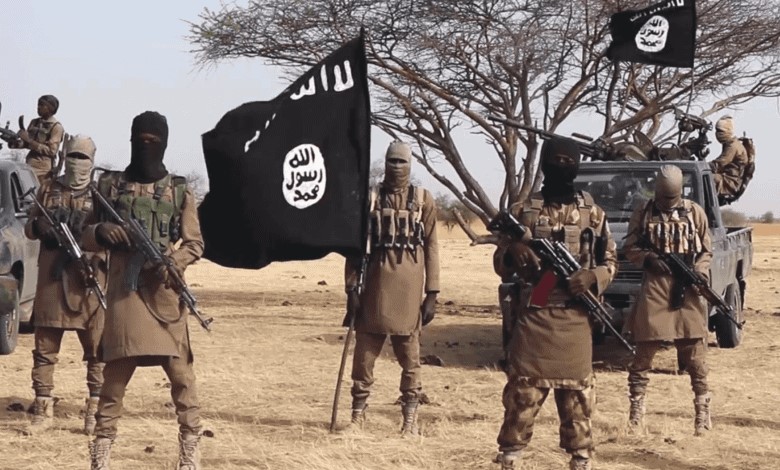
THE long-running rivalry between the Islamic State West Africa Province (ISWAP) and Jama’atu Ahlis Sunna Lidda’awati wal-Jihad (JAS), commonly associated with Boko Haram, has continued to reshape the security landscape across Nigeria’s North-East, with both factions locked in a bitter struggle for territorial control, influence and survival.

A fresh confrontation reported on Friday, August 7, has once again brought the deadly intra-insurgents conflict into sharp focus, with several senior JAS commanders reportedly killed after ISWAP fighters launched a coordinated ambush around Bula Murge in Bama Local Government Area of Borno State.

In this Weekend feature, News Point Nigeria dissects and analyses the situation, tracing the roots of the bitter rivalry between the two insurgents factions, the shifting balance of power, the growing toll of their clashes, and the wider implications for civilians and security operations across the North-East and the Lake Chad region.

According to sources, the latest clash occurred in the Gargash general area around Bula Murge, approximately 11 kilometres north of Miyanti and 26 kilometres northeast of Bama.


The latest encounter is significant not merely because of the reported casualties but because it demonstrates how the rivalry between the two factions continues to evolve, with both groups fighting for territory, resources, influence and survival even as they remain engaged in a wider insurgency against the Nigerian state.
Among the JAS commanders reportedly killed in the latest confrontation were Abu Ubaida, Modu Kori, Alhaji Modu, Mure, Zarkawi, Sheriff and Modu Maye, all of whom were believed to have played important operational roles within the faction operating in the area.
According to the reports, ISWAP fighters launched a surprise attack on the rival JAS faction, inflicting heavy casualties during the engagement and throwing surviving JAS fighters into disarray.
Intercepted communications reportedly indicated that the surviving members of the faction had begun making arrangements to move their women and families to Bula Daloye following the destruction of their camps.
Bula Murge and Nguro Bafuye, two locations previously occupied by the JAS faction, were reportedly set ablaze during the assault, depriving the group of shelters and important logistics locations.

Security sources have consequently urged troops operating around Miyanti, Bama, Kumshe and adjoining communities to maintain pressure on both factions through sustained offensives, with the objective of further degrading their fighting capacity and preventing either group from regrouping or rebuilding its operational bases.
The latest clash is only the most recent chapter in a violent rivalry that has continued for years and has produced a complicated and constantly changing insurgency landscape across Borno and the wider Lake Chad Basin.
The conflict between JAS and ISWAP is rooted in the 2016 split within the original Boko Haram movement, but the divisions have since evolved into a broader struggle over ideology, leadership, territory, resources and the treatment of civilian populations.


The original Boko Haram movement emerged in the 2000s and participated in failed urban uprisings in Nigeria’s North-East in 2009. Following the crackdown, the group reorganised under Abubakar Shekau and increasingly transformed from an urban insurgency into a rural guerrilla movement.
Under Shekau, JAS seized substantial territory in Borno State and expanded into other parts of the North-East, as well as border areas of Niger, Chad and Cameroon around the Lake Chad Basin.
In 2015, Shekau pledged allegiance to the Islamic State in Iraq and Syria, leading the movement to adopt the ISWAP name. However, internal disagreements over leadership and ideology soon created a major fracture.
In 2016, critics of Shekau broke away, retaining the ISWAP identity and gaining recognition from ISIS, while Shekau and his followers returned to the JAS designation.
The disagreement was not simply about leadership. At its heart was a fundamental dispute over how the jihadists should govern and treat civilians.
JAS became associated with a much more indiscriminate approach to civilians, including attacks, theft and plunder, while ISWAP developed a more bureaucratic model in which Muslim civilians were generally treated differently from non-Muslims. The group sought to tax communities and impose its own version of law and order rather than simply looting them.
That distinction became particularly important when ISWAP took control of areas previously held by JAS in the Sambisa Forest.
ISWAP imposed its own rules on JAS fighters, including restrictions on pillage and the seizure of weapons. Many JAS fighters resisted the new arrangement because it threatened their livelihoods and established way of operating.
Some surrendered to Nigerian authorities, while others fought back. The resulting rivalry has now become a war within a war.
The death of Abubakar Shekau in 2021, following his defeat in battle by ISWAP, appeared at the time to signal that ISWAP would become the dominant force among the jihadist factions.
But the expected consolidation never fully materialised.
Instead, JAS gradually regrouped and, under new leadership associated with Bakura Doro, mounted a strong counter-offensive from late 2022. In the course of 2023, JAS reportedly took control of most of the islands in Lake Chad that had previously been held by ISWAP.
A Lake Chad-based ISWAP sub-group also defected to JAS in early 2023, further demonstrating the fluidity of the rivalry. The fighting has consequently weakened both organisations.
Former members of the factions have reportedly indicated that the two groups may have lost more fighters fighting each other since 2021 than they have lost in confrontations with the militaries of the countries around Lake Chad.
That development may appear beneficial to governments battling the insurgency, but it also carries serious risks.
Both groups continue to command significant numbers of fighters and retain access to territory, weapons, resources and civilian populations.
ISWAP has been reorganising in other parts of Borno and remains capable of conducting attacks beyond its principal areas of operation, while JAS has consolidated influence around parts of Lake Chad and the Mandara Mountains. The result is an insurgency that is weaker in some respects but also more unpredictable.
The consequences have been felt not only by the fighters but also by their families and civilians living around the areas controlled or contested by the factions.
Months before the latest Bula Murge confrontation, reports emerged of multiple clashes between JAS and ISWAP in Borno State in which fighters and family members were killed.
One such series of confrontations reportedly began in the Mutakinti general area of Bama Local Government Area, where JAS fighters clashed with ISWAP.
Other clashes were reported around Dollar Land, Mantari and Mutakinti in Bama, as well as Bayan Dushai in Gwoza.
Zagazola Makama had attributed some of those confrontations to attempts by fighters in the Sambisa Forest to avenge the killing of their commander, Malam Aboubakar Munzir, and other fighters during earlier infighting.
He also reported that top Boko Haram commander Ali Ngulde, who was based around the Mandara Mountains, had led fighters armed with weapons from the area towards Sambisa to confront ISWAP.
The development reportedly followed a failed negotiation in which JAS fighters had sought to surrender to ISWAP.
Instead, according to the account, Ngulde and his men mounted an ambush against ISWAP fighters, resulting in casualties and the seizure of vehicles and weapons.
The fighting subsequently spread to other camps and positions, further deepening the hostility between the factions.
In another reported episode, JAS fighters diverted from an anticipated confrontation with ISWAP and attacked an area where ISWAP families were located, killing members of the rival faction’s families.
The incident illustrated how the rivalry had moved beyond battlefield competition to encompass the wider communities and families connected to the two groups.
One of the most significant consequences of the prolonged rivalry has been the increasing number of fighters and their families surrendering to Nigerian authorities.
At one point, reports indicated that hundreds of Boko Haram fighters, including commanders, fighters, women, children and abductees, surrendered following military operations and the intensification of the ISWAP-JAS conflict.
The surrenders were recorded in Bama, Mafa and Konduga Local Government Areas of Borno State.
Sources said the military crackdown on areas including Gezuwa and Mantari was followed by ISWAP taking over some of the abandoned positions, further intensifying the rivalry.
Among those who reportedly surrendered were senior JAS figures, including Laminu, who was responsible for gun trucks and other weapons; Baana Mainari, identified as Amir Zakkat and responsible for collecting dues and levies; K. Sheriff, described as Amir Safara and responsible for transportation; and Ba’agoyi Munzir, an informant.
The surrendered group reportedly arrived with livestock and told authorities that they feared ISWAP because of its willingness to target members of the rival faction and their families.
The scale of the surrenders showed how the intra-jihadist war was affecting the internal cohesion of both organisations.
The rivalry has also produced repeated attacks on isolated camps and fighters. In one reported incident, ISWAP fighters attacked a Boko Haram position in Gajibo, about 95 kilometres northeast of Maiduguri, killing several members of the rival group and recovering weapons.
In another confrontation between Dikwa and Bama, a JAS commander identified as Kundu and several fighters were reportedly killed after ISWAP intercepted them while they were travelling on motorcycles.
The confrontation reportedly resulted in heavy casualties among the JAS fighters, who withdrew and abandoned their motorcycles.
These incidents demonstrate that neither side appears willing to accept the other as a permanent competitor. Rather, each continues to regard the rival faction as an existential threat that must either be defeated, absorbed or driven from strategic territory.
Territorial control remains one of the central drivers of the conflict.
The Lake Chad Basin provides access to fishing, farming, taxation routes, movement corridors and other resources, making control of its islands and surrounding communities strategically important.
Clashes have therefore erupted repeatedly when one faction believes the other is expanding into its area of influence.
Reports have previously linked major confrontations to locations including Dogon Cukwu, Bukare, Tumbun Goni, Mari, Mangari, Tumbun Ayaba, Tumbun Rago, Maryawa and Shuwaram.
One security source described the confrontations as essentially a struggle for territorial expansion, with both sides suffering significant casualties.
The seizure of fishing canoes belonging to fishermen operating under the protection of one faction has also reportedly triggered confrontation.
In one instance, an ISWAP commander was said to have reached out to the military and expressed readiness to surrender, promising to release the seized canoes and submit to the authorities. The incidents illustrate how the conflict is closely intertwined with the livelihoods of civilians living around Lake Chad.
While ISWAP and JAS have been fighting each other, Nigerian forces have continued to conduct operations against both factions.
In one series of operations, troops and the air component of Operation Hadin Kai targeted terrorist enclaves in northern Borno.
Airstrikes reportedly hit locations including Rinu, Jibularam and Kangarwa in Marte and Kukawa Local Government Areas. The operations were based on intelligence concerning terrorist movements and hideouts.
Reports from the period said several fighters were killed, including commanders identified as Muhammed Balge, described as a chief prosecutor; Malam Chiroma, his deputy; and Amir Bashir, also known as Iblis, identified as a sniper and marksman.
Other operations targeted terrorists moving in vehicles around Kangarwa, with military aircraft responding to intelligence and reportedly inflicting casualties.
The military pressure, combined with the internal rivalry between JAS and ISWAP, has therefore created a complex battlefield in which the two factions are fighting each other while also facing sustained pressure from Nigerian security forces.
The renewed violence in Borno is unfolding against the backdrop of another serious security challenge in north-western Nigeria.
It would be tempting to interpret the ISWAP-JAS rivalry simply as a positive development because two hostile insurgent groups are weakening each other. But such an assessment would be incomplete.
The fragmentation of armed groups can make violence less predictable rather than eliminate it.
When a faction loses territory, it may seek new areas to exploit. When commanders are killed, surviving fighters may splinter into smaller groups. When families are displaced, humanitarian pressures increase. And when fighters surrender, authorities must have the capacity to process, rehabilitate and reintegrate them.
The rivalry also creates the possibility of sudden changes in alliances.
The two groups have engaged in negotiations in the past and, although cooperation or a ceasefire may appear unlikely, the possibility cannot be completely dismissed.
A change in the balance of power could therefore produce a new phase of the conflict. For civilians, meanwhile, the immediate concern remains survival.
JAS has continued to operate around parts of Lake Chad and the Mandara Mountains, while ISWAP has sought to consolidate its influence in central Borno and parts of eastern Yobe.
Both areas contain communities already weakened by years of displacement, disrupted livelihoods and insecurity.
The evolving conflict means governments in the Lake Chad Basin cannot afford to interpret the internal fighting between jihadist factions as evidence that the insurgency is nearing its end.
Nigeria and its regional partners need to maintain military pressure while simultaneously addressing the humanitarian and governance conditions that allow armed groups to maintain influence.
Humanitarian assistance should be sustained and expanded rather than prematurely reduced. The government should also strengthen programmes supporting fighters who surrender and create credible pathways for those willing to abandon violent extremism.
Military operations, particularly airstrikes, require increasingly accurate intelligence and targeting protocols to minimise risks to civilians.
Regional cooperation is equally important.
Security cooperation around the Lake Chad islands and shores has weakened in recent years, making it necessary to reinvigorate the Multinational Joint Task Force involving Nigeria and its Lake Chad neighbours.
The broader lesson is that military pressure alone cannot resolve a conflict that has evolved over decades. Communities require security, functioning public services, economic opportunities and confidence that the state can protect them.
For Nigeria and the other Lake Chad countries, that means the apparent weakening of one faction cannot be mistaken for victory over the insurgency itself.
The central challenge remains how to exploit the fractures within the jihadist movement without allowing those fractures to translate into greater danger for civilians.
The battle around Bula Murge is another reminder that the insurgency in the North-East is no longer a simple contest between the state and a single armed group.
It is an increasingly complex conflict in which rival factions are simultaneously fighting for survival, territory and influence, while communities remain caught in the middle.
For the security agencies, the task is therefore twofold: sustain pressure on the armed groups while ensuring that the people whose lives have been disrupted by years of violence are not forgotten.
And for the wider Lake Chad region, the message from the latest developments is clear: a weaker insurgency is not necessarily a defeated insurgency.