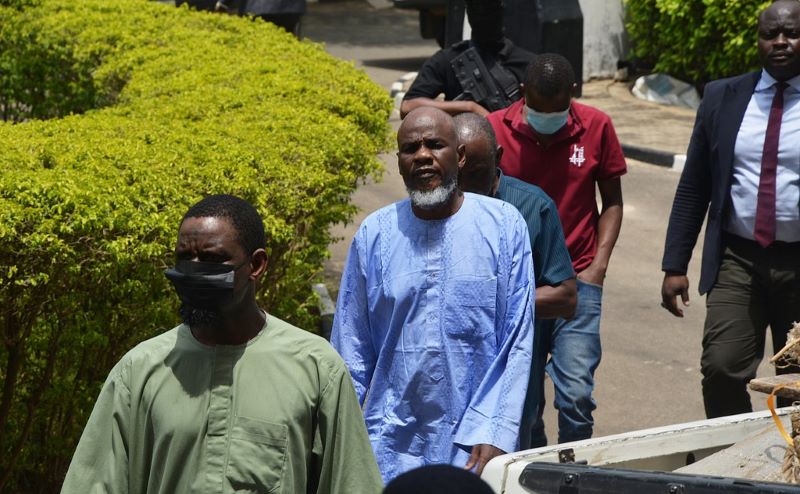
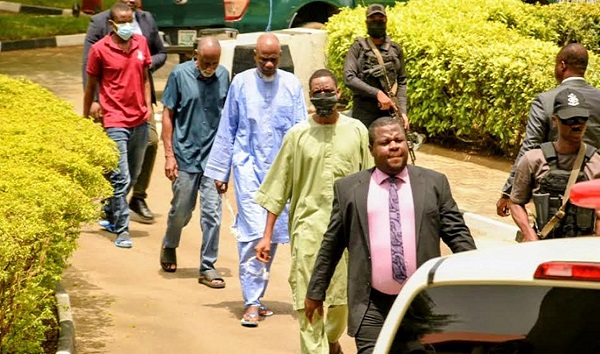
THE General Court Martial sitting over the alleged coup plot involving some Nigerian military officers has again postponed its ruling on the admissibility of statements made by the accused persons.
News Point Nigeria reports that the ruling, which was earlier scheduled for Wednesday, September 30, 2026, has now been fixed for Monday, October 5, 2026.

Read also: Cultism: Court Rejects Police Request To Remand 90-Year-Old Father Of Edo ADC Senatorial Candidate
The court is presided over by Air Vice Marshal H.I. Alhaji of the Nigerian Air Force and is sitting at the Scorpion Officers’ Mess, Asokoro, Abuja.

A notice issued to members of the court and other concerned parties stated that the sitting earlier adjourned to Wednesday had been postponed.
“The GCM sitting earlier adjourned to Wednesday, 30 September, 2026, has now been postponed to Monday, 5 October, 2026.


“The new sitting is scheduled to commence at 10 am at the Scorpion Officers’ Mess, Asokoro, Abuja,” the notice stated.
The notice, signed by the Liaison Officer, Maj. M.U. Ardo, did not give reasons for the latest postponement but expressed regret over the inconvenience caused.
The latest development marks the fourth time the ruling has been deferred.

The ruling is expected to determine whether statements allegedly obtained from some of the accused officers can be admitted as evidence in the ongoing trial.
The defence had challenged the admissibility of the statements, alleging that some of the officers were coerced by officials of the Defence Intelligence Agency into making or reproducing statements containing information they described as false.
The dispute over the statements led to a trial-within-a-trial, during which the defence called evidence to challenge the circumstances in which the statements were obtained.


Defence lawyers argued that the statements failed to meet the legal requirements for admissibility.
Read also: $6.23m Fraud Trial: Court Reserves Ruling On Emefiele’s No-Case Submission
Among other things, they alleged that lawyers or witnesses chosen by some of the accused officers were not present when the statements were made.
The defence also questioned the absence of video recordings showing some of the officers writing their statements in the presence of their chosen witnesses, as required under relevant provisions of the Administration of Criminal Justice Act.
The lawyers further alleged that some of the accused officers were neither properly cautioned nor adequately informed of their rights before making the statements.
The prosecution, however, presented evidence aimed at establishing that the statements were made voluntarily and without improper pressure.
Some of the accused officers gave contrary accounts during the trial-within-a-trial, alleging that they were subjected to coercion, intimidation, inducement and physical abuse while in detention.
According to evidence before the court, some of the officers alleged that they were made to believe that reproducing particular statements would facilitate their release.
They further claimed that some statements had already been prepared by intelligence officials and that they were compelled to copy or sign them despite allegedly not knowing some of the matters contained in the documents.
Some also told the court that they did not personally originate or write the statements attributed to them, alleging that they were forced to reproduce pre-written documents containing claims or admissions they considered false or unrelated to their knowledge.
The ruling on the admissibility of the disputed statements is expected to determine whether the prosecution will be allowed to rely on the statements as part of its evidence in the ongoing proceedings.
The postponement therefore further delays the court’s determination of a key evidentiary dispute in the military trial.
The coup plot trial involves several Nigerian military officers accused of conspiring to overthrow the government of President Bola Tinubu on October 1, 2025.
Read also: Alleged $2.1m Land Fraud: ‘How I Met Wike’s Son, Jordan In London’, Businessman Tells EFCC
The case arose from allegations investigated by the military authorities, leading to the officers’ arrest and prosecution before a General Court Martial in Abuja.
The accused officers have denied the allegations, while the trial has featured disputes over the circumstances in which some of their statements were obtained, including defence claims of coercion and other forms of improper treatment.