A VIDEO of former President Olusegun Obasanjo’s interview with News Central Television has been trending on social media platforms for the past week. In the interview, the former President, in a veiled reference to the current administration, said Nigeria has a President who came into office without a plan. Yet, the same ‘planless’ president is implementing a bold economic reform programme that Obasanjo initiated and abandoned mid-way.
This intervention is essentially about a tale of two leaders and how they both handled fuel subsidy removal, a very touchy issue every president of Nigeria has avoided since 1973 because of its disruptive nature and potential to precipitate a pushback that may lead to civil unrest. This serious matter in itself can make a difference between a bold and courageous leader from one that is pretentious and hesitant.

Read also: Atiku’s Demagoguery In The Face Of Tinubu’s Logical Policies – By Sunday Dare

It is a fact of history that one of the things former President Obasanjo set out to do, among other reforms his administration embarked upon, was complete deregulation of the downstream oil industry. But hard as he tried, he failed to actualise it. Obasanjo faced so much opposition from organised labour and civil society groups that he abandoned a good policy that would have led to massive economic gains for the country. All he could muster the courage to do was to raise the pump price four times during his two-term tenure.


Twenty years after Obasanjo failed to implement complete downstream deregulation, President Bola Tinubu had the courage of his conviction to implement the policy, redirect the economy, and ensure efficiency in the management of public finance.
Despite his foibles and messianic complex, former President Obasanjo is no doubt a remarkable leader. His administration opened the economy and implemented essential reforms that his immediate successor should have continued with. What most critics find offensive about the former president is how he sees himself as the only saviour God created for Nigeria. As far as he is concerned, no other leader before and after him has been good enough. For context and clarity, it is essential to recall the former president’s position on deregulating the downstream oil sector when he was in charge.
In a national broadcast on October 8, 2003, President Obasanjo expressed his frustration and anger at the Nigeria Labour Congress for its opposition to the deregulation of the downstream sector to the point of accusing labour leaders of sedition thus:
“As you are aware, my government has embarked on fundamental reforms designed to depart from the waste and unproductive exercises of the past and leave lasting legacies for the prosperity and improved welfare and well-being of all Nigerians. Since 1999, we have gradually but steadily embarked on the programme of liberalisation and deregulation of the Nigerian economy to promote efficiency and effectiveness of service delivery. Most Nigerians and certainly all organised key stakeholders in the Nigerian economy, including the Nigeria Labour Congress, have endorsed the deregulation programme of government.
“It is a fitting symbol of our administration’s commitment to the welfare of workers and in an effort to cushion the effects of deregulation that the government provided 80 buses to the NLC in 2002. The transliner buses were delivered to the Congress for management without government interference. It is noteworthy that every step taken to deregulate the downstream oil sector has been dogged by, sometimes, irresponsible opposition by the Labour Congress. The result has been that we took too little steps to achieve no meaningful and satisfactory progress. We have tolerated all of these in the interest of promoting popular dialogue and informed dissent.

“Let me inform Nigerians that when government first came up with the deregulation programme, it was endorsed by the NLC and other stakeholders. In fact, the NLC had requested that we call it a “liberalisation” programme. It was thus more a matter of label than of substance. If we had been successful in implementing the deregulation or liberalisation of the downstream oil sector as earlier agreed by all stakeholders, including labour, we would not have been worrying about the periodic and unsatisfactory price-fixing which has led no where except to frustration. The failure to fully deregulate or liberalise has also cost Nigerians billions of naira which are currently wasted on millions of man-hours in queues at the petrol stations.
“The tens of billions of naira currently being lost in money that could have been used to increase capital spending in the universities, fund agriculture, repair and rehabilitate our roads, invest in education and health, improve security with extra police for security of lives and property.
Read also: ‘Nothing To Fear If Tinubu Wins Second Term’, Shettima To Northern Leaders

“Realising that the investment of well over $400 million (excluding pipelines and depots) in the last six years mostly on Turn Around Maintenance (TAM) and repairs had not improved the performance of the refineries significantly, government had decided that it was unwise to put additional money into the repair of the Kaduna and Port Harcourt refineries before privatising them.
“What most Nigerians must know is that the contracts for the Turn Around Maintenance for the Kaduna and Port Harcourt refineries were awarded with 50% of the cost paid upfront before the advent of this administration in 1999. Allow me to add that two of the three refinery locations in the country today, were built by my administration as military head of state. This means that if for no other reason, I should be interested in keeping them working. Already, 18 private firms have been licensed to build refineries but they have been reluctant to go into the industry because of Government’s price control in the sector.
“If only 30% of these firms had been able to establish and operate private refineries, thousands of jobs would have been created and Nigeria would have been in a position to even export refined oil products. All these benefits and more have been denied to Nigerians by the stop-go approach to the deregulation or liberalisation programme, and only a few Nigerians are benefiting from the prevailing government-controlled system. In fact, the NLC’s approach has been counter-productive, and inflicted more pains on Nigerian workers. Each time there is a small increase of three naira or more, transporters have used the opportunity to jerk up transportation cost thereby making the ordinary worker poorer.
“A once-and-for-all total deregulation would have meant a once-and-for-all increase in transport cost and the pump price for petroleum products. Without a doubt, a once-and-for-all total deregulation would have resolved the problem of availability and thus bring down prices for those outside Abuja, Lagos, Port Harcourt and their environs who have always paid much more than the official posted price. Pump prices arising from the present total deregulation would, in reality, amount to a reduction in prices of majority of Nigerians.”
Interestingly, excerpts from the 2003 national broadcast by President Obasanjo present a contrast between the former leader and President Tinubu. They also showcase two leadership visions. One leader saw the need to fight for the country’s long-term sustainability but chickened out because he lacked the courage to upset the status quo. Two decades later, another leader saw the damage the failure to make the right economic decision had caused the country. He decided to correct it to avert a looming calamity. While former President Obasanjo left the most challenging task of his presidency undone, President Tinubu tackled head-on what has become an existential threat to our collective well-being from his first day in office. He has remained focused on the bigger picture.
President Tinubu recognises the burden of leadership and responsibility he bears on behalf of Nigerians. In discharging this burden, he knew from day one that he would have to make the right but unpopular decisions that would ultimately serve the best interest of the country and her people.
It is certainly not correct to say this president came to the office without a plan. President Tinubu came into the office with a clear plan titled “Renewed Hope 2023: Action Plan for a Better Nigeria.” It was a well-thought-out programme, with which he canvassed for votes across the country and was elected by our people.
In the past 17 months, he has remained faithful to the document as he implements the distilled eight-point agenda.
At the heart of President Tinubu’s economic revitalisation is gas development and expansion of gas pipeline infrastructure to enable Nigeria to compete with Russia in the European markets. In fairness to him, former President Obasanjo himself recently lamented he did not pay adequate attention to gas during his term of office.
Read also: Tinubu Sends NDLEA, Safety Investigation Bureau, National School Of Government Bills To Senate
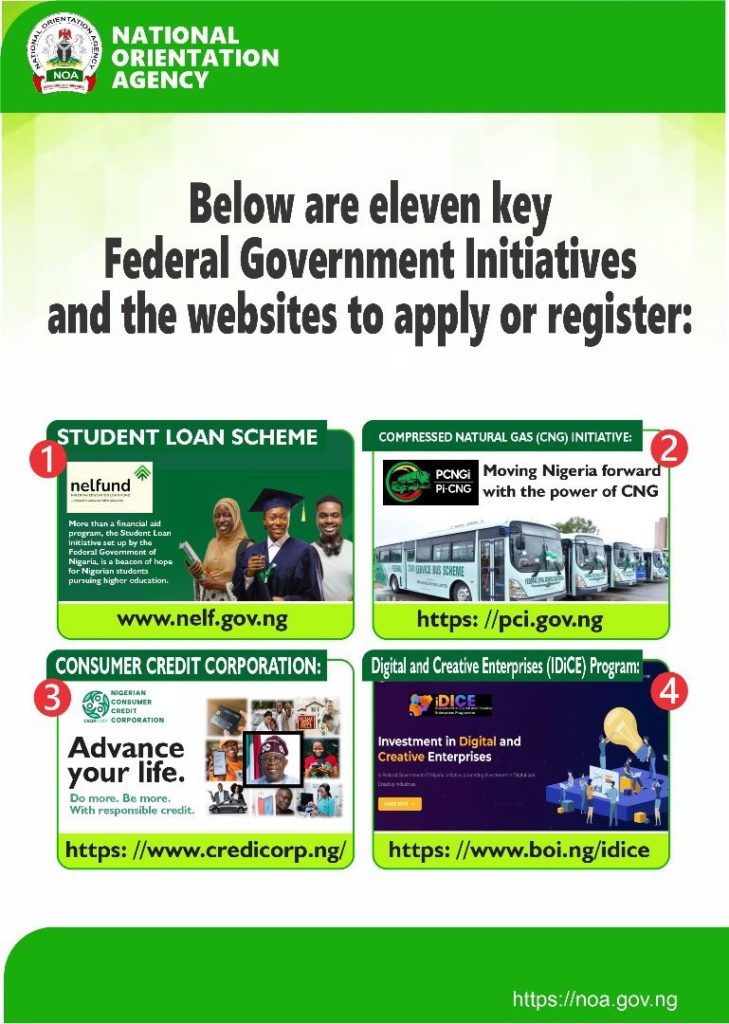
Expanding the pool of available talents and human capital through granting of loans to young Nigerians who are the future of the country to enable them acquire tertiary or vocational education is part of the plans that propelled Tinubu into office. Consumer credit initiative that will promote local production and further stimulate the economy is also high on Tinubu’s action plan. To the President’s credit, these two important policy initiatives among several others are being implemented through NELFUND and Nigerian Consumer Credit Corporation (CrediCorp).
If there is one President of Nigeria that came prepared and well armed with a clear cut plan to reposition the country across sectors for better outcomes, that President, undoubtedly, is President Bola Ahmed Tinubu.
- Ajayi is Senior Special Assistant to President Tinubu on Media and Publicity.