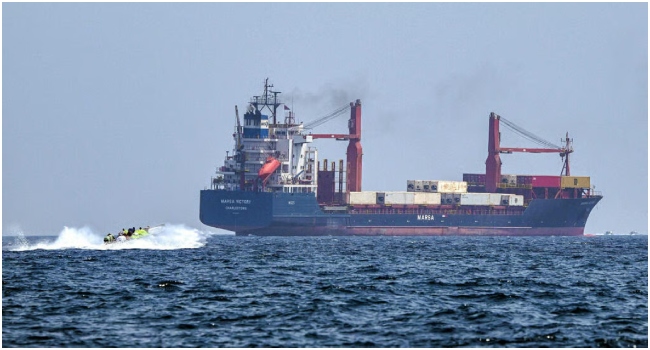
A FRESH global oil crisis appears to be looming as Iran once again closed the strategic Strait of Hormuz following escalating tensions over a United States naval blockade, raising fears of disruption to global energy supplies and renewed instability in international markets.
Iran’s military announced on Saturday that the Strait of Hormuz had been shut again, only hours after it was briefly reopened, even as several commercial vessels abandoned attempts to pass through the crucial maritime corridor.

Read also: Suspected Israeli Online Operations Cause Alarm In Iran, Lebanon
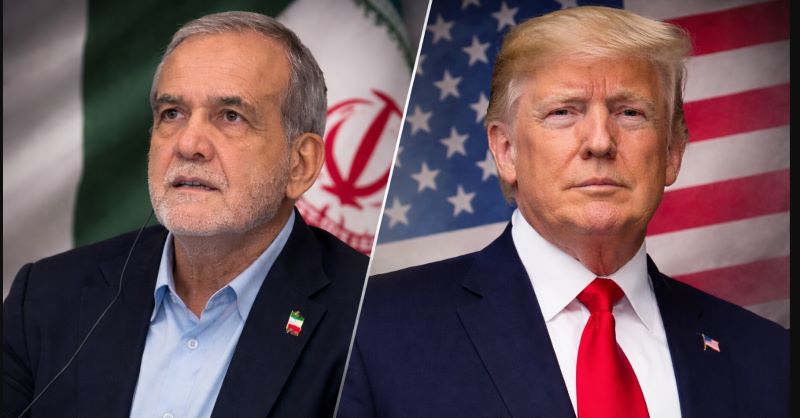
The back-and-forth developments surrounding the strait cast fresh doubt on the optimism expressed by Donald Trump a day earlier, when he suggested that a peace deal to end the ongoing US-Israeli war with Iran was “very close.”

Just a day before, on Friday, Tehran had declared the strait open following a ceasefire agreement reached in Lebanon aimed at halting Israel’s war with Hezbollah. The Strait of Hormuz, a critical chokepoint through which roughly a fifth of the world’s oil and liquefied natural gas flows, had resumed operations briefly, sparking optimism across global markets.
That reopening triggered a wave of positive reactions in international markets, sending oil prices downward as investors reacted to the possibility of de-escalation. However, even as markets celebrated, Trump maintained that a US naval blockade of Iranian ports would remain in place until a final agreement was secured, prompting Tehran to threaten another closure of the waterway.


By late Saturday morning, Iran’s central military command confirmed a renewed tightening of control over the strait, stating that “control of the Strait of Hormuz has returned to its previous status” and that it was now “under strict management and control of the armed forces,” a direct response to the continued US blockade.
The announcement coincided with real-time maritime tracking data showing several vessels rushing through the narrow passage, highlighting the urgency and uncertainty facing global shipping operators.
As of 1030 GMT on Saturday, at least eight oil and gas tankers had successfully crossed the strait, while an equal number of vessels reportedly turned back after attempting to exit the Gulf, underscoring the confusion and risks confronting maritime traffic.

Further complicating the situation, the British maritime security agency, the UK Maritime Trade Operations (UKMTO), reported earlier at 0920 GMT that a tanker located northeast of Oman had been approached by two vessels belonging to Iran’s Revolutionary Guards without prior radio communication. The agency added that the tanker had come under fire, although both the ship and its crew were confirmed safe, with investigations ongoing.
Amid the rising tensions, Iran’s Deputy Foreign Minister, Saeed Khatibzadeh, stated during a diplomatic forum in Turkey that the United States would not succeed in imposing its will on Iran through what he described as a siege.
At the same time, Iran’s Supreme Leader, Mojtaba Khamenei, who has largely remained out of public view since assuming power, issued a written message asserting that Iran’s navy “stands ready” to confront and defeat the United States.


These developments come as only four days remain before the expiration of a fragile two-week ceasefire in the US-Israeli war with Iran, a conflict initiated by Washington and its ally on February 28.
Despite the mounting uncertainty, President Trump continued to express confidence that a resolution was imminent. He described Friday as “GREAT AND BRILLIANT” and issued multiple social media posts commending Pakistan’s role as a mediator in the negotiations.
Pakistan’s powerful military chief, Asim Munir, concluded a three-day diplomatic visit to Iran on Saturday, part of ongoing efforts to secure a lasting peace agreement.
Read also: Trump Cancels Plan To Livestream Nidal Hasan’s Execution After Global Backlash
Egypt has also played a role in mediation efforts, with Foreign Minister Badr Abdelatty expressing optimism during the same diplomatic forum in Antalya, noting that Cairo and Islamabad were hopeful of reaching a final agreement “in the coming days.”
Speaking at the same forum, Khatibzadeh clarified that no date had yet been fixed for the next round of direct negotiations, even as diplomatic momentum continued to build.
Islamabad has increasingly taken on a central role in mediation, having hosted a marathon first round of talks the previous weekend. A second round of discussions is expected to take place in Pakistan’s capital in the coming week, with envoys aiming to bring an end to the conflict that erupted on February 28.
The war itself began with a wave of large-scale surprise attacks launched by the United States and Israel against Iran, despite ongoing negotiations between Washington and Tehran. The strikes resulted in the death of Iran’s former Supreme Leader, Ali Khamenei, along with several senior officials.
The conflict quickly spread across the region, with Iran targeting US interests in the Gulf and Hezbollah escalating tensions by launching rocket attacks from Lebanon into Israel, drawing the region deeper into instability.
In a sign that the ceasefire remained partially intact, Iran’s civil aviation authority announced that the country’s airspace had reopened, allowing international flights to transit via eastern Iran.
However, major issues remain unresolved in the peace negotiations, particularly concerning Iran’s stockpile of near-weapons-grade enriched uranium and the long-term status of the Strait of Hormuz, both of which continue to cast uncertainty over the prospects for lasting peace.
In a phone interview on Friday, Trump reiterated his belief that an agreement was within reach, stating that “we’re very close to having a deal,” and insisting that there were “no sticking points at all” remaining with Tehran.
Later that same day, during an event in Arizona, he claimed that Iran had agreed to hand over approximately 440 kilogrammes of uranium enriched to 60 percent purity, close to weapons-grade levels.
“We’re going to get it by going in with Iran, with lots of excavators,” he said.
However, Iranian officials quickly contradicted that assertion. The country’s foreign ministry, through spokesman Esmaeil Baqaei, stated that the uranium stockpile—believed to be buried deep underground following US airstrikes during a 12-day conflict last June—would not be transferred under any circumstances.
“Iran’s enriched uranium is not going to be transferred anywhere,” Baqaei said during a broadcast on state television.
Read also: Three Dead As Istanbul Recovers From Heaviest Rainfall In 80 Years
“Transfer of Iran’s enriched uranium to the US has never been raised in negotiations.”
Meanwhile, ordinary Iranians continue to face communication challenges, with internet monitoring group NetBlocks reporting on Saturday that the nationwide internet blackout imposed at the onset of the conflict had now entered its 50th day.