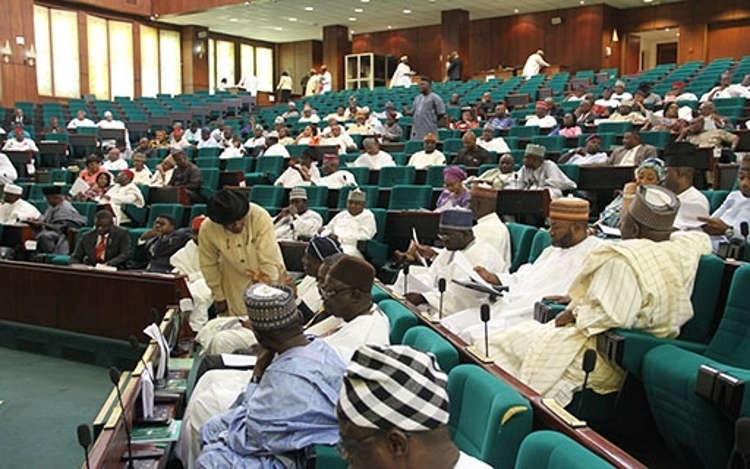

THE House of Representatives Committee on Infectious Diseases has called for tighter coordination and stricter oversight in the implementation of donor-funded health programmes as it intensifies an investigation into the utilisation of about $4.6bn received by implementing organisations between 2021 and 2025.
News Point Nigeria reports that the funds, largely provided by the Global Fund and the United States Agency for International Development, were meant to support Nigeria’s fight against HIV/AIDS, Tuberculosis, Malaria and other infectious diseases.
Read also: Tinubu To Inaugurate APC Presidential Campaign Council October 14
According to the committee, the investigation is aimed at ensuring transparency, accountability and value for money amid concerns over duplication of responsibilities among principal recipients and sub-recipients involved in the programmes.
Chairman of the committee, Amobi Ogah, disclosed this in Abuja on Sunday during an oversight visit to major grant recipients, including the Institute of Human Virology Nigeria, Family Health International and Catholic Relief Services.
While commending the organisations for their contributions to disease control and public health interventions, Ogah stressed that stricter monitoring mechanisms would now be enforced.
“It is imperative that every mobilised resource must be judiciously expended and accounted for.
“Therefore, the committee is charging all Global Fund recipients to sit up as it will no longer be business as usual,” he said.
Ogah further stated that all implementing partners would henceforth be required to submit their implementation plans directly to the National Assembly for approval.

“To this end, I will reiterate once more for the benefit of doubt that all recipients of Global Fund grants and sub-recipients are to submit their implementation plan to the parliament for approval.
“This is in addition to quarterly reports of the activities so that the National Assembly will ensure strict adherence to transparency and accountability. It is our desire to engage a coordinated and robust oversight of the implementers,” he added.
Nigeria remains one of the largest beneficiaries of Global Fund support globally, with billions of dollars committed over the years to combat HIV, tuberculosis and malaria diseases that continue to pose major public health challenges across the country.

The country currently has the world’s second-largest HIV burden, while malaria remains one of the leading causes of death, particularly among children under five years.
At the Institute of Human Virology Nigeria, the Chief Executive Officer, Patrick Dakum, who joined the session virtually, described the oversight visit as timely and necessary.
Read also: Ondo Military Plane Crash: Air Force Panel Begins Probe, Warns Against Speculation
“The visit has provided an opportunity for the committee to get to understand exactly, not only the successes that have been going on in the area of HIV, TB, and malaria, but also to see an opportunity where the House can play a critical role.
“Not only in legislating these things, but also in getting great relief for the needy children of this country,” he said.
A presentation delivered by Adetiba Temitope showed that the institute received about $359.4m from the Global Fund between 2021 and 2026, with an additional $170.96m expected.
He, however, explained that procurement under the programme is largely handled directly by the Global Fund through approved vendors and manufacturers.
At Catholic Relief Services, Country Representative Akim Kikonda reaffirmed the organisation’s commitment to transparency and accountability.
“We see accountability as a big part of our mission. As a Catholic organisation, we have demanded to be transparent in what we do, and to show and demonstrate integrity in everything we do.
“So as such, we are more than happy to collaborate with your committee, as well as the National Assembly in general, to ensure that you conduct your oversight mission as required,” he said.
CRS disclosed that it received about $74.784m in grants within the review period.
Similarly, at Family Health International, Country Representative Victor Ogbodo said the engagement underscored the importance of stronger collaboration among stakeholders in Nigeria’s health sector.
“The visit underscores the importance of strong collaboration between the legislative arm of government, implementing partners, and other key stakeholders in strengthening Nigerian response to infectious diseases,” he said.
The organisation disclosed that it received $290.44m between January 2021 and December 2023 and disbursed $223.99m before the programme ended.
Read also: Nigeria First: FG Orders MDAs To Buy Vehicles Only From Local Assemblers
As part of the ongoing probe, the committee directed all organisations involved to submit detailed financial records, including bank statements and procurement documents, signalling a more assertive legislative approach to monitoring donor-funded health interventions.
The development comes amid increasing pressure on government institutions and development partners to demonstrate transparency and accountability in the management of foreign aid, especially as Nigeria continues to depend heavily on international support to fund critical healthcare programmes.