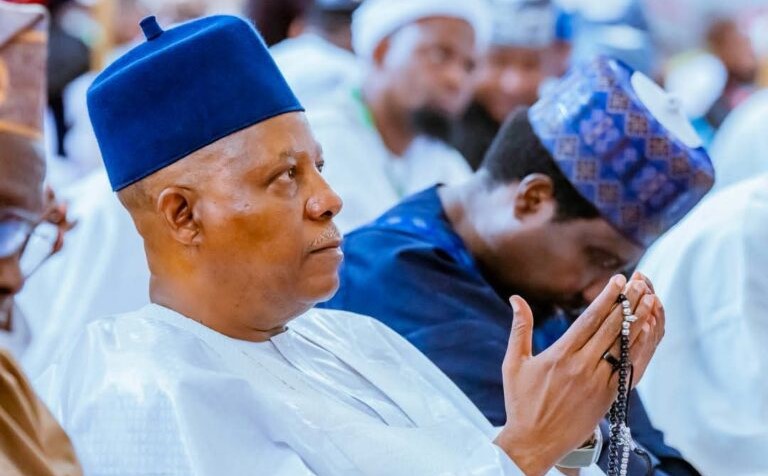
VICE President Kashim Shettima has showered praises on the late Abibatu Mogaji, mother of President Bola Tinubu.
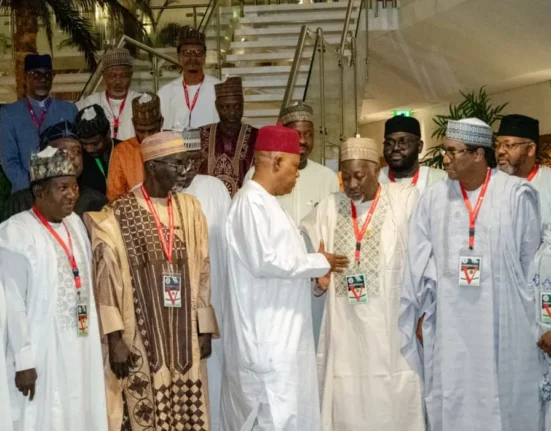
News Point Nigeria reports that Shettima spoke on Sunday in Abuja during the Annual Grand Prayer Session held in honour of the late Alhaja Mogaji at the Abuja National Mosque.

Read also: ‘Nothing To Fear If Tinubu Wins Second Term’, Shettima To Northern Leaders

The Vice President described her as a woman whose love extended far beyond her immediate family and helped shape Nigeria’s moral imagination, noting that her leadership as the late Iyaloja-General of Nigeria, who died on June 15, 2013, was reflected in the lives she uplifted and the institutions she strengthened.


Shettima said the late matriarch of the Tinubu family “ran her race, finished her course,” and left behind a legacy capable of guiding generations yet unborn.
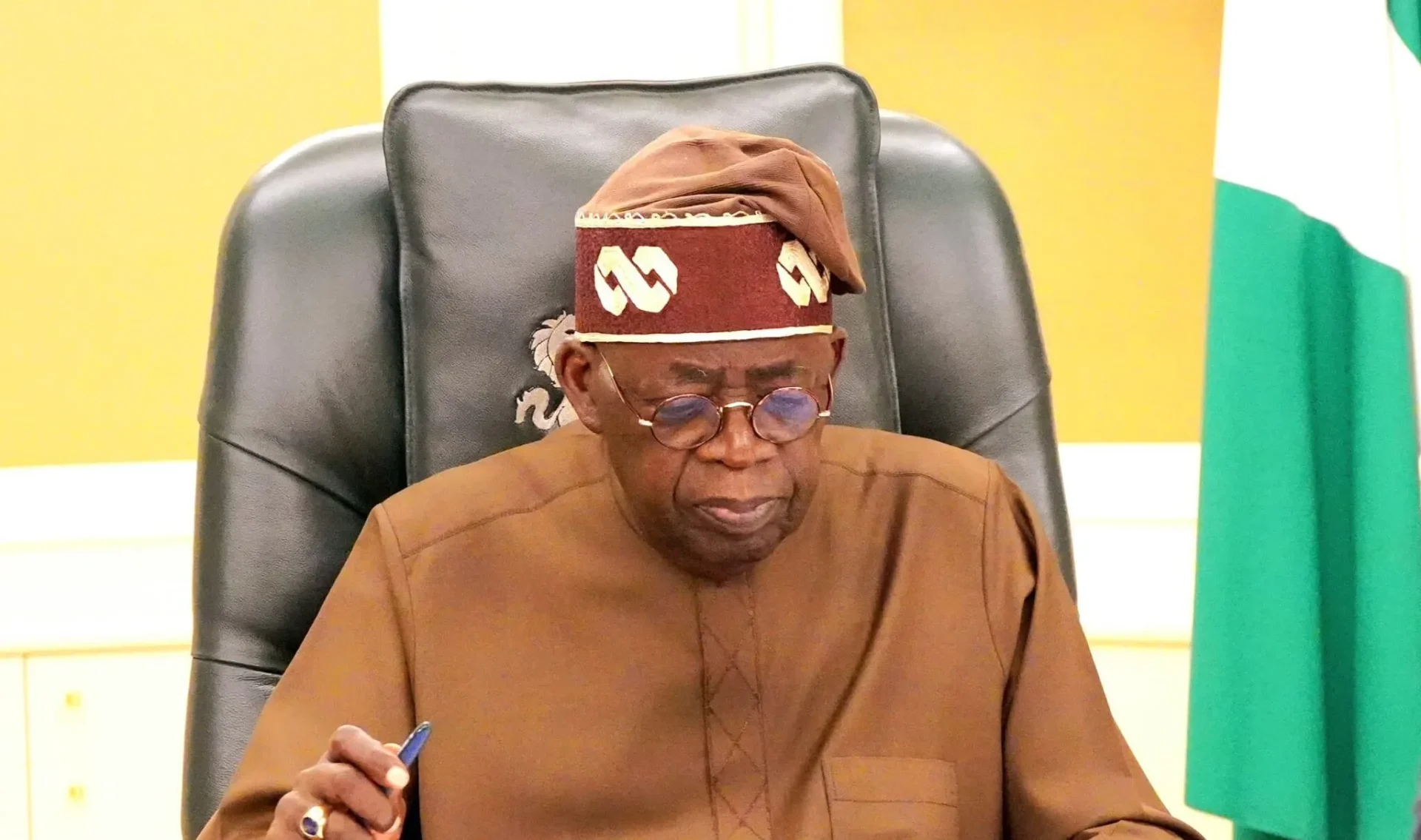
Drawing a close connection between mother and son, the Vice President pointed to what he described as a “like mother, like son” leadership pattern between President Tinubu and his late mother, stressing that Mogaji played a central role in shaping the values that define the President today.
According to Shettima, Mogaji shaped Tinubu into a leader and served Nigeria indirectly through the values she instilled in him.
“It should surprise no one, then, that the son she raised carries the same fire into the highest office in our land,” he said.
“President Bola Tinubu learned at her side that public life is a trust and that leadership is owed first to the ordinary and the unheard. The instinct to fight for democracy when it was dangerous to do so, the willingness to stand for the common good when comfort counselled silence, the conviction that the citizen deserves a government that works for them—all of this was first kindled in a home where service was the daily example.

“A mother shaped a leader, and through that leader her values now serve the whole of Nigeria.”
Shettima further described the late Mogaji as belonging to a rare class of Nigerians who understood that commerce is a service to humanity, and that the marketplace represents a meeting point between human need and human dignity.
Read also: Tinubu Welcomes World Bank Report, Says Economic Reforms Are Delivering Results


He said she devoted much of her life to the welfare of traders and the protection of ordinary women who built their livelihoods stall by stall.
“She taught a generation of market women that their work mattered, that their voices carried weight, and that their toil deserved respect,” he said.
“Alhaja Mogaji earned her people’s affection because she served before she sought to be served; she fed where there was hunger, mediated where there was discord, and stood between the weak and those who would exploit them.”
The Vice President also prayed for the repose of the late Mogaji’s soul and committed her to the mercy of God, expressing confidence that Nigeria would overcome its current security and economic challenges through prayers, unity, and collective national commitment.
He assured Nigerians that President Tinubu remains fully committed to addressing the nation’s pressing challenges, noting that the administration is implementing policies and programmes aimed at strengthening security, stimulating economic growth, and improving citizens’ welfare.
Earlier, Ibrahim Masari, Convener of the prayer session and Special Adviser to the President on Political Affairs and Other Matters, described Mogaji as a woman whose life was dedicated to service.
Masari disclosed that more than 250 hand-pump boreholes have been constructed across nine states in Northern Nigeria in memory of the late matriarch.
He also announced plans for the establishment of the Abibatu Mogaji Islamic Centre in Abuja, aimed at promoting Islamic scholarship, leadership development, science, and technology education.
Read also: APC Slams Atiku For Addressing Tinubu As ‘Bola’, Says 2027 Campaign Will Focus On Achievements
According to him, a modern Juma’at Mosque with residential quarters for the Imam and supporting staff would also be built in Rigasa, Kaduna State, in her honour.
This newspaper reports that prominent Islamic scholars from across the country offered special prayers for the repose of the soul of the late Mogaji, as well as for peace, security, unity, and economic prosperity in Nigeria.