

SOUTH Africa has ruled out any form of compensation for Nigerians who abandoned properties after being evacuated from the country, insisting that assets acquired illegally or located in informal settlements do not qualify for reimbursement.

News Point Nigeria reports that the South African government also maintained that even owners of legally acquired properties should dispose of such assets through the country’s property market rather than expect compensation from the government.
The position was reaffirmed by South Africa’s Minister in the Presidency, Khumbudzo Ntshavheni, who dismissed suggestions that Pretoria could compensate affected Nigerians for properties abandoned during previous episodes of unrest.


Her remarks followed comments by Nigeria’s Acting High Commissioner to South Africa, Temitope Ajayi, who disclosed that the Nigerian government was exploring possible avenues of compensation for citizens whose assets were lost or abandoned after being evacuated from South Africa.
Responding to the proposal during a media briefing, Ntshavheni insisted that South Africa had no basis for compensating affected Nigerians.
According to her, all legitimately owned properties in South Africa are properly registered with the relevant authorities, while structures situated in informal settlements are regarded as illegal and are therefore not recognised under the country’s laws.
She advised migrants with legally acquired properties to sell them through South Africa’s property market instead of expecting financial compensation from the government.
“People with legitimate properties should sell them in the property market,” she said, maintaining that the government would not assume responsibility for abandoned assets.
The minister’s remarks drew criticism from former Shehu Sani, who expressed surprise at what he described as the South African government’s hardline position.

Reacting on social media, Sani wrote: “This is from a SENIOR Government official and NOT a thug from the streets.”
Responding to the criticism, Ntshavheni stood by her position.
“I didn’t stutter. Any form of property obtained illegally won’t be compensated for,” she replied.


The minister also renewed South Africa’s call on the Nigerian government to provide intelligence on locations allegedly being used for drug-related activities, saying such information would assist law enforcement agencies in combating organised crime.
The latest exchange adds another chapter to the often strained diplomatic relations between Nigeria and South Africa over the treatment of Nigerian nationals living in the Southern African country.
Relations between both countries deteriorated significantly following recent waves of xenophobic attacks that targeted foreign nationals.
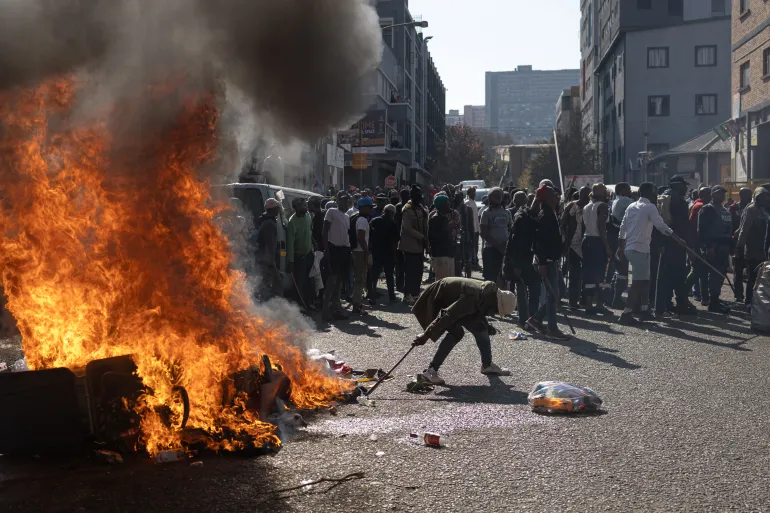
During the violence, businesses and properties belonging to foreigners, including Nigerians, were looted, vandalised and destroyed in several South African cities.
The attacks prompted the Nigerian government to evacuate hundreds of its citizens through a government-assisted voluntary return programme.
The incidents attracted widespread condemnation across Africa, with Nigeria demanding stronger protection for its citizens and their investments in South Africa.
In response, Pretoria pledged to strengthen security measures and prosecute those responsible for the attacks, while both countries established diplomatic mechanisms aimed at improving bilateral relations and addressing recurring concerns over migration, crime and the safety of foreign nationals.