
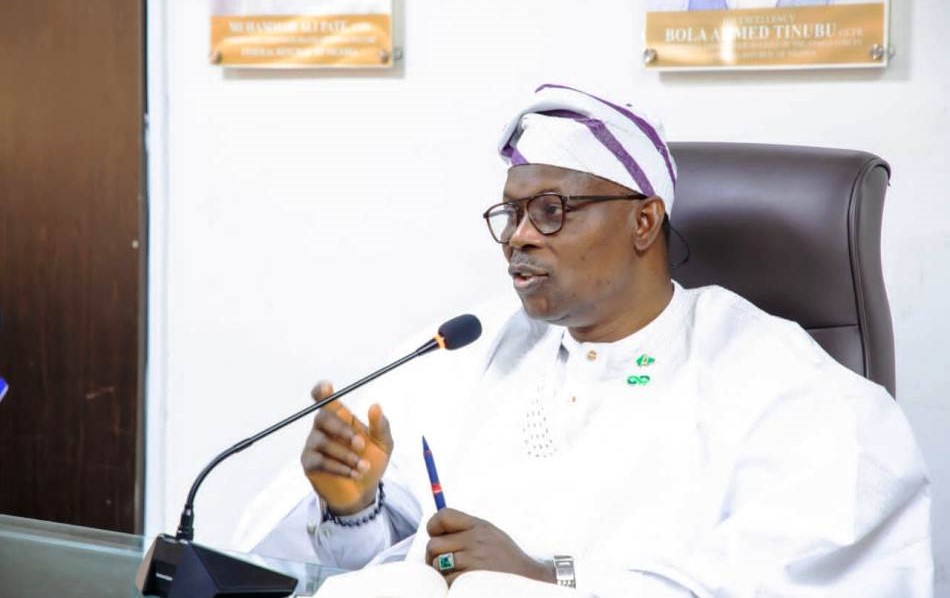
THE Federal Government has raised concerns over the growing impact of unsafe food consumption in Nigeria, revealing that more than 53,000 people die annually from food-related illnesses, while nearly 50 million others fall sick each year.

News Point Nigeria reports that the Minister of State for Health and Social Welfare, Iziaq Salako, disclosed this on Monday during a press conference in Abuja to commemorate the 2026 World Food Safety Day.

Read also: FG To Deploy 3,700 Telecom Towers, Connect 20 Million Nigerians Without Network Access – Minister
This year’s celebration is themed, “From Burden to Solutions, Safe Food Everywhere.”

According to the minister, the burden of foodborne diseases in Nigeria remains alarming, with millions of illnesses and thousands of deaths recorded annually.
“Nigeria records nearly 50 million foodborne illnesses every year, and unsafe food causes more than 53,000 deaths annually in our country,” Salako said.


“Together, these illnesses and deaths result in a staggering 4.26 million years of healthy life lost to illness, disability or early death.”
He noted that children under the age of five account for the overwhelming majority of the burden, representing more than 80 per cent of foodborne disease cases in the country.
“Most of this burden falls heavily on children under five, who account for more than 80 percent of all foodborne disease burden in Nigeria.

“The true cost of unsafe food in Nigeria is not only measured in sickness and death but also in the lost cognitive, physical and developmental potential of our children,” he added.
Read also: Reps Summon Finance Minister, Accountant-General Over ₦75bn UBEC Debt
Salako identified diarrhoeal diseases as the leading form of foodborne illness in Nigeria, disclosing that more than 40 million cases are linked to foodborne pathogens.


“Over 40 million diarrhoeal illnesses in Nigeria are linked to foodborne pathogens. These infections continue to be a major cause of hospitalisation, malnutrition, and mortality among our youngest citizens,” he said.
The minister also warned about the increasing threat posed by chemical contaminants in food and water sources, particularly lead exposure.
“Chemical hazards are also emerging as a serious concern, with lead exposure responsible for tens of thousands of healthy lives lost through contaminated grains, spices, and water sources,” he stated.
Despite the challenges, Salako said Nigeria has recorded significant progress in strengthening its food safety framework and surveillance systems.
According to him, a Joint External Evaluation conducted in 2023 showed measurable improvements across all food safety indicators, while the country’s 2025 State Party Annual Report indicated that Nigeria surpassed the target set by the World Health Organization (WHO) for low- and middle-income countries.
“Nigeria is now one of the leading countries in the region in establishing functional systems for detecting, reporting, and responding to foodborne disease events,” the minister said.
He, however, stressed that food safety concerns extend beyond infectious diseases, noting that poor food quality and unhealthy consumption patterns are contributing to the rising prevalence of non-communicable diseases such as hypertension, stroke, diabetes and obesity.
Read also: ‘You’re Working For Tinubu’, ADC Blasts Kwankwaso Over Call For Atiku To Step Down
Also speaking at the event, Mojisola Adeyeye, Director-General of the National Agency for Food and Drug Administration and Control (NAFDAC), underscored the importance of maintaining effective food safety systems.
She said strengthening food safety measures remains critical to reducing the burden of foodborne diseases and protecting public health across the country.